Genesis 32:22-32 · Genesis · Updated April 25, 2026
Jacob Wrestles Angel
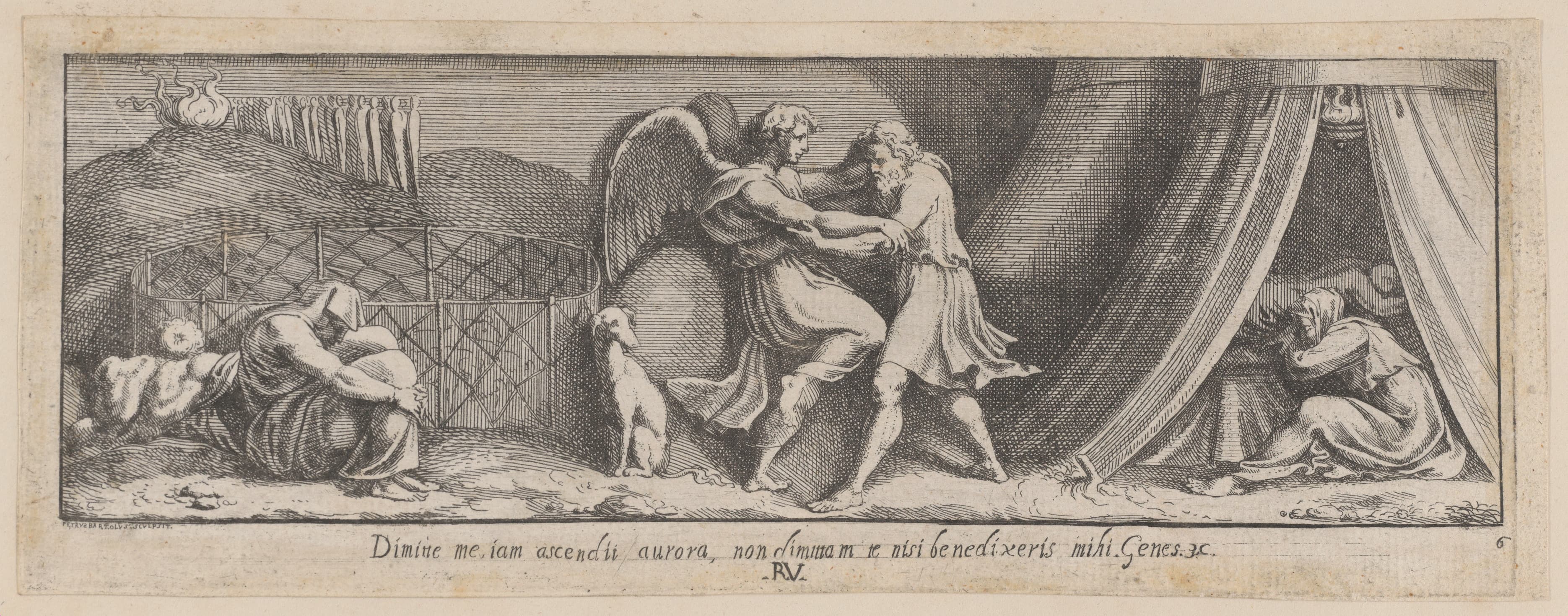
Jacob wrestles with a mysterious man until daybreak, refusing to let go until he receives a blessing. The man renames Jacob as Israel, signifying his struggle with God and men. Jacob names the place Peniel, acknowledging he has seen God face to face and survived.
Summary
The passage from Genesis 32:22-32 describes a moment in the life of Jacob. Jacob, on his journey back to his homeland, is preparing to meet his estranged brother Esau. Anxious about this reunion due to their tumultuous past, Jacob takes his two wives, two maidservants, and eleven sons and sends them across the ford of Jabbok along with his possessions (32:22-23). Left alone on the other side, Jacob encounters a mysterious man, setting the stage for an encounter.
Throughout the night, Jacob wrestles with this man until daybreak (32:24). Unable to overpower Jacob, the man touches Jacob's hip, dislocating it (32:25). Despite his injury, Jacob refuses to release the man until he receives a blessing (32:26). The man asks Jacob's name and then declares that his name will now be Israel, signifying his struggle and prevailing power with God and men (32:28). Jacob, in turn, asks for the man's name, but the man does not provide it and instead blesses Jacob there (32:29).
The passage concludes with Jacob naming the place Peniel, meaning "face of God," acknowledging that he has seen God face-to-face and survived (32:30). As the sun rises, Jacob crosses Penuel with a limp due to his injured thigh (32:31). The text notes that the Israelites refrain from eating the sinew of the thigh to this day, in remembrance of this event (32:32). The passage establishes Jacob's transformation into Israel, marking a moment in his journey and relationship with God. The passage in Genesis 32:22-32 primarily establishes Jacob's transformation and the significance of his encounter with the divine. Jacob wrestles with a mysterious figure throughout the night, a struggle that leads to his renaming as Israel, meaning "he struggles with God" (32:28). This moment matters because it marks a transformation in Jacob's identity and relationship with God. The text suggests that this struggle is not just physical but symbolic of Jacob's spiritual journey. Jacob's insistence on receiving a blessing from the mysterious man underscores his determination and persistence in securing divine favor, which he receives. The encounter ends with Jacob acknowledging that he has encountered God and has survived, highlighting the nature of this meeting (32:30).
Chiastic structure
ⓘGenesis 32:24-25
“And Jacob was left alone; and there wrestled a man with him... the hollow of Jacob's thigh was out of joint.”
Genesis 32:28
“Thy name shall be called no more Jacob, but Israel: for as a prince hast thou power with God and with men, and hast prevailed.”
Genesis 32:31-32
“And as he passed over Penuel the sun rose upon him, and he halted upon his thigh.”
Both A and A' involve Jacob's physical struggle and its consequences, highlighting his perseverance and the lasting impact of the encounter.
Interpretation and theological stakes
Continue reading with a Scholar plan
Upgrade to Scholar