1 Peter 2:4-10 · 1 Peter · Updated April 25, 2026
Living Stones
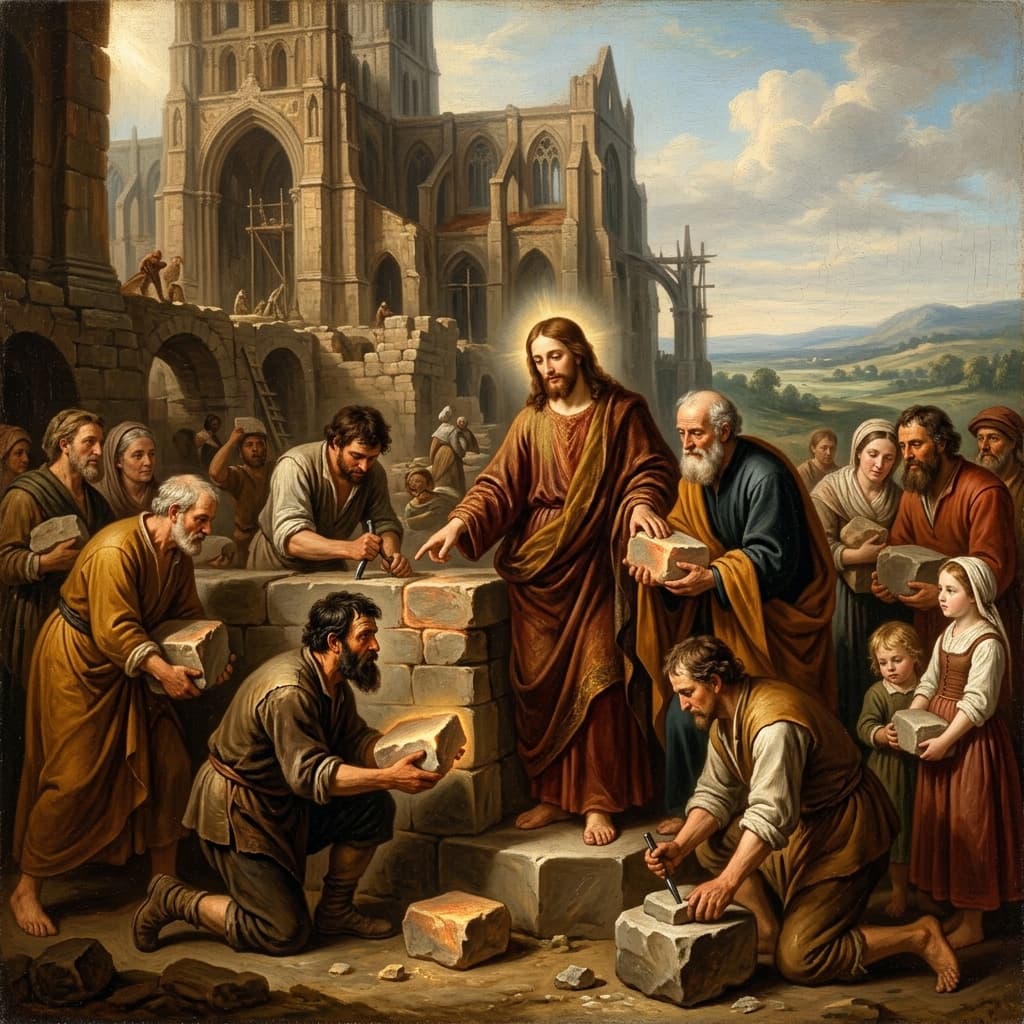
In 1 Peter 2:4-10, believers are described as living stones being built into a spiritual house and a holy priesthood. The passage emphasizes the believers' identity as a chosen generation and a royal priesthood, called out of darkness into light.
Summary
The passage from 1 Peter 2:4-10 is part of a letter addressed to early Christians, likely in Asia Minor during the first century. It focuses on the identity and role of believers in relation to Jesus Christ. Introducing Jesus as a "living stone," rejected by humans but chosen and precious to God (2:4), the passage describes early Christians as "living stones," built into a spiritual house and forming a holy priesthood to offer spiritual sacrifices through Jesus Christ (2:5).
Continuing by referencing scripture, it states that God has laid a "chief cornerstone" in Zion, which is Jesus (2:6). This cornerstone is precious to those who believe, but to those who do not, it becomes a stone that causes them to stumble (2:7-8). The text contrasts believers, honored by their faith, with those who reject Jesus, who are disobedient and stumble over the word.
The passage concludes by affirming the believers’ new identity. They are called a "chosen generation," a "royal priesthood," a "holy nation," and a "peculiar people" meant to proclaim the praises of God (2:9). It emphasizes that they were once not a people but now are the people of God, having received mercy (2:10). This establishes the significance of their transformation and their role in God's plan. The primary conclusion of 1 Peter 2:4-10 is the establishment of a new spiritual identity for believers. The passage emphasizes the believers’ transformation into a "chosen generation" and a "royal priesthood" (2:9). This identity shift is rooted in their relationship with Jesus, the "living stone" who, though rejected by humans, is chosen and precious to God (2:4). The believers, as "living stones," are integrated into a spiritual house where they offer spiritual sacrifices through Jesus Christ (2:5). This transformation holds theological significance as it defines the believers' new role and purpose within God's plan, contrasting them with those who stumble by rejecting Jesus.
Chiastic structure
ⓘ1 Peter 2:4
“a living stone, disallowed indeed of men, but chosen of God, precious”
1 Peter 2:9
“a chosen generation, a royal priesthood, an holy nation, a peculiar people”
1 Peter 2:10
“Which in time past were not a people, but are now the people of God”
Both A and A' discuss the concept of being chosen and precious, with A focusing on Christ as the cornerstone and A' on believers as a chosen people.
Interpretation and theological stakes
Continue reading with a Scholar plan
Upgrade to Scholar