John 9:1-41 · John · Updated April 25, 2026
Man Born Blind
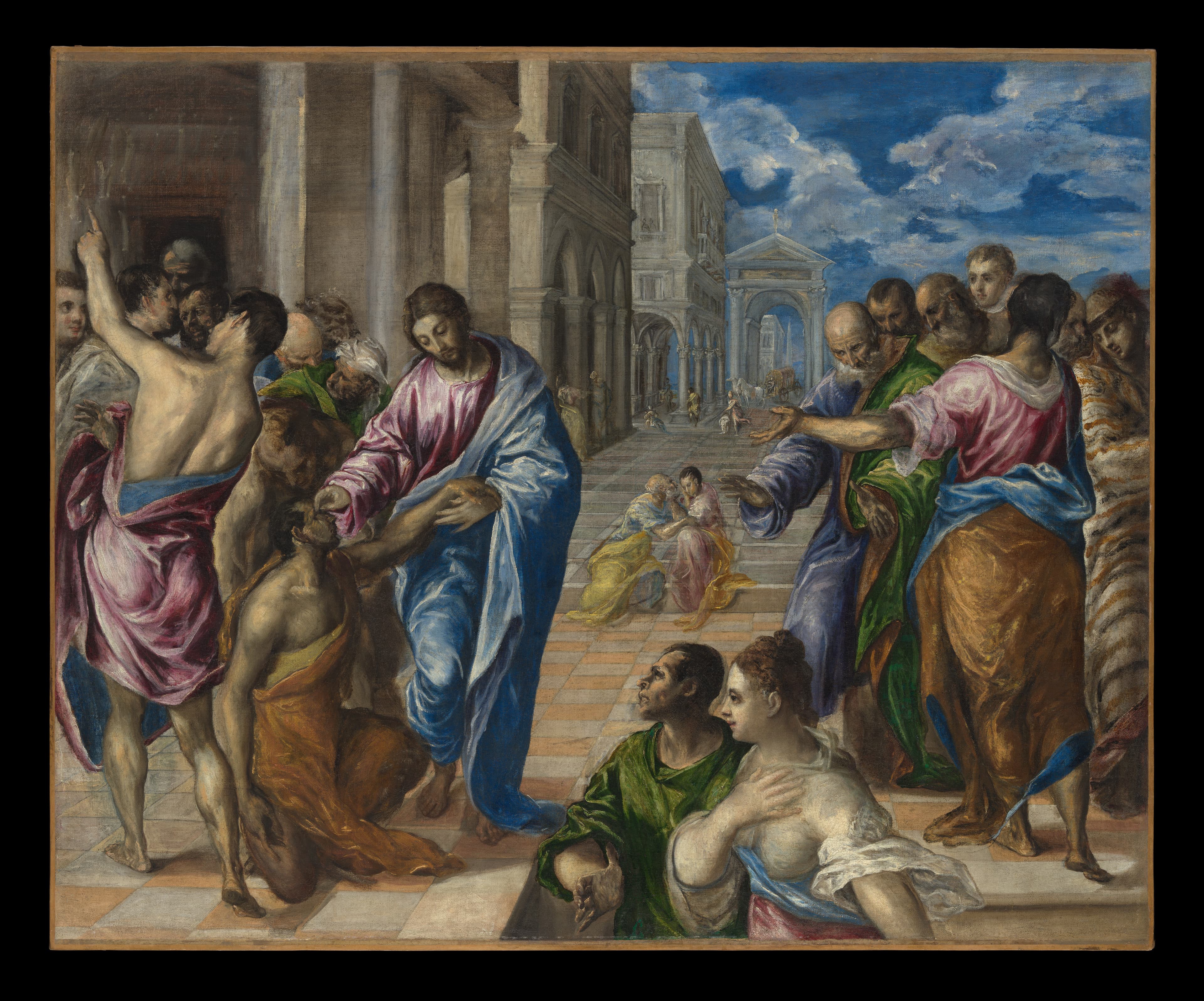
Jesus encounters a man blind from birth and heals him by making clay with his saliva and instructing him to wash in the pool of Siloam. The Pharisees question the man and his parents about the healing, leading to a debate about Jesus' identity and authority, and the man is eventually cast out of the synagogue.
Summary
This passage from the Gospel of John recounts the story of Jesus healing a man who was blind from birth, an event that sparks significant debate and controversy. As Jesus and his disciples pass by the blind man, the disciples ask Jesus whether the man's blindness is due to his own sin or that of his parents. Jesus replies that neither is the case; rather, the man’s condition is an opportunity for the works of God to be displayed (John 9:3). Jesus then makes clay with his saliva, applies it to the man's eyes, and instructs him to wash in the pool of Siloam. The man follows these instructions and gains his sight (John 9:7).
After the healing, the man's neighbors are astonished and question whether he is indeed the same person who was blind. The man confirms his identity and explains that Jesus healed him (John 9:11). The neighbors bring him to the Pharisees, as the healing occurred on the Sabbath, which leads to a division among them. Some Pharisees argue that Jesus cannot be from God because he does not observe the Sabbath, while others are perplexed by the miraculous nature of the healing (John 9:16). The Pharisees then question the man again, and despite their skepticism, he maintains that Jesus opened his eyes. His parents are also questioned but avoid direct involvement due to fear of expulsion from the synagogue (John 9:22).
The story concludes with the Pharisees casting the healed man out after he challenges their disbelief. Jesus finds the man and reveals himself as the Son of God, prompting the man to express his belief and worship Jesus (John 9:38). Jesus states that he came into the world for judgment, so that those who do not see may see, and those who see may become blind (John 9:39). This statement leads to a final exchange with the Pharisees, where Jesus points out that their claim to sight leaves them accountable for their sin (John 9:41).
Chiastic structure
ⓘJohn 9:1-5
“As long as I am in the world, I am the light of the world.”
John 9:25
“One thing I know, that, whereas I was blind, now I see.”
John 9:39-41
“For judgment I am come into this world, that they which see not might see; and that they which see might be made blind.”
The theme of spiritual blindness and sight is introduced in A and resolved in A', with the physical healing of the blind man serving as a metaphor for spiritual enlightenment.
Interpretation and theological stakes
Continue reading with a Scholar plan
Upgrade to Scholar