Genesis 6:9-9:17 · Genesis · Updated April 25, 2026
Noah & the Flood
God instructs Noah to build an ark to survive a coming flood that will destroy all life due to the earth's corruption. Noah, his family, and pairs of animals enter the ark, and after the floodwaters recede, God establishes a covenant with Noah, promising never to flood the earth again, symbolized by a rainbow.
Summary
The story of Noah and the Flood, found in Genesis 6:9-9:17, is a pivotal biblical narrative about divine judgment and covenant. Noah, described as a righteous man who walked with God, is chosen to survive a coming flood meant to cleanse the earth of its widespread corruption and violence (6:9-11). God instructs Noah to build an ark of specific dimensions to preserve his family and pairs of every living creature (6:14-19). Noah, along with his wife, his sons Shem, Ham, and Japheth, and their wives, obeys God's command, gathering the animals and entering the ark before the flood begins (6:22, 7:1-7).
The flood commences as God opens the fountains of the deep and the windows of heaven, causing rain to fall for forty days and nights (7:11-12). The waters rise high enough to cover the mountains, wiping out all living creatures outside the ark (7:19-23). After 150 days, the waters begin to recede, and the ark comes to rest on the mountains of Ararat (8:3-4). Noah sends out a raven and then a dove to check if the land has dried. The dove eventually returns with an olive leaf, signaling that the waters have abated (8:11). Once the earth is dry, God instructs Noah to leave the ark with his family and the animals to repopulate the earth (8:15-17).
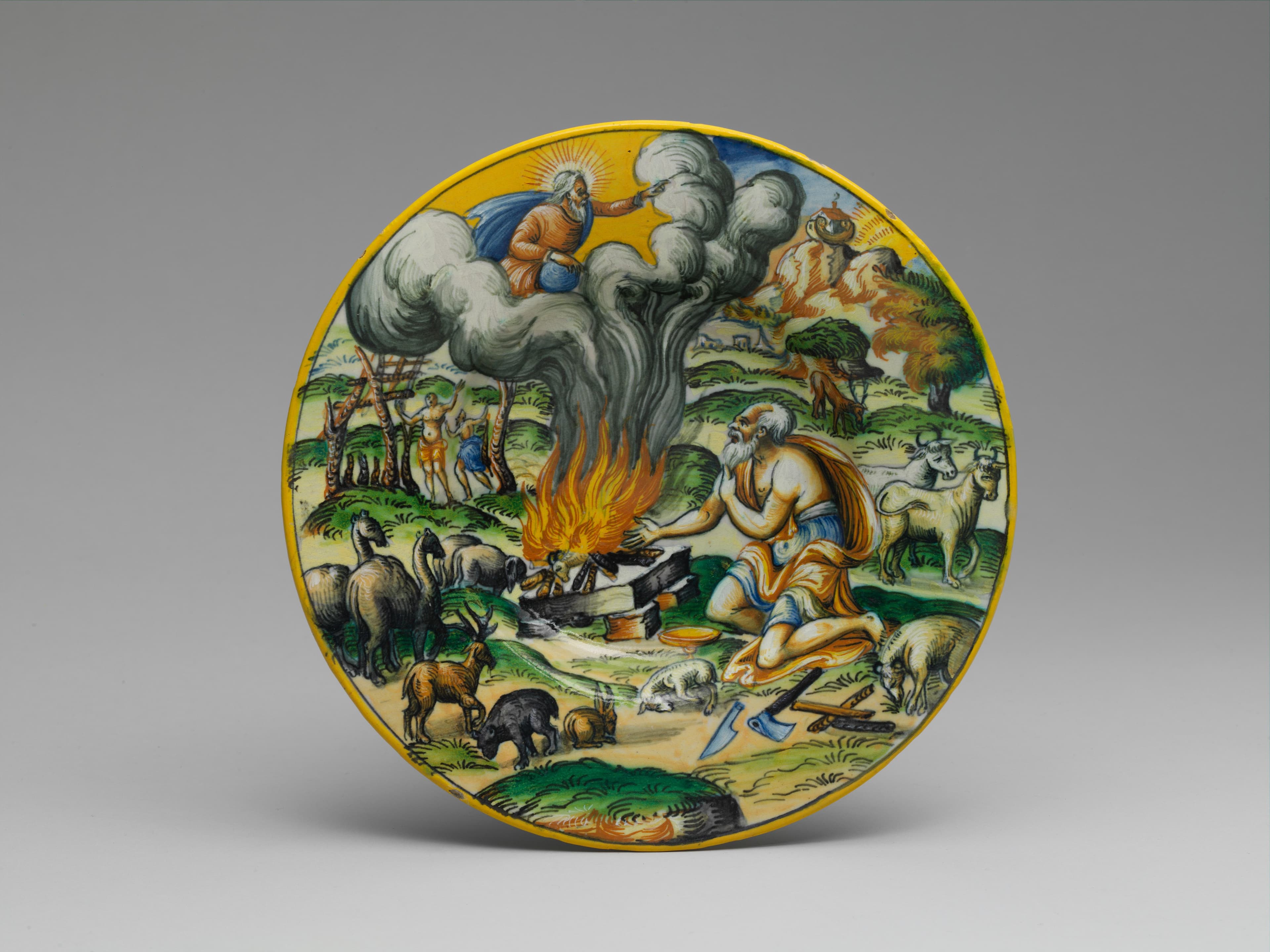
The passage concludes with Noah building an altar to offer sacrifices to God, who then promises never to curse the ground or destroy all living creatures again (8:20-21). God establishes a covenant with Noah and his descendants, symbolized by a rainbow, assuring that a flood will never again destroy the earth (9:11-13). This covenant marks a new beginning for humanity and the natural world, as God blesses Noah and his sons to be fruitful and multiply across the earth (9:1).
Chiastic structure
ⓘGenesis 6:17-18
“And, behold, I, even I, do bring a flood of waters upon the earth, to destroy all flesh... But with thee will I establish my covenant...”
Genesis 8:20-22
“And Noah builded an altar unto the LORD... I will not again curse the ground any more for man's sake...”
Genesis 9:11-13
“And I will establish my covenant with you; neither shall all flesh be cut off any more by the waters of a flood... I do set my bow in the cloud...”
Both A and A' focus on God's actions and promises regarding the destruction and preservation of life on earth.
Interpretation and theological stakes
Continue reading with a Scholar plan
Upgrade to Scholar