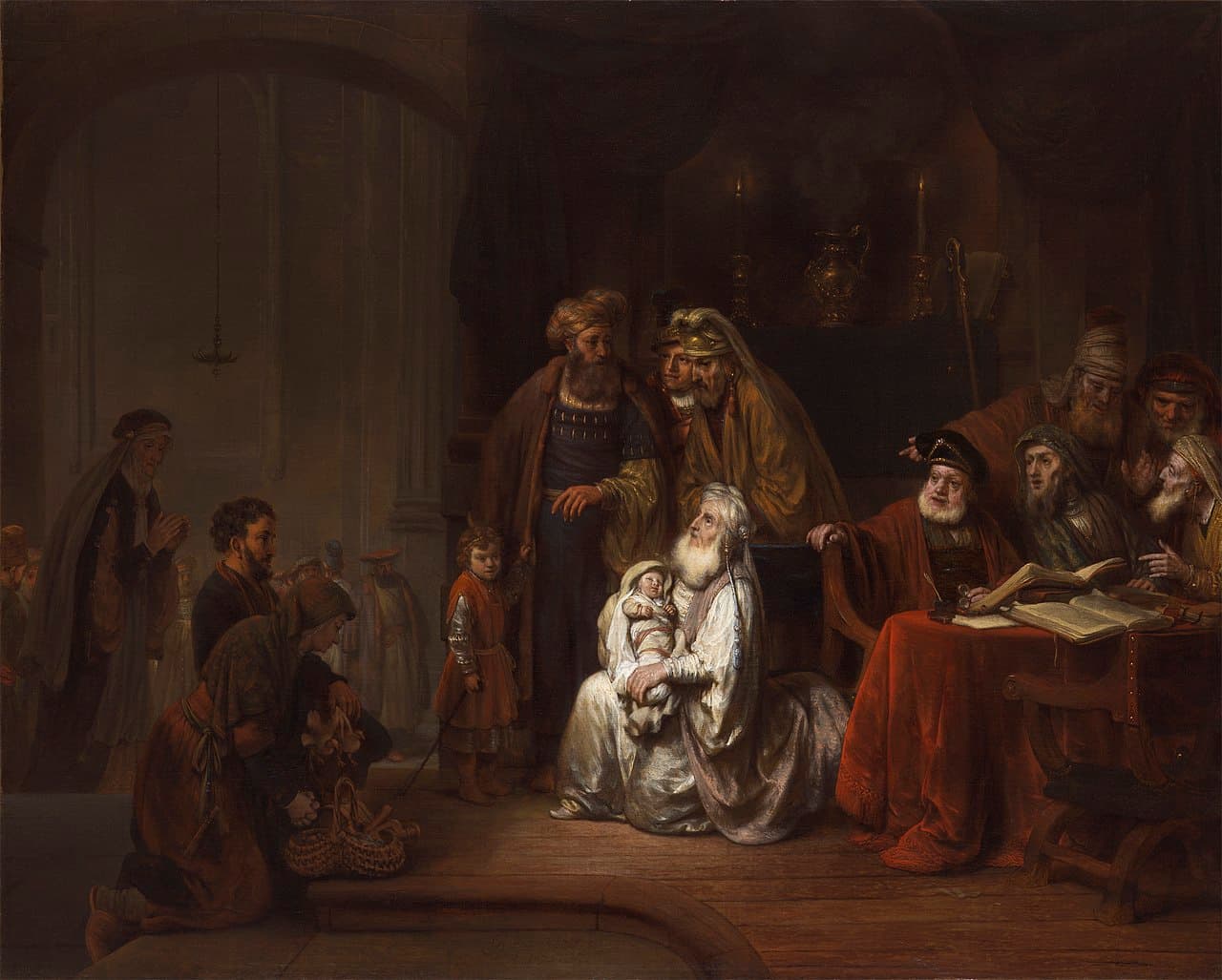
Luke 2:25-35 · Luke · Updated April 25, 2026
Nunc Dimittis / Simeon
Simeon, a devout man in Jerusalem, is promised by the Holy Ghost that he will not die before seeing the Messiah. Guided by the Spirit, he meets the child Jesus in the temple, blesses God, and prophesies about Jesus' impact on Israel and Mary. Joseph and Mary marvel at his words.
Summary
Luke 2:25-35 introduces key themes about Jesus' role and destiny. In Jerusalem, a man named Simeon, described as just and devout, waits for the consolation of Israel. The Holy Ghost is upon him, and he has been promised that he will not die before seeing the Messiah, the Lord's Christ (2:25-26). The Spirit leads Simeon to the temple as Mary and Joseph bring Jesus to fulfill Jewish law requirements.
Simeon takes Jesus in his arms and blesses God, expressing his readiness to die in peace now that he has seen God's Salvation (2:28-29). He declares that Jesus is a light for revelation to the Gentiles and the glory of Israel (2:32). Mary and Joseph are amazed at Simeon's words about their child (2:33). Simeon then blesses them and speaks directly to Mary, predicting that Jesus is destined for the fall and rise of many in Israel and will be a sign opposed by many (2:34). He also warns Mary that a sword will pierce her own soul, indicating future sorrow, and that the thoughts of many hearts will be revealed (2:35).
The passage concludes with Simeon's prophetic words establishing Jesus' challenging role in Israel's future. This moment in the temple presents the divine mission and the impact Jesus will have on both Israel and the world, as stated by Simeon. The primary conclusion of the Nunc Dimittis passage in Luke 2:25-35 is the affirmation of Jesus' identity as the Messiah, who fulfills God's promise. Simeon's encounter with Jesus in the temple is a moment of divine assurance, as he recognizes Jesus as the one destined to bring Salvation. Simeon's declaration in verse 29, where he expresses readiness to "depart in peace," confirms the fulfillment of the promise revealed to him by the Holy Spirit in verse 26. This fulfillment is not only personal to Simeon but also universal, as indicated by Jesus being a "light to lighten the Gentiles" and the "glory of Israel" (verse 32). This passage frames Jesus as central to God's plan for humanity, emphasizing themes of revelation and salvation for both Jews and Gentiles.
Chiastic structure
ⓘLuke 2:25-28
“Simeon...waiting for the consolation of Israel...took him up in his arms, and blessed God”
Luke 2:30-32
“For mine eyes have seen thy salvation...A light to lighten the Gentiles, and the glory of thy people Israel”
Luke 2:34-35
“Simeon blessed them...set for the fall and rising again of many in Israel”
Both A and A' involve Simeon's recognition and prophetic declaration about Jesus' role and impact.
Interpretation and theological stakes
Continue reading with a Scholar plan
Upgrade to Scholar