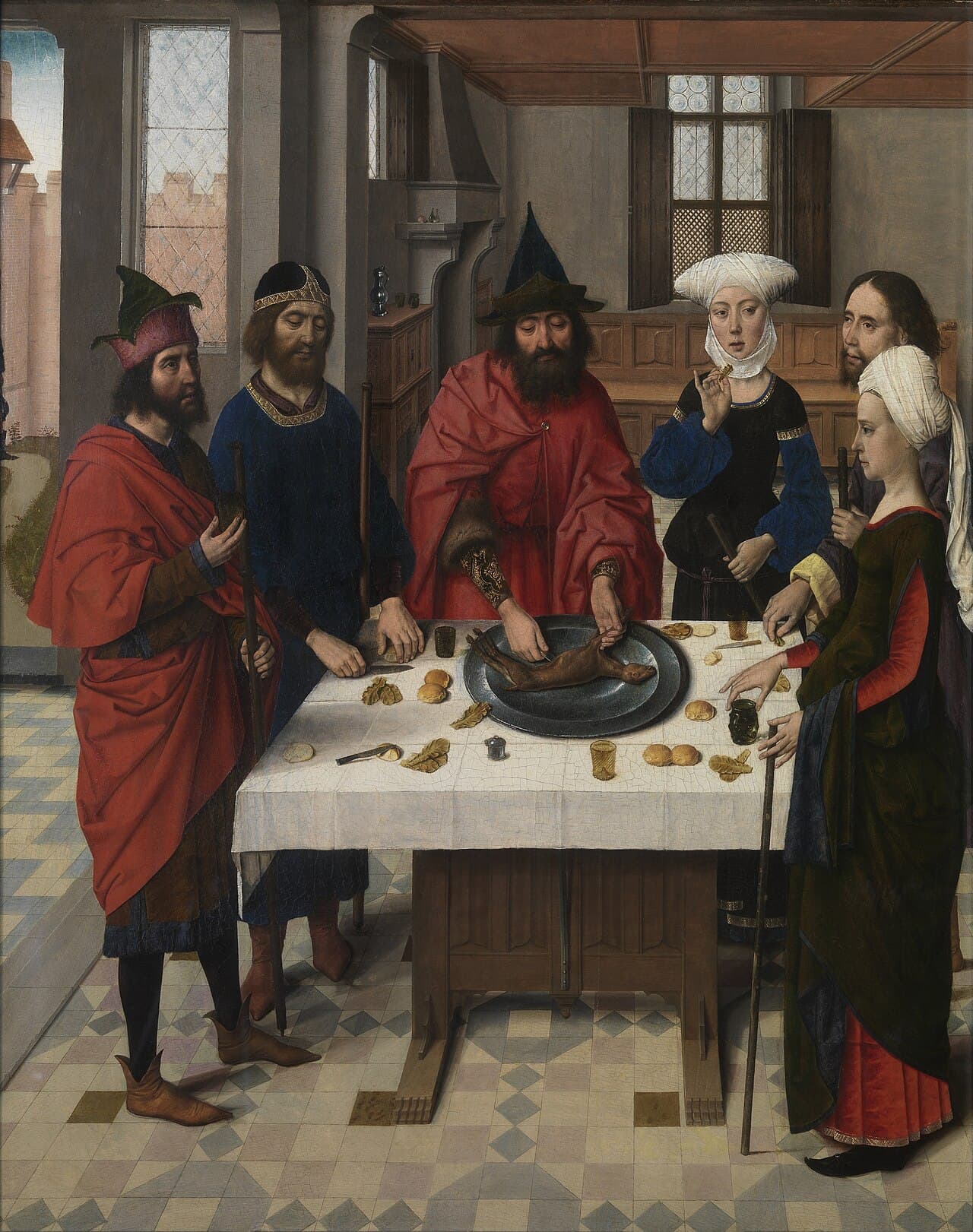
Exodus 12:1-28 · Exodus · Updated April 25, 2026
Passover Institution
God instructs Moses and Aaron to establish the Passover as a perpetual ordinance for the Israelites. Each household is to sacrifice a lamb, mark their doorposts with its blood, and eat it with unleavened bread and bitter herbs. The Israelites obey these commands, ensuring their protection from the plague that strikes Egypt.
Summary
Exodus 12:1-28 outlines the institution of Passover, a significant event for the Israelites in Egypt. God instructs Moses and Aaron to prepare the Israelites for their imminent departure from Egypt. This occurs during the series of plagues that God has sent upon Egypt, with the final and most severe plague about to occur. The Israelites are in bondage, and God is about to deliver them, marking a new beginning for them as a people.
God commands Moses and Aaron to tell the Israelites that on the tenth day of the first month, each household must select a lamb without blemish (12:3, 5). On the fourteenth day, they are to kill the lamb at twilight and use its blood to mark the doorposts and lintel of their houses (12:6-7). The lamb must be roasted and eaten with unleavened bread and bitter herbs, consumed in haste, dressed for travel, as it is the Lord's Passover (12:8, 11). God declares that He will pass through Egypt that night and strike down every firstborn, but when He sees the blood on the doorposts, He will pass over those homes, sparing the Israelites from the plague (12:12-13). This event is to be commemorated annually as a festival to the Lord, lasting seven days, during which only unleavened bread is to be eaten (12:14-20).
Moses conveys God's instructions to the elders of Israel, who are to ensure that each household follows the commands regarding the lamb and the marking of the doorposts (12:21-22). God promises to spare the marked houses as He brings judgment upon Egypt (12:23). The Israelites are to observe this ritual as an enduring ordinance, explaining its significance to future generations as a reminder of how God delivered them from Egypt (12:24-27). The people respond by bowing in worship, and they carry out God's instructions as commanded (12:27-28). Exodus 12:1-28 establishes the institution of Passover as a defining ritual for the Israelites, signifying both a historical event and a divine intervention. It marks the moment when God acted decisively to free the Israelites from Egyptian bondage. The blood of the lamb on the doorposts serves as a sign for God to spare the Israelites from the final plague — death of the firstborn — illustrating divine protection and deliverance. This ritual is an everlasting commemoration, ensuring that the memory of divine deliverance is perpetuated through generations (12:14).
Chiastic structure
ⓘExodus 12:3-7
“In the tenth day of this month they shall take to them every man a lamb... And they shall take of the blood, and strike it on the two side posts and on the upper door post of the houses...”
Exodus 12:12-13
“For I will pass through the land of Egypt this night... and when I see the blood, I will pass over you, and the plague shall not be upon you to destroy you...”
Exodus 12:21-23
“Draw out and take you a lamb according to your families, and kill the passover... when he seeth the blood upon the lintel, and on the two side posts, the LORD will pass over the door...”
A and A' both focus on the instructions and significance of the Passover lamb and its blood as a sign of protection and deliverance.
Interpretation and theological stakes
Continue reading with a Scholar plan
Upgrade to Scholar