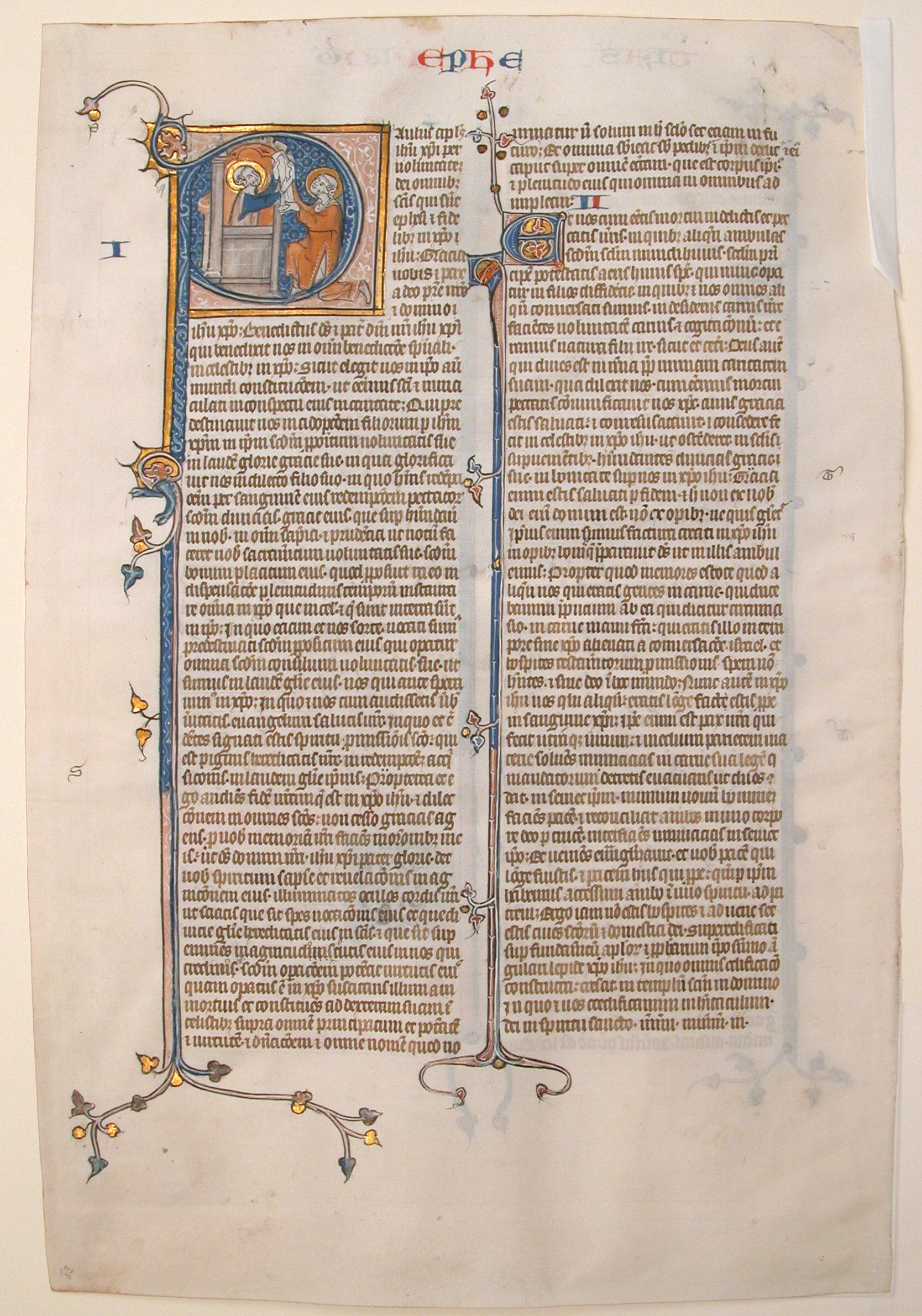
Ephesians 1:15-23 · Ephesians · Updated April 25, 2026
Paul's Thanksgiving Prayer
Paul expresses his gratitude for the faith and love of the Ephesians and prays for them to receive wisdom and revelation from God. He highlights the power of God demonstrated in Christ's resurrection and exaltation above all powers and authorities.
Summary
Ephesians 1:15-23 is a Thanksgiving prayer written by Paul to the believers in Ephesus. Paul, writing from prison in Rome, addresses the Ephesians, acknowledging their faith in Jesus Christ and their love for all the saints. He expresses gratitude for them and mentions that he continually includes them in his prayers (verses 15-16). Paul seeks divine blessings for the Ephesians.
Paul prays that God, the Father of glory, will grant the Ephesians a spirit of wisdom and revelation, enabling them to know Him better (verse 17). He desires that their understanding be enlightened so they can grasp the hope of God's calling, the riches of His glorious inheritance, and the greatness of His power for those who believe (verses 18-19). Paul explains that this power is the same as that which God used to raise Christ from the dead and seat Him at His right hand in the heavenly realms (verse 20). Christ is above all rule, authority, power, and dominion, and above every name, both now and in the future (verse 21).
The passage concludes with Paul stating that God has placed everything under Christ's feet and appointed Him as head over everything for the church, which is Christ's body, the fullness of Him who fills everything in every way (verses 22-23). This establishes the supremacy and authority of Christ, emphasizing His central role in the church and His dominion. The passage in Ephesians 1:15-23 primarily establishes the exalted status of Christ and His integral role within the church. Paul’s prayer for the Ephesians focuses on enlightenment and understanding of God's power, demonstrated in Christ’s resurrection and Ascension. Christ is seated at the right hand of God, signifying His authority over all cosmic powers and His preeminence in the church. This emphasis on Christ’s supremacy shapes the understanding of the church's identity and mission as the body of Christ, filled with His presence and power.
Chiastic structure
ⓘEphesians 1:15-16
“your faith in the Lord Jesus, and love unto all the saints”
Ephesians 1:19-20
“the exceeding greatness of his power to us-ward who believe, according to the working of his mighty power, Which he wrought in Christ, when he raised him from the dead”
Ephesians 1:22-23
“gave him to be the head over all things to the church, Which is his body”
Both A and A' emphasize the believers' relationship with Christ and the church, highlighting faith and the church's role as Christ's body.
Interpretation and theological stakes
Continue reading with a Scholar plan
Upgrade to Scholar