John 11:1-44 · John · Updated April 25, 2026
Raising of Lazarus
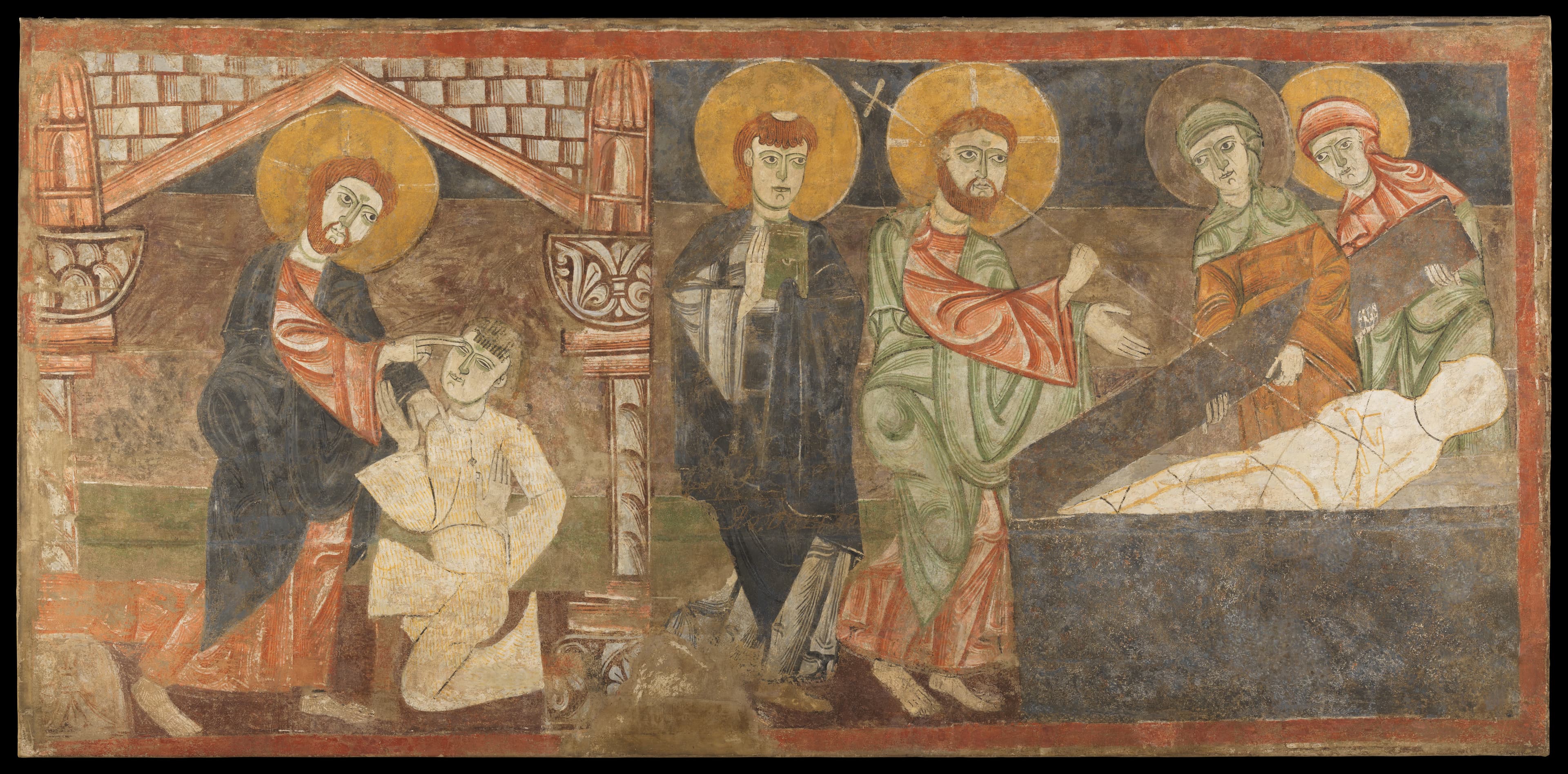
In the town of Bethany, Lazarus falls ill and dies. Jesus, after being informed by Lazarus's sisters Mary and Martha, travels to Bethany and raises Lazarus from the dead, demonstrating his power over death. This miracle strengthens the faith of those present and glorifies God.
Summary
John 11:1-44 recounts the story of Jesus raising Lazarus from the dead, highlighting Jesus' power over life and death. Lazarus, a resident of Bethany and the brother of Mary and Martha, is gravely ill. Mary is the one who anointed Jesus with ointment and wiped his feet with her hair. The sisters send a message to Jesus informing him of Lazarus's illness, referring to him as the one Jesus loves. Upon hearing this, Jesus states that the sickness will not end in death but will glorify God (John 11:4). Despite the urgent news, Jesus delays his visit for two days before deciding to return to Judea, despite the disciples' concerns about the danger from the Jews who previously sought to stone him.
Upon arriving in Bethany, Jesus learns that Lazarus has been in the tomb for four days (John 11:17). Martha meets Jesus and expresses her belief that if Jesus had been present earlier, Lazarus would not have died. Jesus assures her that Lazarus will rise again, and Martha acknowledges her faith in the resurrection on the last day. Jesus declares himself to be the resurrection and the life, promising that those who believe in him will live even if they die (John 11:25). Martha affirms her belief in Jesus as the Messiah. Mary then approaches Jesus, followed by mourners, and repeats Martha's sentiment. Moved by their grief, Jesus asks to be shown where Lazarus is laid and weeps (John 11:35). Arriving at the tomb, Jesus commands the stone to be removed despite Martha's concern about the stench after four days. Jesus prays to God and then calls Lazarus to come out of the tomb (John 11:43).
Lazarus emerges from the tomb, still wrapped in grave clothes, and Jesus instructs those present to unbind him and let him go (John 11:44). This miraculous event establishes the power of Jesus over death and demonstrates his divine authority. The text emphasizes the belief in Jesus as the source of life and the agent of God's glory. The primary conclusion of the passage in John 11:1-44 is that Jesus possesses power over life and death, serving as a direct conduit for God's glory. The text explicitly states that Lazarus's sickness will not end in death but will glorify God through Jesus (John 11:4). The miracle of raising Lazarus from the dead is not just about bringing a friend back to life but is an act that highlights Jesus's divine authority. By demonstrating control over death, the passage asserts Jesus as the source of life, reinforcing his identity as the Son of God.
Chiastic structure
ⓘJohn 11:4
“This sickness is not unto death, but for the glory of God, that the Son of God might be glorified thereby.”
John 11:25-26
“I am the resurrection, and the life: he that believeth in me, though he were dead, yet shall he live.”
John 11:43-44
“And when he thus had spoken, he cried with a loud voice, Lazarus, come forth. And he that was dead came forth...”
Both A and A' involve the theme of belief in Jesus leading to life, with A focusing on the sickness not leading to death and A' demonstrating the actual raising of Lazarus.
Interpretation and theological stakes
Continue reading with a Scholar plan
Upgrade to Scholar