Genesis 18:16-19:29 · Genesis · Updated April 25, 2026
Sodom & Gomorrah
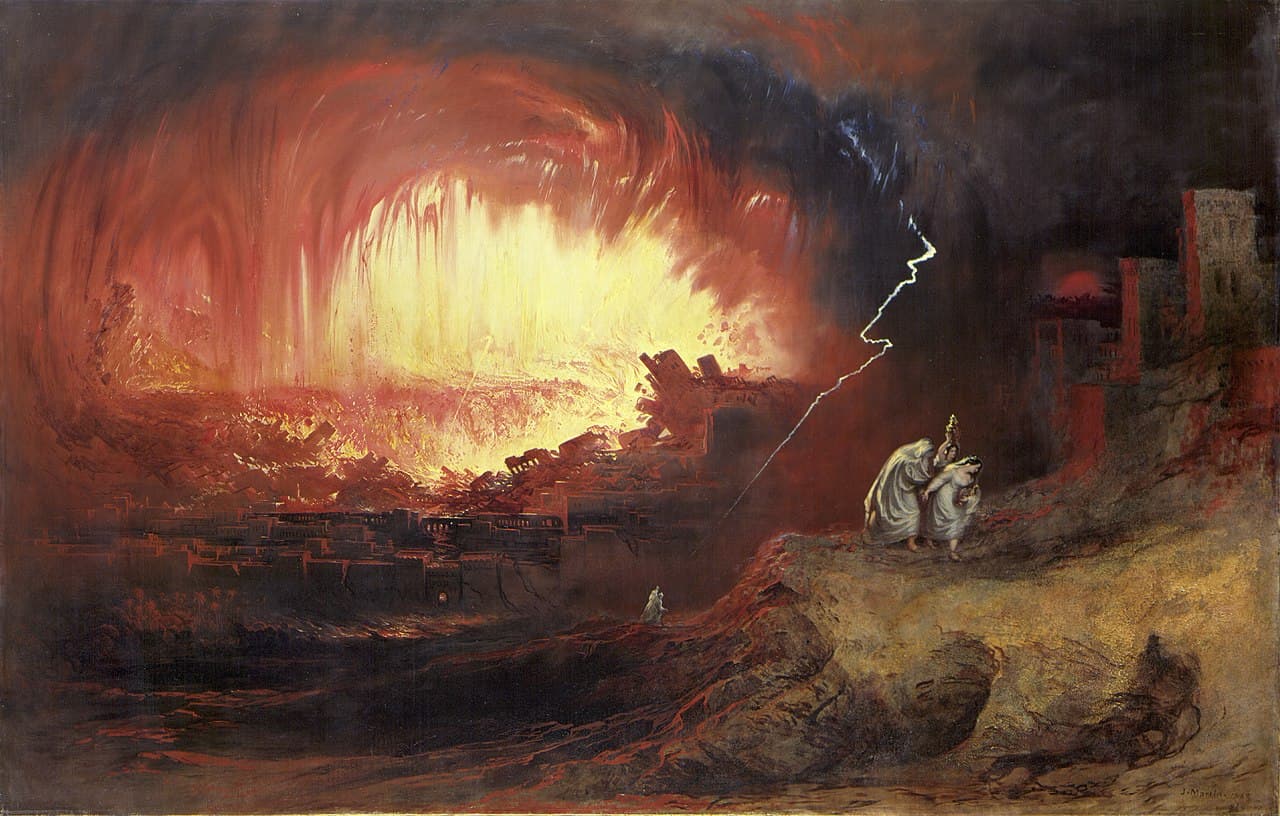
In Genesis 18:16-19:29, God reveals to Abraham His plan to destroy Sodom and Gomorrah due to their grievous sin. Abraham intercedes, negotiating with God to spare the cities if righteous people are found. Two angels visit Sodom, and Lot offers them hospitality. The cities are ultimately destroyed, but Lot and his family are saved, though Lot's wife turns into a pillar of salt for looking back.
Summary
The passage from Genesis describes the events leading to the destruction of Sodom and Gomorrah. It begins with God and Abraham discussing the fate of these cities. God reveals His intent to investigate the cities because the outcry against them is due to their grievous sin (Genesis 18:20). Abraham intercedes, asking if God will spare the cities if righteous people are found there. Abraham negotiates with God, who agrees not to destroy the city if ten righteous people can be found (Genesis 18:26-32).
Two angels arrive in Sodom in the evening, where Lot, Abraham's nephew, greets them and insists they stay at his house (Genesis 19:1-3). That night, the men of Sodom surround Lot's house and demand the visitors be brought out to them. Lot offers his daughters instead, but the crowd refuses and attempts to break in. The angels pull Lot back inside, strike the crowd with blindness, and warn Lot to gather his family and flee because they will destroy the city (Genesis 19:4-13). Lot's sons-in-law dismiss the warning. The next morning, the angels urge Lot, his wife, and daughters to leave. As they flee, Lot's wife looks back and becomes a pillar of salt (Genesis 19:15-26).
The passage concludes with the destruction of Sodom and Gomorrah by fire and brimstone from the heavens (Genesis 19:24-25). Lot reaches safety in the city of Zoar, and Abraham observes the destruction from a distance (Genesis 19:27-28). The text notes that God remembered Abraham and spared Lot from the destruction, emphasizing Abraham's relationship with God and his intercession for the cities (Genesis 19:29). The passage on Sodom and Gomorrah in Genesis primarily establishes the theme of divine judgment against pervasive wickedness. The text emphasizes that the cities faced destruction due to grievous sins, which had provoked outcry (Genesis 18:20). The narrative shows God's willingness to spare the cities if a small number of righteous people could be found, revealing a tension between justice and mercy. The lack of righteousness led to the cities' obliteration, illustrating the seriousness of their sins and the concept of collective responsibility. This passage matters because it highlights the moral expectations God holds for societies and the severe consequences of failing to meet them.
Chiastic structure
ⓘGenesis 18:23-26
“Wilt thou also destroy the righteous with the wicked?... If I find in Sodom fifty righteous within the city, then I will spare all the place for their sakes.”
Genesis 18:25
“Shall not the Judge of all the earth do right?”
Genesis 19:29
“God remembered Abraham, and sent Lot out of the midst of the overthrow, when he overthrew the cities in the which Lot dwelt.”
Both A and A' involve the theme of divine judgment and mercy, with Abraham's intercession and God's ultimate action of saving Lot.
Interpretation and theological stakes
Continue reading with a Scholar plan
Upgrade to Scholar