Bible study / Biblical figures / Abraham

Old Testament

Abraham

Patriarchal period (c. 2000 BC)

covenantfaithobediencepromiseelection

The Story of Abraham

Abraham, originally Abram, emerges from the ancient Mesopotamian city of Ur during a time dominated by city-states and tribal confederations. His world, marked by complex social structures and polytheistic beliefs, shifts dramatically when he receives a divine call. In Genesis 12:1-3, God instructs him to leave his homeland with a promise: "I will make of you a great nation." This call uproots Abram from his familiar surroundings, sending him and his wife Sarah into the unknown lands of Canaan, a region populated by Canaanite tribes, and eventually into Egypt during a famine. This divine directive sets the stage for a life defined by faith and the pursuit of a promise that seems implausible.

The narrative takes a surprising turn as Abraham, in his pursuit of the divine promise, faces a profound test of faith. In Genesis 22:9-12, God commands him to sacrifice his son Isaac, the very child through whom God's covenant was to be fulfilled. Isaac's birth had been a miraculous event, coming to Sarah in her old age, a testament to God's power to fulfill promises against all odds. The tension escalates as Abraham prepares to carry out this heart-wrenching command. His obedience, despite the apparent contradiction of sacrificing the child of promise, underscores a deep trust in God's plan. The intervention of an angel halts the sacrifice, offering a ram as a substitute, and reaffirms the covenant with Abraham, ensuring the continuation of his lineage through Isaac.

With the birth of Isaac and the dramatic episode on Mount Moriah, the narrative shifts towards the establishment of a lineage. Genesis 21:1-3 recounts Isaac's birth, fulfilling God's promise to Abraham and Sarah. This event not only solidifies the covenant but also sets the stage for future generations. The binding of Isaac and his subsequent release mark a pivotal moment, demonstrating that faith and divine intervention can coexist with seemingly contradictory demands. This episode cements Abraham's role as a patriarch whose actions shape the destiny of his descendants, including those beyond the immediate covenant line, such as Ishmael, the son of Hagar, who also becomes a significant figure in his own right.

Abraham's story concludes with his death at the age of 175, as recorded in Genesis 25:7-10. He is buried by his sons Isaac and Ishmael in the cave of Machpelah, a final act that unites his divided family. This burial site becomes a symbol of his enduring legacy. Abraham's influence extends beyond his life, as he is mentioned in the New Testament, underscoring his foundational role in the lineage of Israel. Matthew 1:1 lists him in the genealogy of Jesus, linking the patriarch's faith journey to the broader narrative of redemption. Abraham's life, marked by obedience and faith, leaves a lasting imprint on the biblical narrative, reverberating through the ages in both Jewish and Christian traditions.

Who Was Abraham

The Hebrew word אֱמוּנָה (emunah), meaning "faithfulness," encapsulates Abraham's defining characteristic. This term, found in Genesis 15:6, describes Abraham's belief in God's promise to make him a great nation, an act counted to him as righteousness. Yet, emunah is more than mere belief; it embodies a steadfast commitment, as seen in Abraham's actions throughout Genesis 12-25. When God commands Abraham to leave his homeland in Genesis 12:1-4, he obeys without question, venturing into the unknown with only divine assurance as his guide. Abraham's hospitality in Genesis 18:1-8, where he eagerly tends to three visitors at Mamre, further underscores his devotion to the divine and his unwavering adherence to God's covenant. Even his decision to intercede for Sodom in Genesis 18:22-33 reveals an intricate blend of faith and compassion.
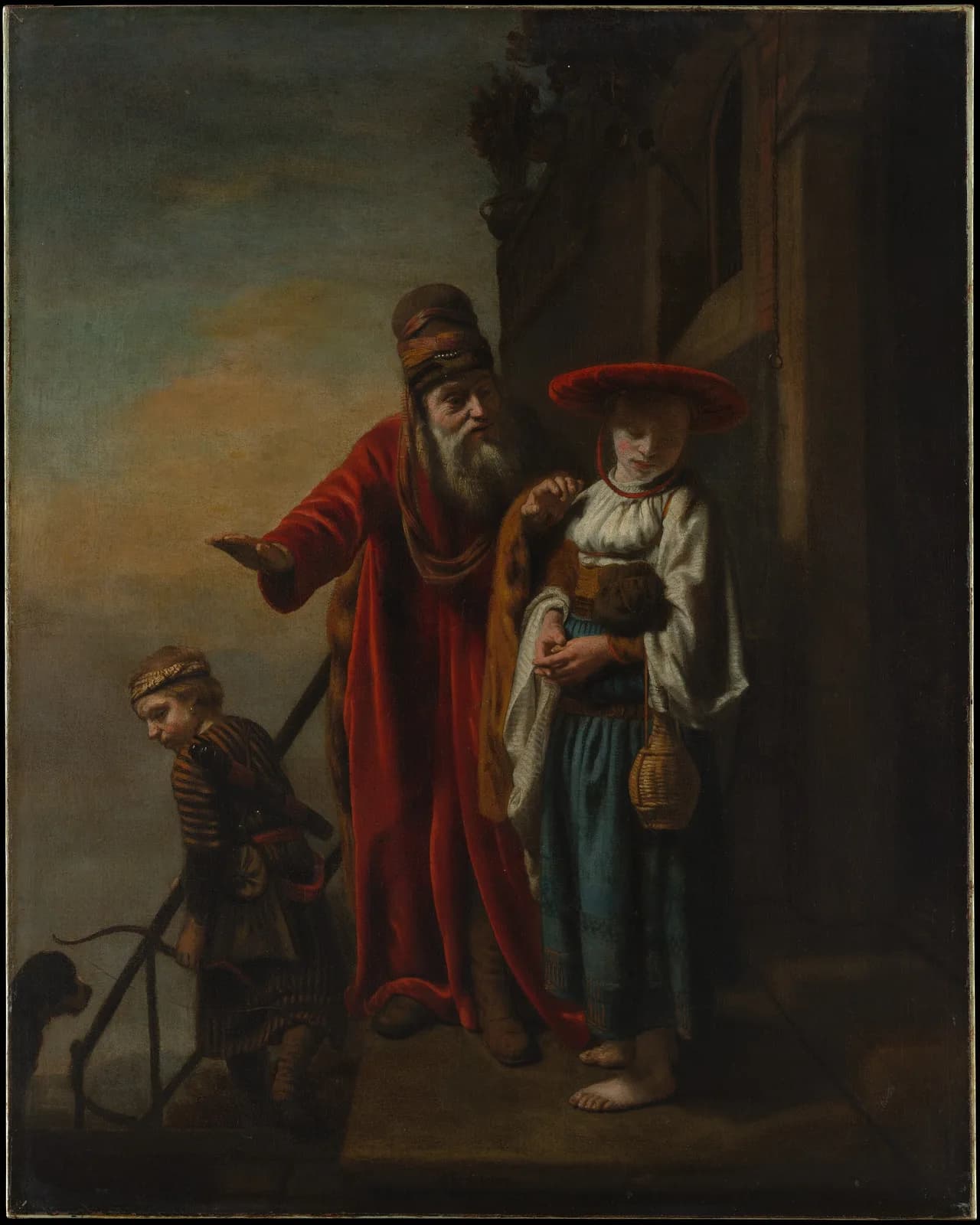
Abraham's life is marked by pivotal decisions that illuminate the depth of his faith. When God instructs him to leave Haran for Canaan (Genesis 12:1-4), Abraham's readiness to forsake familiar comforts for a promised land he has never seen highlights his profound trust in divine promises. This faith is starkly contrasted with his nephew Lot, who chooses the fertile plains of Jordan based on immediate gain (Genesis 13:10-11). In Genesis 22:1-10, the near-sacrifice of Isaac reveals Abraham's ultimate obedience, as he prepares to relinquish the very promise God gave him. This act of faith, unthinkable to many, underscores a profound trust in God's plan, however incomprehensible it might appear. Similarly, the decision to send Hagar and Ishmael away in Genesis 21:9-14, a response to Sarah's demands and divine assurance, reflects Abraham's struggle with familial tensions while remaining faithful to God's broader promises.

Popular readings often cast Abraham solely as a paragon of unwavering faith, but this view overlooks his moments of doubt and fear. For instance, in Genesis 12:11-13, Abraham deceives Pharaoh by claiming Sarah is his sister, driven by fear for his life. This episode reveals a more complex portrait of Abraham, a man who grapples with human frailties despite his overarching faith. His journey is not one of flawless piety but rather of a dynamic relationship with God, marked by both faith and faltering. The biblical narrative presents Abraham as a figure who embodies emunah not through perfection but through an enduring commitment to God, even amid uncertainty and fear. This nuanced depiction invites a deeper appreciation of Abraham's character beyond simplistic labels.

The Significance of Abraham

Abraham's willingness to sacrifice Isaac, as recounted in Genesis 22, highlights a profound theological claim: true faith involves radical obedience, even when it seems to contradict God's promises. This narrative is not merely a test of personal devotion but a pivotal moment in the unfolding of the covenant, or "בְּרִית" (berit), that God establishes with Abraham. This covenant, initiated in Genesis 12:1-3, promises Abraham land, numerous descendants, and that through him all nations on earth will be blessed. This unconditional promise forms the backbone of Israel's identity and God's broader redemptive strategy, weaving through the entirety of the biblical narrative.

Abraham's story is laden with themes of faith, obedience, and promise. Genesis 15:6 captures Abraham's faith succinctly: "And he believed the LORD, and he counted it to him as righteousness." Here, faith is depicted as trust in God's promises without tangible evidence, a concept later echoed in Romans 4:3. Obedience is similarly underscored, illustrated by Abraham's immediate response to God's command to leave his homeland and his readiness to sacrifice Isaac (Genesis 22:2-3). These acts demonstrate that obedience is not merely a complement to faith but an integral part of it. The theme of promise is reiterated in God's assurances of numerous descendants and the land of Canaan (Genesis 17:4-8), setting the stage for the eventual formation of the nation of Israel. Typologically, Abraham's near-sacrifice of Isaac prefigures the Father’s willingness to offer His Son, drawing a parallel to the New Testament narrative of Christ's sacrifice (John 1:29).

Beyond the immediate story, Abraham's role in the biblical narrative widens to include the gentile dimension and the Messianic line. The promise that "all peoples on earth will be blessed through you" (Genesis 12:3) not only foreshadows the inclusion of Gentiles in God's plan but also solidifies Abraham as a universal patriarch. This is reinforced by his appearance in the Messianic genealogy in Matthew 1:1, emphasizing the fulfillment of the promise through Jesus Christ. Abraham's legacy as the "father of many nations" finds theological resonance in Galatians 3:7-9, where believers are deemed his spiritual descendants. This intersection of narratives positions Abraham at a crucial juncture, bridging the promises of the Old Testament with the realities of the New, culminating in a lineage that ultimately leads to Christ.

The Legacy of Abraham

In Jewish tradition, Abraham is the quintessential figure of faith and obedience, deeply embedded in the spiritual and liturgical life of the community. The Talmud, particularly in Sanhedrin 89b, discusses the Akedah, or the Binding of Isaac, exploring the depths of Abraham's commitment to God. This narrative underscores his unwavering trust and obedience, even in the face of profound personal sacrifice. The Amidah prayer, recited daily, invokes Abraham, emphasizing his role in establishing the covenant between God and the Jewish people. During the Passover Seder, he is remembered as a symbol of the covenantal promises made by God, highlighting his foundational role in the Jewish narrative. The Torah readings for Rosh Hashanah include the story of the Akedah, reinforcing his status as the archetype of faith during one of the most significant times in the Jewish liturgical calendar.

Christian interpreters have long viewed Abraham as a model of faith, a perspective deeply rooted in the writings of early church fathers and reformers. Augustine of Hippo saw Abraham as a spiritual ancestor of all Christians, emphasizing the universality of faith over lineage. During the Reformation, Martin Luther seized upon Paul's epistle to the Romans, particularly Romans 4, to argue for justification by faith, using Abraham as the exemplar who believed God and was deemed righteous. This interpretation positioned Abraham not only as a patriarch but as a precursor to Christ, especially through the typology of the near-sacrifice of Isaac, which prefigures the crucifixion. The New Testament further cements his role in the Christian imagination, with Hebrews 11 and James 2:23 citing him as a paragon of faith and righteousness. Abraham's narrative, therefore, extends beyond a mere historical account, becoming a theological cornerstone for understanding faith in the Christian tradition.

Beyond religious texts, Abraham's legacy permeates art, literature, and modern culture. John Milton's "Paradise Lost" features him as a representation of divine election and obedience, while Marc Chagall's paintings vividly capture scenes from his life, such as the Akedah, infusing them with emotional and spiritual depth. The term "Abrahamic religions" reflects his role as a shared patriarch in Judaism, Christianity, and Islam, highlighting his significance in interfaith dialogue. In secular contexts, Abraham's journey from Ur to Canaan resonates with themes of migration, identity, and belonging, striking a chord with contemporary audiences who grapple with issues of displacement and the quest for a promised future. His narrative embodies the timeless human search for purpose and connection, making Abraham a figure of enduring relevance across time and culture.