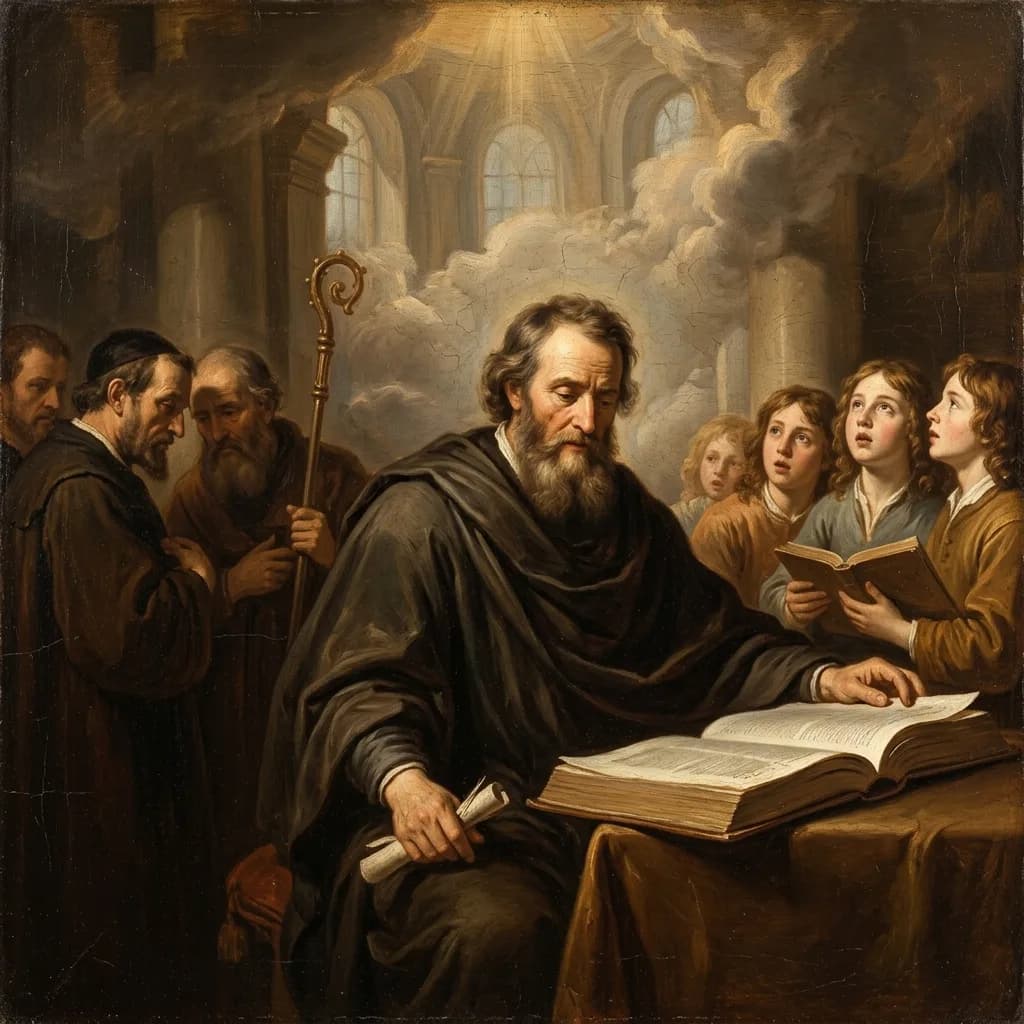
Predestination
Theology · Updated August 15, 2026
Overview
Debates over predestination have led to the formation of entirely new branches of Christianity. The question of whether God has predetermined who will be saved and who will not has been a major theological issue, stirring passionate arguments and dividing believers. During the Reformation, a period marked by religious upheaval and the birth of Protestantism, Predestination became a lightning rod for disputes. Different groups sought to define the nature of God's will and human freedom, leading to the establishment of distinct denominations that persist to this day.
Augustine of Hippo in the 5th century emphasized God's control over salvation. However, in the 16th century, John Calvin took these ideas further, embedding Predestination as a key doctrine in what became known as Calvinism. Calvin's interpretation suggested that God had already chosen who would be saved, a belief that strongly influenced Protestant thought. The controversy intensified in the early 17th century when Jacob Arminius, a Dutch theologian, challenged this view by advocating for human free will in salvation. This opposition led to the Synod of Dort (1618-1619), a council in the Netherlands, which firmly backed Calvinist Predestination and dismissed Arminianism. In 1646, the Westminster Confession of Faith further cemented the Calvinist stance, becoming a cornerstone for many Reformed churches.
Today, the echoes of these historical debates continue to resonate. While some Christian denominations have embraced the Calvinist view, others, like those following Arminianism, emphasize the role of human choice. This theological divide remains a defining characteristic of many Christian communities, influencing how they interpret scripture and understand the nature of Salvation. The discussion over predestination is far from settled, as it continues to be a topic in theological discussions, reflecting the enduring complexity of reconciling divine sovereignty with human freedom.
The debate over predestination has been so intense that it led to the formation of entirely new branches of Christianity.
Why Fighting Over Predestination Was a Big Deal
The debate over predestination concerned the authority and identity of the church and its followers. Who held the power to define salvation? Was it an unchangeable divine decree, or did human choice play a role? The debate extended beyond intellectual circles, affecting church authority and individual believers' sense of agency. The outcome would determine not just the nature of salvation but who had the right to interpret the relationship between God and humanity, a question tied to both spiritual and institutional power.
In the Netherlands from 1618 to 1619, the Synod of Dort became the battleground for these clashing ideas. On one side stood the Calvinists, led by figures like John Calvin, who argued that predestination was solely God's sovereign choice, independent of human action. They sought to uphold God's absolute authority and maintain doctrinal purity. Opposing them were the Arminians, inspired by Jacobus Arminius, who believed that God's foreknowledge of human decisions influenced Salvation, advocating for human free will and a just understanding of God's nature. The Synod aimed to settle these disputes. The Calvinists emerged victorious, with the Canons of Dort affirming their doctrines and sidelining Arminianism within the Dutch church, thereby shaping the future of Reformed Christianity.
Despite the decisive outcome of the Synod of Dort, the debate over Predestination never reached a conclusion. The underlying questions about divine justice and human freedom remain unresolved, as they touch on aspects of faith that different Christian denominations interpret differently. Various Christian communities still grapple with these theological questions. Today, the divide persists, with some denominations embracing Calvinist views while others, influenced by Arminian thought, emphasize human choice.
Continue reading with a Scholar plan
Upgrade to ScholarCommon questions
- What is predestination in Christianity?
- Predestination in Christianity is the doctrine that God has foreordained all events and outcomes, particularly concerning the salvation of some individuals and not others. It suggests that God has predetermined who will be saved and who will not.
- How does predestination differ from free will?
- Predestination asserts that God has already determined the fate of every soul, while free will emphasizes human ability to choose salvation. The debate centers on whether divine sovereignty or human choice ultimately decides salvation.
- Why is predestination a controversial topic among Christians?
- Predestination is controversial because it challenges the balance between God's sovereignty and human free will. It raises questions about divine justice, the nature of salvation, and who has the authority to interpret these theological concepts.
- How is predestination explained in the Bible?
- Predestination is discussed in several biblical passages, notably in Romans 8:29-30 and Ephesians 1:4-5, which speak of God's foreknowledge and choosing of individuals for salvation. Interpretations vary, leading to different theological views.
- What did John Calvin teach about predestination?
- John Calvin taught that predestination is God's eternal decree, where He has chosen some people for salvation and others for damnation. This doctrine became a central tenet of Calvinism, emphasizing God's absolute sovereignty.
- How does predestination relate to salvation?
- Predestination relates to salvation by asserting that God has predetermined who will be saved, independent of human actions. This belief shapes how different Christian denominations understand the process and assurance of salvation.
- What is the difference between single and double predestination?
- Single predestination holds that God has chosen some for salvation, while double predestination asserts that God has also determined others for damnation. The latter view emphasizes God's sovereignty over both salvation and condemnation.
- How do Catholic and Protestant views on predestination differ?
- Catholic views on predestination generally incorporate human free will and cooperation with God's grace, while many Protestant views, especially Calvinist, emphasize God's sovereign choice without human influence. These differences reflect broader theological distinctions.
- What role does predestination play in Reformed theology?
- In Reformed theology, predestination is a fundamental doctrine that underscores God's sovereignty and grace in salvation. It is central to the belief that God has chosen certain individuals for salvation before the foundation of the world.
- How did Augustine influence the doctrine of predestination?
- Augustine of Hippo influenced the doctrine of predestination by emphasizing God's control over salvation and the necessity of divine grace. His ideas laid the groundwork for later theological developments, particularly in Calvinism.
- What is the purpose of predestination according to Christian theology?
- The purpose of predestination in Christian theology is to demonstrate God's sovereignty and grace in salvation. It serves to assure believers of their salvation and highlight the divine plan and purpose in the redemption of humanity.
- How does predestination impact the concept of God's sovereignty?
- Predestination underscores God's sovereignty by affirming His ultimate authority and control over all aspects of salvation. It highlights the belief that God's will is decisive in determining the eternal destiny of individuals.
- Why do some Christians reject the idea of predestination?
- Some Christians reject predestination because they believe it undermines human free will and responsibility. They argue that it portrays God as unjust and contradicts the biblical message of universal salvation through faith.
- How is predestination viewed in other religions outside Christianity?
- Predestination is not a central doctrine in most other religions, though some, like Islam, have concepts of divine decree and destiny. These views vary widely and often differ significantly from the Christian understanding of predestination.