Bible study / Biblical figures / Isaac

Old Testament

Isaac

Patriarchal period (c. 1900 BC)

covenantsacrificeprovidenceinheritance

The Story of Isaac

Isaac, the son of Abraham and Sarah, emerged as a pivotal figure in the Patriarchal period, around 1900 BC, in the region of Canaan. This era was shaped by the nomadic movements of Abraham's family through lands like Beersheba and Hebron. Isaac's birth, recorded in Genesis 21:1-3, was a miraculous fulfillment of God's promise to the elderly couple, establishing him as the heir to God's covenant with Abraham. However, the tranquility of Isaac's early life was shattered by a divine test: the Akedah, or the binding of Isaac, where Abraham was commanded to offer his son as a sacrifice (Genesis 22:9-12). This moment not only tested Abraham's faith but also highlighted Isaac's role as a willing participant, setting the stage for his own spiritual journey.

The binding of Isaac stands as a moment of profound tension and faith. Abraham obediently built an altar and bound Isaac, preparing to sacrifice him, as narrated in Genesis 22:9. The scene is vivid and harrowing, yet Isaac's compliance is often underappreciated. The text does not record any resistance from Isaac, suggesting a deep trust in his father and God. The intervention of an angel at the last moment halted the sacrifice, emphasizing the gravity of the test. This event underscored the covenant's continuity through Isaac, who, despite the near-sacrifice, remained the chosen bearer of God's promise. The dynamics of faith and obedience at Mount Moriah set the tone for Isaac's life, marked now by both divine favor and familial complexity.

Isaac's life took another significant turn with his marriage to Rebekah, brought from Abraham's homeland to ensure the covenant lineage, as detailed in Genesis 24:67. This union produced twins, Esau and Jacob, whose births were foretold with a prophecy: the older would serve the younger (Genesis 25:24-26). The narrative's tension heightens as Isaac, now a father, becomes the center of family intrigue. The blessing he intended for Esau was deceptively secured by Jacob, orchestrated by Rebekah. Genesis 27:22-29 captures this deception, altering the trajectory of the covenant. Isaac's blessing of Jacob, albeit unwittingly, reshaped the future of his descendants and demonstrated the unpredictable nature of divine election.

In the twilight of his life, Isaac experienced a reaffirmation of the covenant. Genesis 26:24 records God's promise to bless him with numerous descendants, echoing the assurances given to Abraham. Isaac's legacy extends beyond Genesis, with mentions in the New Testament, such as in Hebrews 11:17-19, Romans 9:7, and Matthew 1:2, underscoring his role in the lineage leading to Christ. Isaac's life, marked by moments of sacrifice and blessing, laid a foundational stone in the unfolding biblical narrative, with his story reverberating through the generations that followed.

Who Was Isaac

Isaac’s name in Hebrew, Yitzhak (יִצְחָק), is derived from the root word "tsachaq" (צָחַק), meaning "to laugh." This word first appears in Genesis 21:6, when Sarah laughs with joy at Isaac's birth, a child born to her against all odds. Yet, Isaac’s life is marked by contrasts to this laughter, unfolding instead in moments of quiet obedience and unassuming faith. In Genesis 22:9, Isaac allows himself to be bound by his father, Abraham, on the altar, demonstrating a profound submission. His life is less about the grand gestures of his father or the cunning maneuvers of his son, Jacob, and more about a steady, unyielding faith in the covenant God made with Abraham. Isaac seems to embody peace, as seen when he avoids conflict over disputed wells with the Philistines in Genesis 26:20-22. His actions suggest a man who embraces his role in the divine promise not with loud declarations, but with quiet, enduring trust.
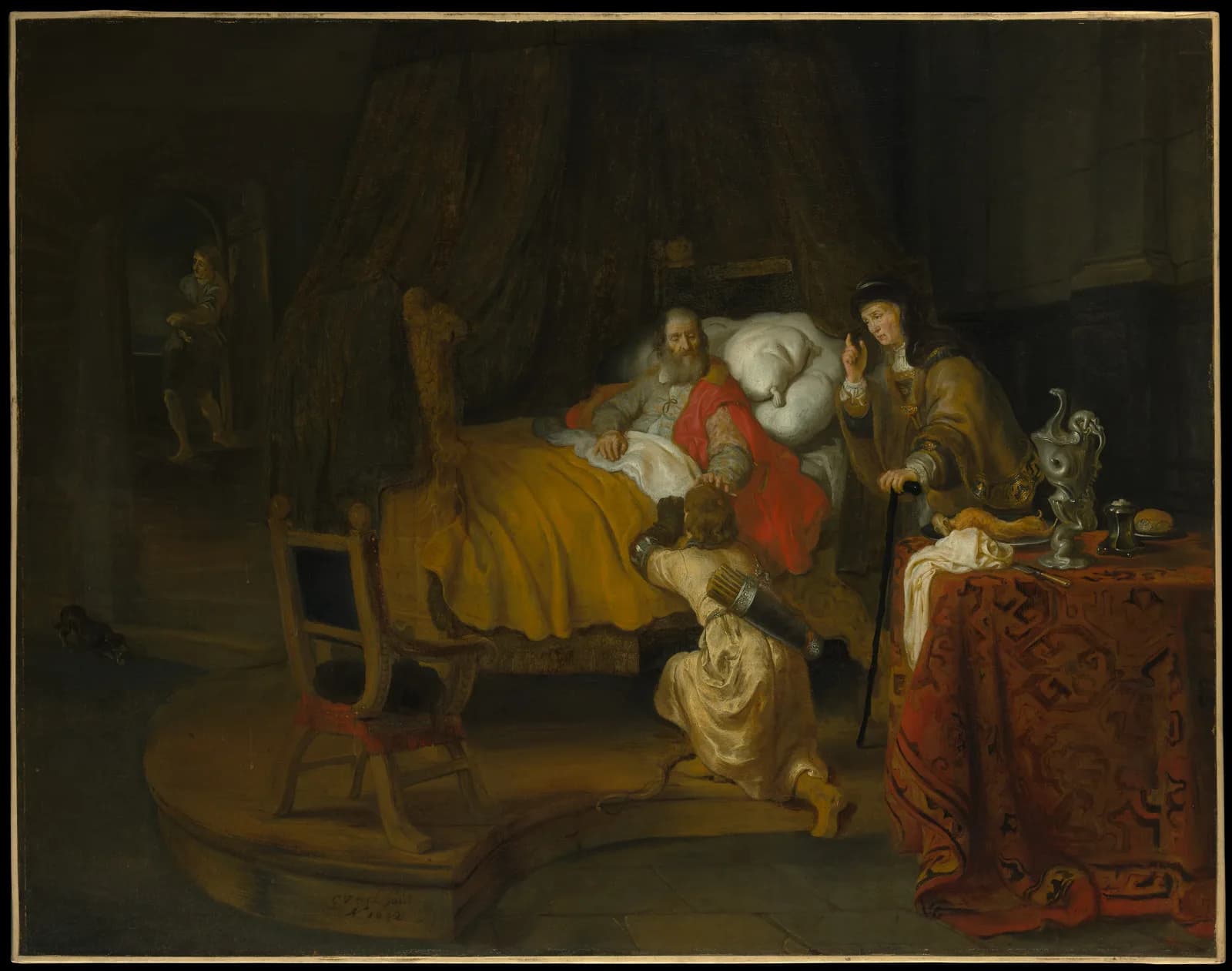
Isaac’s choices, or often lack thereof, reveal the depth of his character. His willingness to be sacrificed by Abraham in Genesis 22:9 shows a rare submission and trust in both his earthly and heavenly fathers. This passive choice contrasts sharply with Jacob’s active cunning, especially in Genesis 27:23, when Isaac is deceived into blessing Jacob instead of Esau. Isaac’s vulnerability in this blessing incident highlights the irreversible nature of spoken blessings within the cultural context and underscores his role as a vessel through which the covenant continues. While Jacob’s actions are marked by cleverness and ambition, Isaac’s life is a testament to reliance on divine providence. His peaceful nature is further evidenced in Genesis 26:24, where he receives reassurance directly from God, "Fear not, for I am with you and will bless you." Isaac’s decisions, steeped in faith and trust, stand in stark relief against the more active and often contentious paths chosen by those around him.

In popular readings, Isaac is often overshadowed by the towering figures of Abraham and Jacob, perceived merely as a bridge between two more dynamic patriarchs. This perspective flattens his role, ignoring the significant ways he sustains the covenant. Modern interpretations sometimes miss the subtleties of Isaac’s story, focusing instead on more dramatic narratives. Yet, the biblical text shows a man whose life exemplifies the quiet strength required to uphold a divine promise. His passive demeanor does not denote weakness but rather a profound understanding of his role within the lineage of the covenant. Through his experiences, from the near-sacrifice to the blessing of Jacob, Isaac’s story enriches the tapestry of the patriarchal narratives, weaving in themes of trust, faith, and divine providence that are essential to the unfolding story of Israel.

The Significance of Isaac

Isaac's near-sacrifice in Genesis 22 underscores the radical obedience and faith required in God's covenant relationship, prefiguring the ultimate sacrifice in Christian theology. This episode, known as the Akedah or the Binding of Isaac, is pivotal in showcasing the theme of divine providence. The Hebrew term יְהוָה יִרְאֶה (YHWH Yir'eh), meaning "The LORD Will Provide," is used by Abraham in Genesis 22:14 after a ram is provided as a substitute for Isaac. This term encapsulates the belief that God sees and provides for His people, even in seemingly impossible situations. The narrative is not merely a test of Abraham's faith but a profound demonstration of God's faithfulness to His covenant promises, a theme echoed in Genesis 26:24 when God assures Isaac of His presence and blessing as He did with Abraham.

The story of Isaac weaves together several critical theological themes: covenant, sacrifice, and inheritance. Isaac is the child through whom the divine covenant with Abraham is continued, as noted in Genesis 17:19. This covenantal promise underscores God's commitment to Abraham's lineage, ensuring that his descendants would be numerous and blessed. The theme of sacrifice is vividly illustrated in Genesis 22:2, where God commands Abraham to offer Isaac as a burnt offering, highlighting the depth of faith and obedience required by God. While the narrative resolves with Isaac's life spared, the event foreshadows the concept of substitutionary sacrifice, a typological element later echoed in the New Testament's portrayal of Christ's crucifixion. Isaac's role as Abraham's heir also reinforces the theme of inheritance, as seen in Genesis 25:5, where Abraham bequeaths all he has to Isaac, affirming the continuation of the divine promise through him.

Isaac's inclusion in the genealogy of Jesus, as recorded in Matthew 1:2, places him at a crucial juncture in the biblical narrative, linking the patriarchal promises to the Messianic fulfillment in Christ. This connection underscores the continuity of God's salvific plan across generations, emphasizing the fulfillment of the Abrahamic covenant. Despite his relatively passive role in the narratives compared to his father and sons, Isaac is a vital figure in God's unfolding plan. His life, marked by divine encounters and familial tensions, serves as a bridge between Abraham's pioneering faith and the complex destiny of his twin sons, Jacob and Esau. In Genesis 26, Isaac's journey to Gerar and his subsequent interactions with Abimelech further illustrate his role in maintaining the covenantal promise, solidifying his place within the broader tapestry of biblical history.

The Legacy of Isaac

In Jewish tradition, Isaac is a central patriarchal figure, and his story, particularly the Akedah or Binding of Isaac, holds significant theological weight. Genesis 22 recounts how Isaac was nearly sacrificed by his father, Abraham, an event commemorated during Rosh Hashanah with a reading from the Torah. This narrative underscores Isaac's willingness to submit to God's will, a theme explored in the Talmud, specifically in Ta'anit 4a, which highlights Isaac's role in the merit of the patriarchs. The Midrash Rabbah (Genesis Rabbah 56:3) delves deeper into this submission, portraying Isaac as a willing participant in his near-sacrifice, thus embodying ultimate faith and obedience. Jewish liturgy often reflects on Isaac's life, emphasizing themes of covenant and divine providence, with the Akedah serving as a poignant reminder of faith's complexities and the nature of divine promises.

Christian interpretations of Isaac have often revolved around typology, where Isaac prefigures Christ's own sacrifice. Early Church Fathers, such as Augustine, explored this typology in works like "City of God," where he draws parallels between Isaac's willingness to be sacrificed and Christ's obedience unto death. Augustine saw Isaac as a foreshadowing of Jesus, a symbol of faith and God's promises. During the Reformation, theologians continued to develop this typological view, using Isaac to discuss themes of sacrifice and faith, crucial elements in Christian theology. The New Testament also references Isaac in Hebrews 11:17-19, where his inclusion in the "Hall of Faith" reiterates the significance of his story in understanding faith and obedience within Christian doctrine.

Beyond religious texts, Isaac's story has permeated various cultural and artistic expressions. Caravaggio's "Sacrifice of Isaac" is a renowned depiction of the dramatic moment when Abraham prepares to sacrifice his son, capturing the tension and gravity of the narrative. In literature, Søren Kierkegaard's "Fear and Trembling" examines the ethical implications of Isaac's near-sacrifice, probing the complexities of faith and morality. The phrase "binding of Isaac" has even transcended its biblical origins, often used metaphorically in discussions about sacrifice and obedience. In contemporary discourse, Isaac's story touches on themes of faith and the ethical limits of religious devotion, prompting reflection on authority and personal belief. This enduring narrative continues to provoke thought and debate, illustrating the profound impact of Isaac's legacy across time and cultures.