Genesis 22:1-19 · Genesis · Updated April 25, 2026
Binding of Isaac
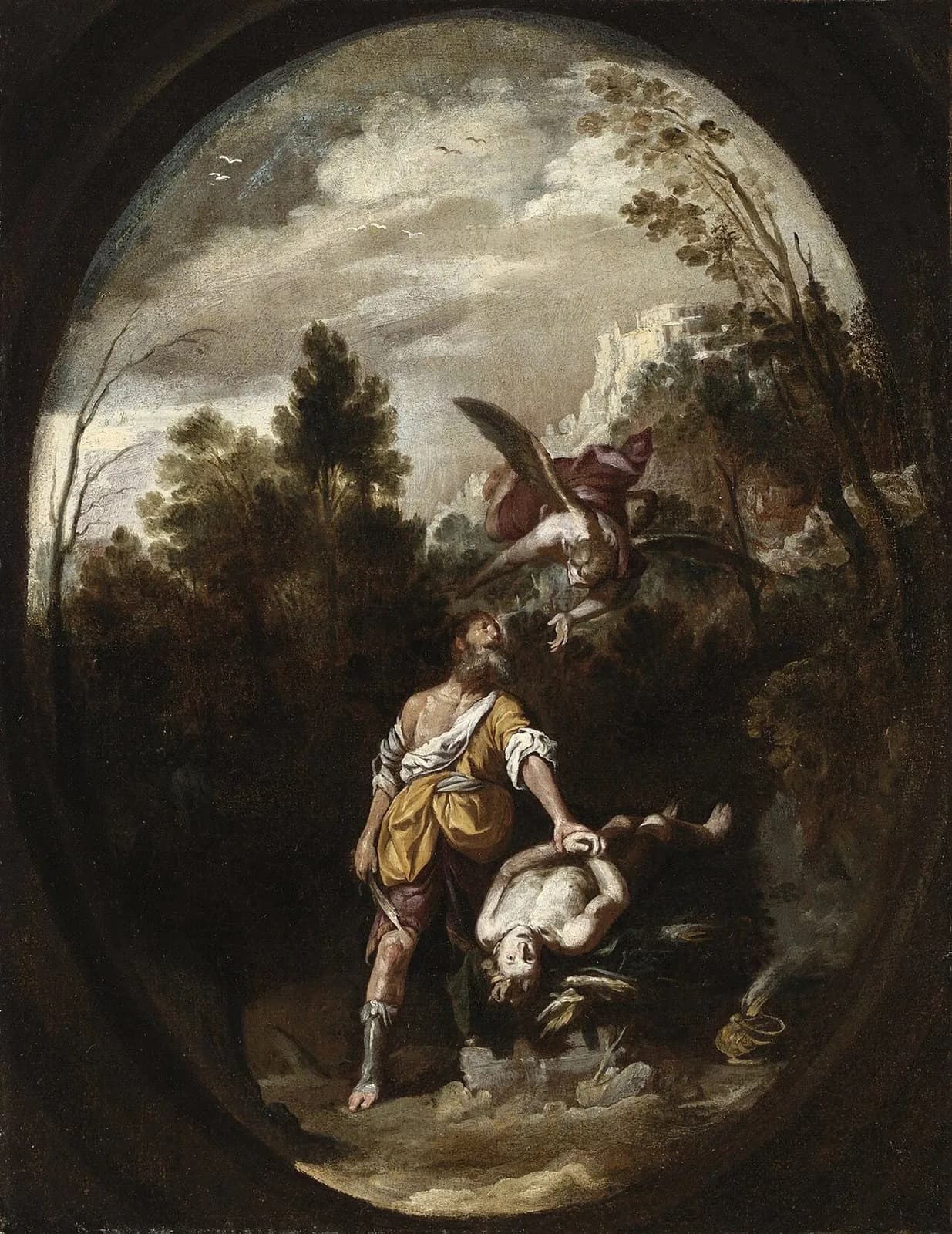
God tests Abraham by instructing him to sacrifice his son Isaac in the land of Moriah. As Abraham is about to slay Isaac, an angel stops him, and a ram is provided as a substitute offering. God reaffirms His covenant with Abraham, promising blessings and numerous descendants.
Summary
The Binding of Isaac is a passage in Genesis 22:1-19, where God tests Abraham's faith. Abraham, a key patriarch in the Bible, receives God's instruction to sacrifice his beloved son, Isaac, in the land of Moriah (22:2). This command follows God's promise to Abraham that Isaac would be the heir through whom his descendants would be numerous. Abraham immediately obeys; he rises early, prepares for the journey, and sets off with Isaac and two servants toward the designated mountain (22:3).
Upon reaching the mountain on the third day, Abraham tells his servants to stay behind while he and Isaac go to worship (22:5). Isaac carries the wood for the offering, while Abraham carries the fire and knife (22:6). As they walk together, Isaac questions the absence of a lamb for the sacrifice, to which Abraham responds that God will provide one (22:7-8). Upon arrival at the place God indicated, Abraham builds an altar, arranges the wood, and binds Isaac to it (22:9). Just as Abraham is about to kill his son, the angel of the Lord intervenes, stopping him and acknowledging Abraham's fear of God because he did not withhold his son (22:10-12). Abraham then sees a ram caught in a thicket and offers it as a burnt offering instead of Isaac (22:13).
The passage concludes with the angel of the Lord speaking again to Abraham, reaffirming God's promise to bless him and multiply his descendants like the stars in the sky and the sand on the seashore (22:17). God declares that Abraham's offspring will conquer their enemies and that all nations will be blessed through his seed because of his obedience (22:18). Abraham returns to his servants, and they travel back to Beersheba, where he resides (22:19). The passage emphasizes the importance of Abraham's faith and obedience to God. The Binding of Isaac in Genesis 22:1-19 primarily establishes the theme of faith and obedience to God's command. The narrative centers on Abraham's willingness to sacrifice his beloved son, Isaac, as a demonstration of his fear of God. The passage concludes with God reaffirming His covenant with Abraham, promising abundant blessings and the success of his descendants (22:17-18). This test of faith is crucial, as it emphasizes the importance of absolute trust in divine instructions, no matter how difficult they may seem.
Chiastic structure
ⓘGenesis 22:2
“Take now thy son, thine only Isaac, whom thou lovest, and get thee into the land of Moriah; and offer him there for a burnt offering”
Genesis 22:12-13
“Lay not thine hand upon the lad... Abraham lifted up his eyes, and looked, and behold behind him a ram caught in a thicket”
Genesis 22:16-18
“Because thou hast done this thing, and hast not withheld thy son, thine only... in blessing I will bless thee”
A and A' both involve the theme of God's command regarding Isaac and Abraham's response, highlighting obedience and divine provision.
Interpretation and theological stakes
Continue reading with a Scholar plan
Upgrade to Scholar