Acts 7:54-60 · Acts · Updated April 25, 2026
Stephen's Martyrdom
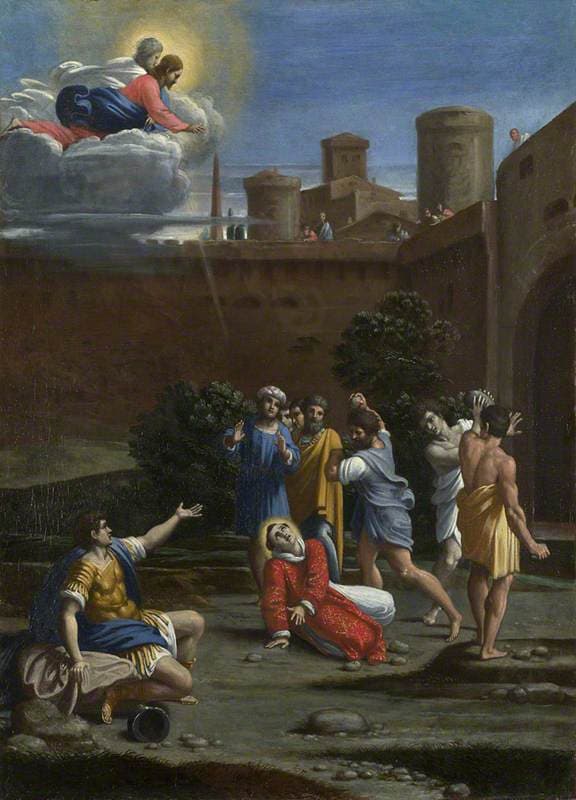
Stephen, filled with the Holy Spirit, sees a vision of Jesus standing at the right hand of God. The crowd, enraged by his vision, stones him to death, while Stephen prays for Jesus to receive his spirit and not to hold the sin against his attackers.
Summary
Acts 7:54-60 describes the martyrdom of Stephen, a significant event in early Christianity. Stephen, a deacon in the early church, had been speaking to the Sanhedrin, the Jewish council, about Jesus and the history of Israel. His speech provoked a strong reaction from the council members. The passage begins with the council members angered by Stephen's words, expressing their rage by gnashing their teeth at him (7:54).
As the council reacts with hostility, Stephen, filled with the Holy Spirit, gazes into Heaven and sees a vision of God's glory with Jesus standing at His right hand (7:55). He declares this vision to the council, saying, "Behold, I see the heavens opened, and the Son of man standing on the right hand of God" (7:56). This declaration incites the council further, and they cry out loudly, cover their ears, and rush at him in unison (7:57). They drag Stephen out of the city and begin to stone him. Meanwhile, the witnesses lay their garments at the feet of a young man named Saul, who later becomes known as Paul (7:58). As he is stoned, Stephen calls out to Jesus, asking Him to receive his spirit (7:59).
In his final moments, Stephen kneels down and cries out with a loud voice, asking the Lord not to hold this sin against his attackers (7:60). After saying this, he dies, described in the text as "falling asleep." The passage concludes with the image of Stephen's peaceful death, despite the violence against him. Stephen is marked as the first Christian martyr, establishing the seriousness and danger of early Christian witness. The martyrdom of Stephen in Acts 7:54-60 highlights the embodiment of steadfast faith and forgiveness in the face of persecution. Stephen's vision of Jesus standing at the right hand of God (7:56) and his prayer for forgiveness for his attackers (7:60) mark this moment not just as a narrative of suffering but as an expression of the Christian ethos of forgiveness and the conviction of Jesus's heavenly authority. Stephen's death, described as "falling asleep," conveys a sense of peace and fulfillment in his faith, even amidst violence.
Chiastic structure
ⓘActs 7:54
“When they heard these things, they were cut to the heart, and they gnashed on him with their teeth.”
Acts 7:55-56
“But he, being full of the Holy Ghost, looked up stedfastly into heaven, and saw the glory of God, and Jesus standing on the right hand of God.”
Acts 7:60
“And he kneeled down, and cried with a loud voice, Lord, lay not this sin to their charge.”
Both A and A' involve reactions to Stephen's testimony and his faith in Jesus, with A showing the hostility of the crowd and A' showing Stephen's forgiving spirit.
Interpretation and theological stakes
Continue reading with a Scholar plan
Upgrade to Scholar