Matthew 27:11-26 · Matthew · Updated April 25, 2026
Trial Before Pilate
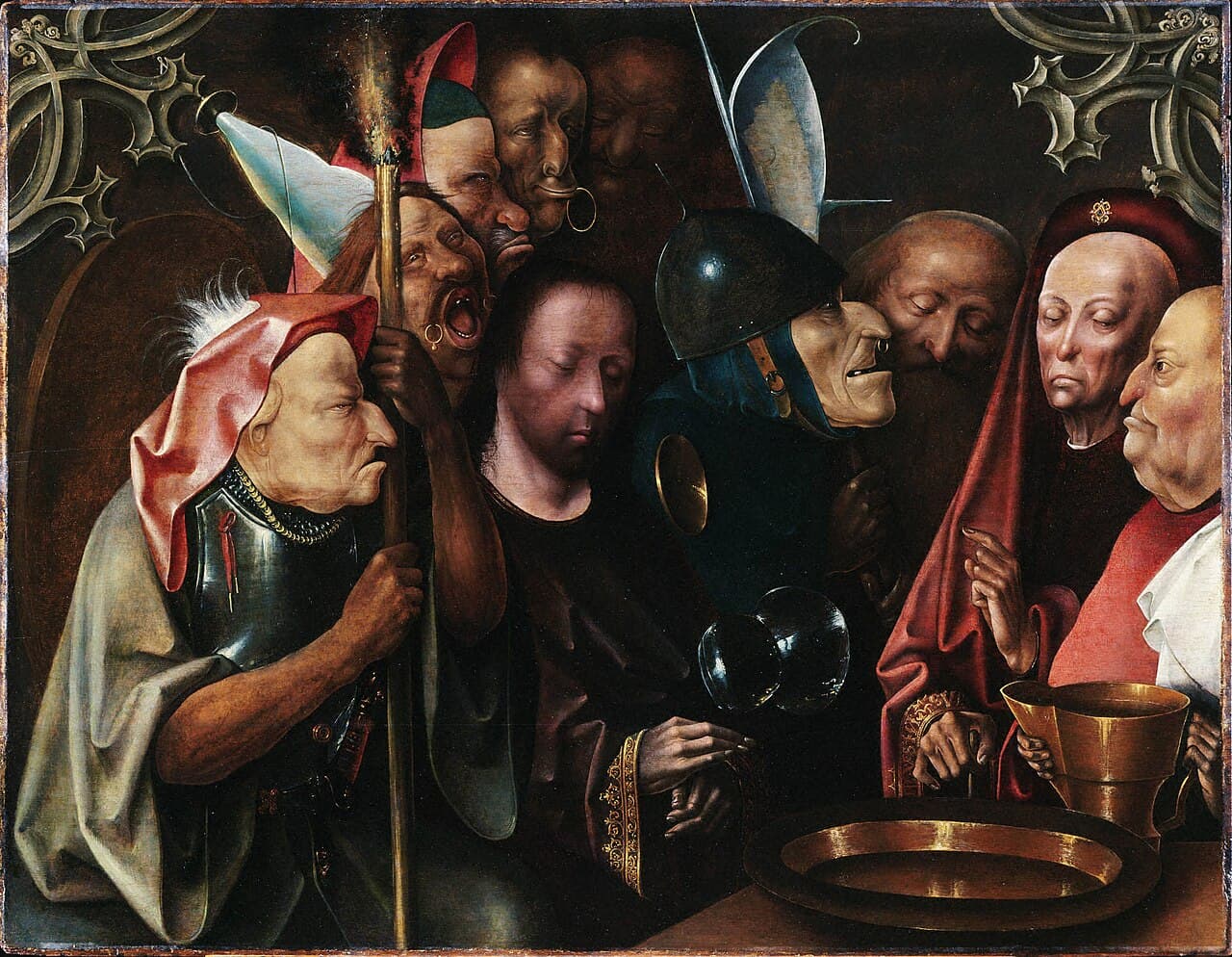
Jesus stands trial before Pilate, who questions him about being the King of the Jews. Despite the accusations from the chief priests and elders, Jesus remains silent. Pilate offers to release either Jesus or Barabbas, and the crowd chooses Barabbas, leading to Jesus being sentenced to crucifixion.
Summary
Matthew 27:11-26 describes the trial of Jesus before Pontius Pilate, the Roman governor of Judea. This event leads directly to the crucifixion of Jesus, a central moment in the Christian narrative. Jerusalem, during the Passover feast, is the setting, a time when tensions were high. The chief priests and elders bring Jesus before Pilate, accusing him of claiming to be the King of the Jews. Pilate questions Jesus, asking if he is indeed the King of the Jews, to which Jesus responds, "Thou sayest" (27:11). Despite the accusations from the religious leaders, Jesus remains silent, which causes Pilate to marvel (27:14).
As the trial progresses, Pilate offers the crowd a choice between releasing Jesus or a prisoner named Barabbas, as was the custom during the feast (27:17). Pilate knows that Jesus has been handed over out of envy (27:18). Meanwhile, Pilate's wife sends him a message, urging him to have nothing to do with Jesus, whom she calls a just man, because she has been troubled by a dream about him (27:19). The chief priests and elders persuade the crowd to ask for Barabbas's release and to demand Jesus's Crucifixion (27:20-21). Despite Pilate's questioning of Jesus's guilt, the crowd insists on crucifixion (27:23).
The passage concludes with Pilate washing his hands before the crowd, declaring himself innocent of Jesus's blood and leaving the responsibility to them (27:24). The crowd accepts this responsibility, saying, "His blood be on us, and on our children" (27:25). Pilate then releases Barabbas and has Jesus scourged before delivering him to be crucified (27:26). The text presents the conclusion that the crowd's choice and Pilate's actions set the stage for Jesus's crucifixion, fulfilling the events leading to his death. The Trial Before Pilate in Matthew 27:11-26 emphasizes the collective responsibility for Jesus's crucifixion. The passage shows a complex interplay between the Roman authorities, represented by Pilate, and the Jewish leaders and crowd. Pilate's questioning of Jesus, his wife's warning, and his own symbolic hand-washing reveal his reluctance and attempt to shift the blame (27:18, 24). Yet, his actions, including offering the crowd a choice between Jesus and Barabbas and conceding to their demands, are central to the events. The crowd's vocal acceptance of responsibility — "His blood be on us, and on our children" (27:25) — marks a moment, establishing the communal aspect of this decision.
Chiastic structure
ⓘMatthew 27:17
“Whom will ye that I release unto you? Barabbas, or Jesus which is called Christ?”
Matthew 27:18
“For he knew that for envy they had delivered him.”
Matthew 27:26
“Then released he Barabbas unto them: and when he had scourged Jesus, he delivered him to be crucified.”
Both A and A' involve the interaction between Pilate and the crowd, focusing on the decision of whom to release and the ultimate fate of Jesus.
Interpretation and theological stakes
Continue reading with a Scholar plan
Upgrade to Scholar