Matthew 21:1-11 · Matthew · Updated April 25, 2026
Triumphal Entry
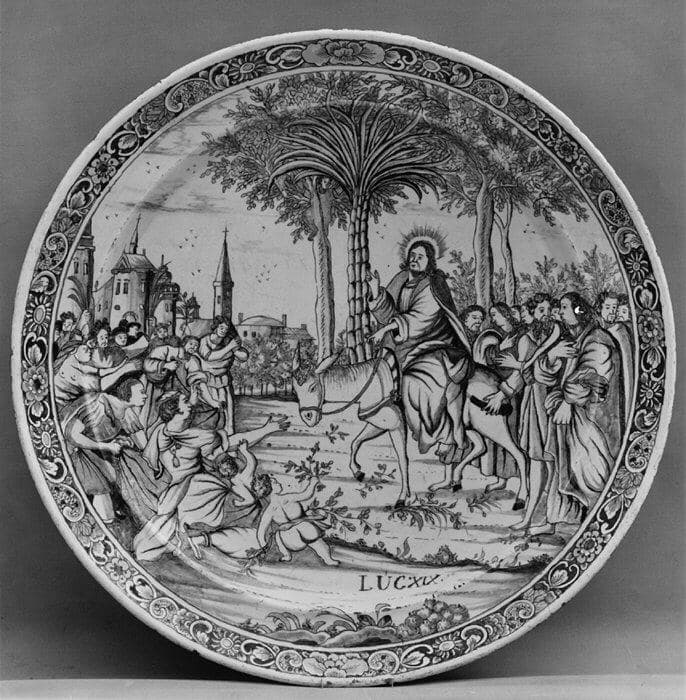
Jesus instructs two disciples to fetch a donkey and a colt from a nearby village. He enters Jerusalem riding on them, fulfilling a prophecy, while a large crowd spreads garments and branches on the road, shouting praises. The city is stirred, and the crowd identifies Jesus as the prophet from Nazareth.
Summary
The Triumphal Entry, described in Matthew 21:1-11, marks an event in the final week of Jesus' life before his crucifixion. As Jesus and his disciples approach Jerusalem, they arrive at Bethphage, near the Mount of Olives (21:1). Jesus instructs two of his disciples to go into a nearby village where they will find a donkey and a colt tied up. He tells them to untie the animals and bring them to him, assuring them that if anyone questions their actions, they should say that the Lord needs them (21:2-3).
Following Jesus' instructions, the disciples bring the donkey and colt to him (21:6-7). They place their garments on the animals, and Jesus sits on them. As Jesus makes his way into Jerusalem, a large crowd gathers. Many people spread their garments on the road, while others cut branches from trees and lay them in his path (21:8). The crowd goes ahead of Jesus and follows behind, shouting praises: "Hosanna to the Son of David: Blessed is he that cometh in the name of the Lord; Hosanna in the highest" (21:9).
Upon Jesus' entry into Jerusalem, the entire city is stirred, and people begin to ask, "Who is this?" (21:10). The crowd responds by identifying Jesus as the prophet from Nazareth in Galilee (21:11). The passage concludes with the acknowledgment of Jesus' arrival in Jerusalem as a momentous event, drawing widespread attention and recognition from the people. The primary conclusion drawn from Matthew 21:1-11 is that Jesus' entry into Jerusalem is a deliberate declaration of his identity as a King, but one whose rule is characterized by humility. This passage describes a moment when Jesus openly accepts messianic acclamation from the crowd, fulfilling the prophecy of Zechariah 9:9. The event sets the stage for the unfolding of the Passion Week, contrasting the crowd's expectations of a conquering hero with Jesus' mission of peace and spiritual redemption.
Chiastic structure
ⓘMatthew 21:5
“Behold, thy King cometh unto thee, meek, and sitting upon an ass”
Matthew 21:9
“Hosanna to the Son of David: Blessed is he that cometh in the name of the Lord”
Matthew 21:11
“This is Jesus the prophet of Nazareth of Galilee”
Both A and A' involve the recognition and proclamation of Jesus' identity and mission.
Interpretation and theological stakes
Continue reading with a Scholar plan
Upgrade to Scholar