Joshua 6:1-27 · Joshua · Updated April 25, 2026
Walls of Jericho
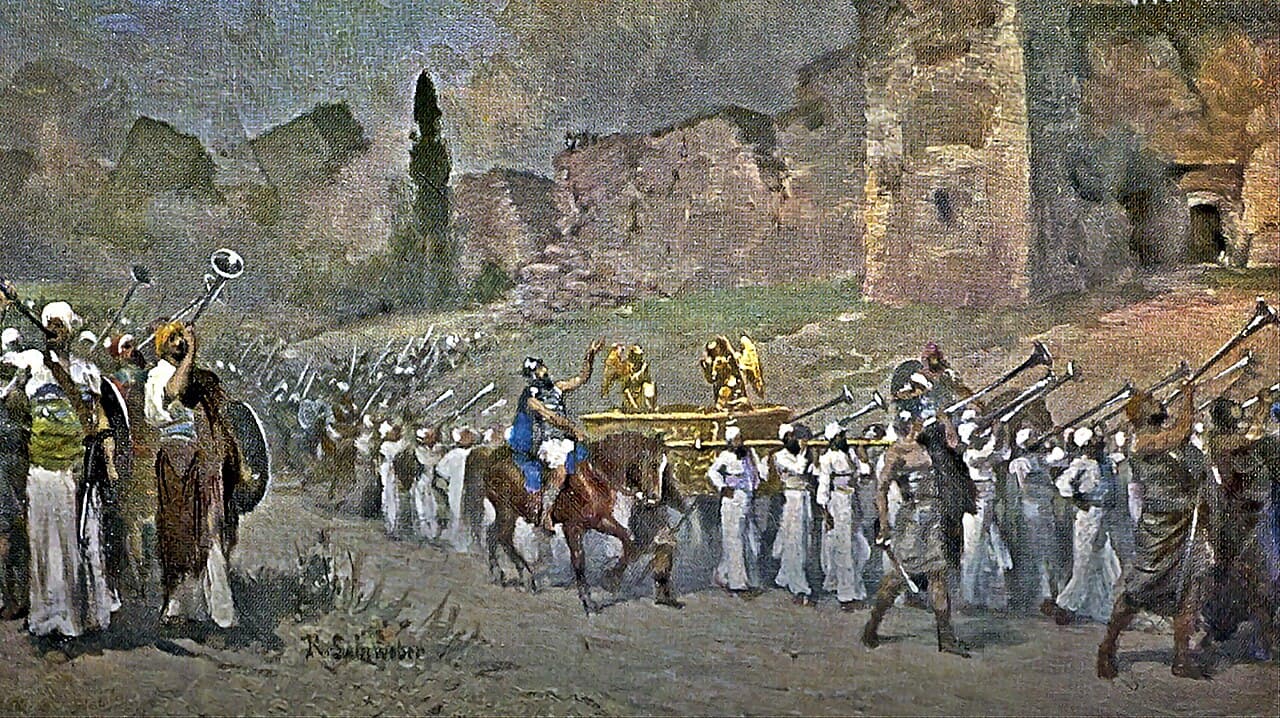
The city of Jericho is tightly shut due to the presence of the Israelites. God instructs Joshua to have the Israelites march around the city for seven days, with priests blowing trumpets, and on the seventh day, the walls of Jericho fall after the people shout, allowing them to take the city.
Summary
The passage from Joshua 6:1-27 describes the fall of Jericho, an event in the Israelites' conquest of Canaan. Jericho is tightly secured, with no one entering or leaving due to the presence of the Israelites (6:1). God speaks to Joshua, the leader of the Israelites, promising victory over Jericho, including its king and warriors (6:2). Joshua receives specific instructions for the siege: he is to have his men of war march around the city once a day for six days, with seven priests carrying trumpets before the Ark of the Covenant (6:3-4). On the seventh day, they are to circle the city seven times, and upon a long trumpet blast, the people are to shout, causing the city walls to collapse (6:5).
Joshua follows God's commands precisely. For six days, the Israelites march around Jericho once each day, maintaining silence except for the sound of the trumpets (6:8-14). On the seventh day, they rise early and march around the city seven times. At the seventh circuit, the priests blow the trumpets, and Joshua commands the people to shout, declaring that the Lord has given them the city (6:16). As they shout, the Walls of Jericho fall flat, allowing the Israelites to charge straight into the city and capture it (6:20). They destroy everything in the city except for Rahab and her family, who are spared because she hid Israelite spies earlier (6:17, 6:22-23).
The passage concludes with the Israelites burning the city and placing its valuable metals into the treasury of the Lord (6:24). Rahab and her family are brought into the Israelite camp and spared as promised (6:25). Joshua pronounces a curse on anyone who attempts to rebuild Jericho (6:26). The final verse states that the Lord was with Joshua, and his fame spread throughout the land (6:27). The passage from Joshua 6:1-27 primarily establishes that the fall of Jericho was a divinely orchestrated event that demonstrated God's power and faithfulness to the Israelites. The narrative emphasizes the importance of obedience to God's commands as Joshua and the Israelites follow precise instructions to bring about the miraculous collapse of the city's walls. This act is a significant moment in the Israelites' conquest of Canaan, signifying that their victories are directly linked to their adherence to God's will. The preservation of Rahab and her family further emphasizes the theme of faithfulness, rewarding those who assist and align themselves with God's people.
Chiastic structure
ⓘJoshua 6:2
“And the LORD said unto Joshua, See, I have given into thine hand Jericho, and the king thereof, and the mighty men of valour.”
Joshua 6:16
“And it came to pass at the seventh time, when the priests blew with the trumpets, Joshua said unto the people, Shout; for the LORD hath given you the city.”
Joshua 6:20
“So the people shouted when the priests blew with the trumpets: and it came to pass, when the people heard the sound of the trumpet, and the people shouted with a great shout, that the wall fell down flat, so that the people went up into the city, every man straight before him, and they took the city.”
The initial command and promise of victory (A) is mirrored by the fulfillment of that promise and the victory achieved (A').
Interpretation and theological stakes
Continue reading with a Scholar plan
Upgrade to Scholar