John 13:1-17 · John · Updated April 25, 2026
Washing Disciples' Feet
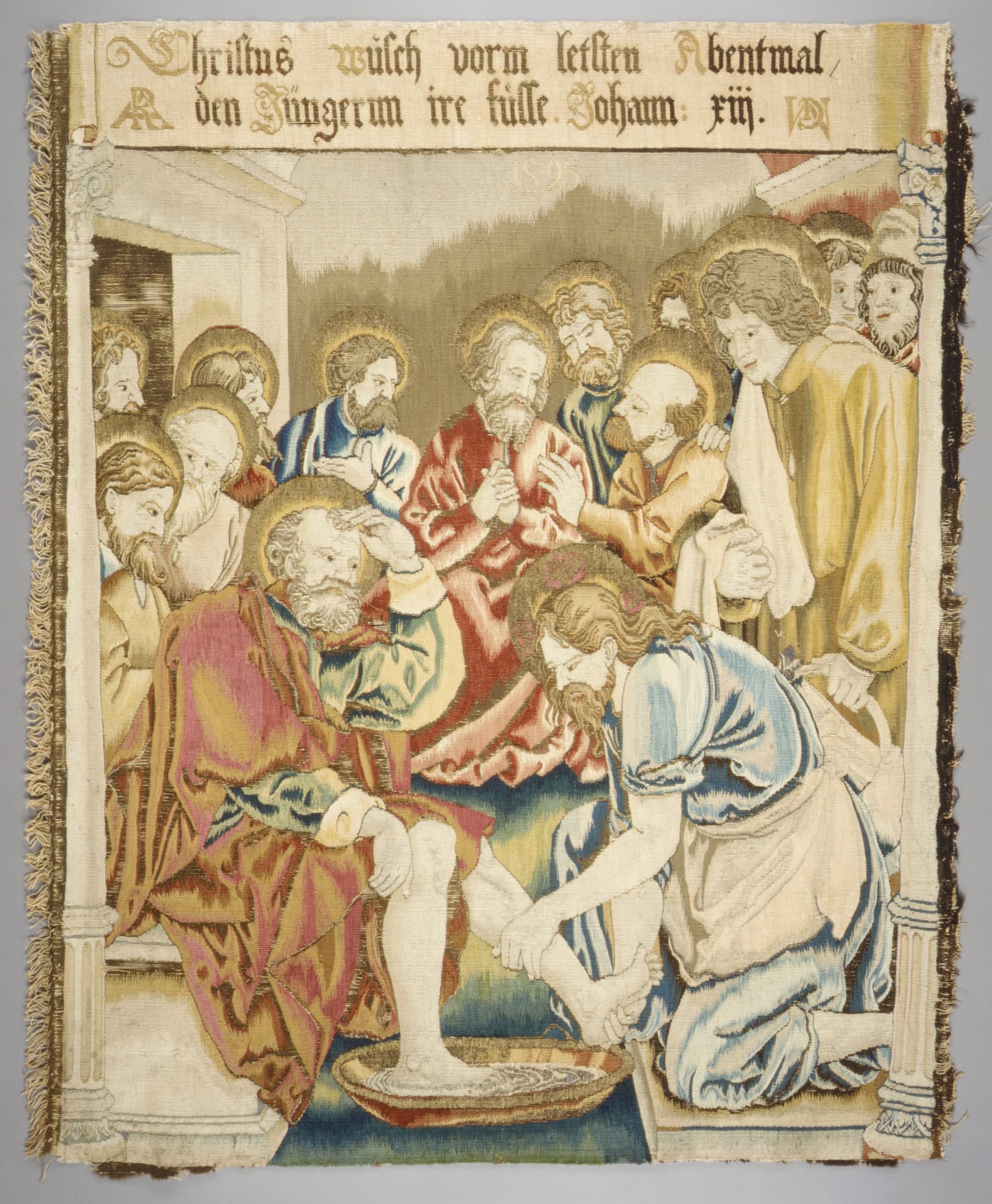
Jesus, knowing his time had come, washes his disciples' feet during the Last Supper as an act of humility and service. He instructs them to follow his example by serving one another, emphasizing that no servant is greater than his master.
Summary
The passage from the Gospel of John describes an event during the Last Supper, just before the feast of the Passover. Jesus is aware that his time to depart from the world is near, and he gathers with his disciples, whom he loves (John 13:1). The setting is tense, as Judas Iscariot is already planning to betray Jesus (John 13:2). Jesus, knowing his divine authority and mission, begins an unexpected act of service by washing his disciples' feet, setting the stage for a lesson (John 13:3-4).
As the supper progresses, Jesus rises, removes his outer garments, and wraps a towel around his waist (John 13:4). He pours water into a basin and washes the feet of each disciple, drying them with the towel (John 13:5). When he approaches Simon Peter, Peter protests, saying that Jesus should never wash his feet, to which Jesus responds that unless he washes Peter, he will have no part with him (John 13:8). Peter then insists that Jesus wash not only his feet but also his hands and head. Jesus clarifies that only the feet need washing, implying that the disciples are already clean, though not all of them, hinting at Judas's betrayal (John 13:10-11).
After washing their feet, Jesus resumes his place and questions the disciples about the significance of his actions (John 13:12). He explains that as their Lord and Master, he has set an example by serving them, and they should do likewise for one another (John 13:14-15). Jesus emphasizes that no servant is greater than his master, and they are blessed if they follow his example (John 13:16-17). The passage concludes with Jesus establishing the importance of humility and service among his followers. The primary conclusion of John 13:1-17 is that Jesus uses the act of foot washing to teach his disciples about humility and service. Jesus, aware of his imminent departure, performs this task to demonstrate the kind of leadership and love he expects from his followers. By washing the feet of his disciples, Jesus sets an example, showing that true leadership in his kingdom is marked by serving others, not by wielding authority or seeking prestige (John 13:14-15). This moment is important because it emphasizes the importance of adopting a servant's mindset, which stands in contrast to worldly definitions of power and greatness.
Chiastic structure
ⓘJohn 13:4-5
“He riseth from supper, and laid aside his garments; and took a towel, and girded himself. After that he poureth water into a bason, and began to wash the disciples' feet”
John 13:14-15
“If I then, your Lord and Master, have washed your feet; ye also ought to wash one another's feet. For I have given you an example, that ye should do as I have done to you.”
John 13:16-17
“The servant is not greater than his lord; neither he that is sent greater than he that sent him. If ye know these things, happy are ye if ye do them.”
Both A and A' focus on Jesus' actions and their implications for the disciples. A describes Jesus' act of washing feet, demonstrating love and humility. A' emphasizes the disciples' need to follow His example.
Interpretation and theological stakes
Continue reading with a Scholar plan
Upgrade to Scholar