Revelation 12:1-17 · Revelation · Updated April 25, 2026
Woman & Dragon
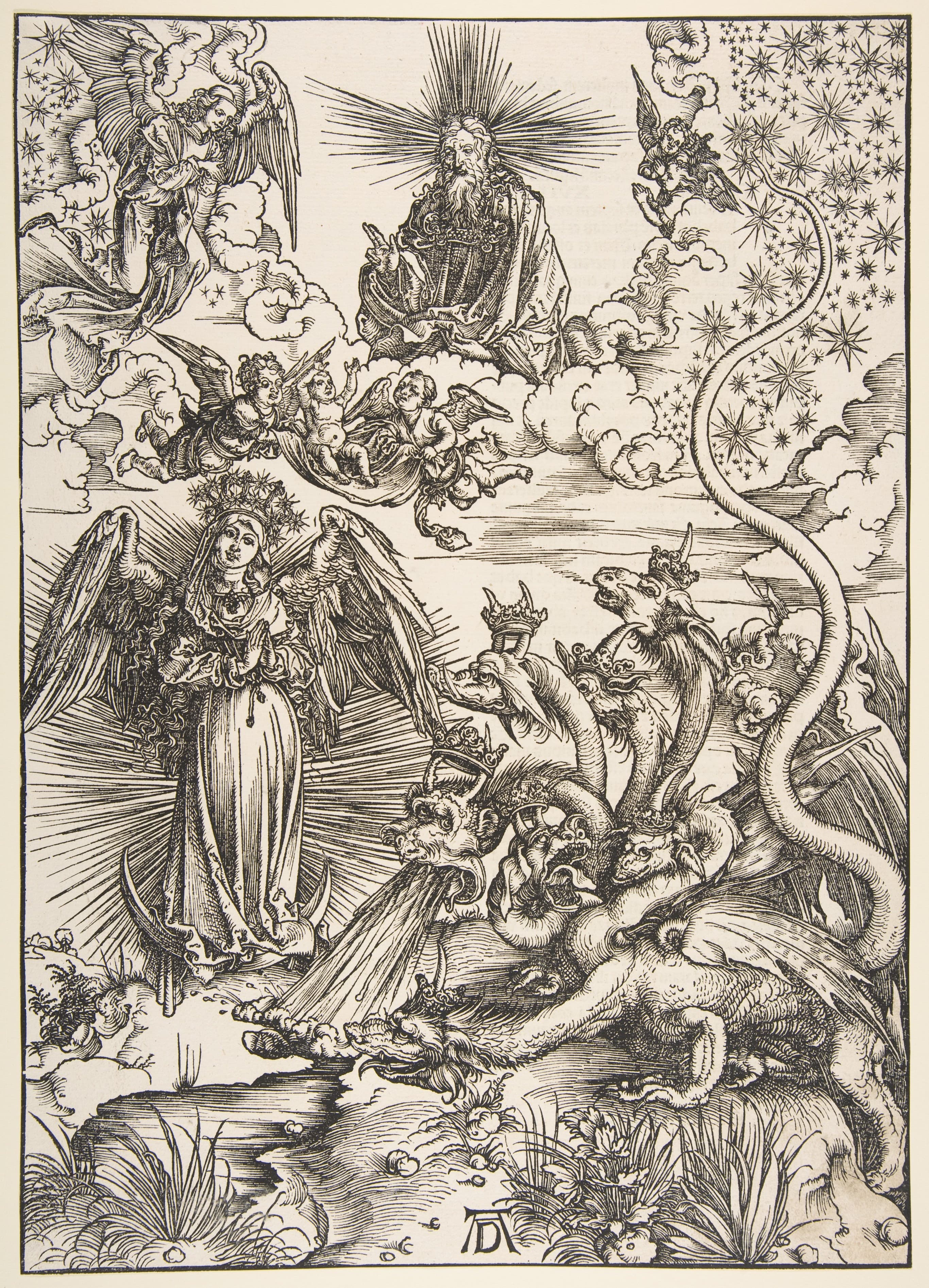
A woman appears in heaven, clothed with the sun, and gives birth to a child destined to rule all nations. A great red dragon seeks to devour the child but fails as the child is taken to God. The woman flees to the wilderness, and a war ensues in heaven, resulting in the dragon being cast down to earth, where he continues to pursue the woman and her offspring.
Summary
Revelation 12:1-17 is a prophetic vision that describes a cosmic conflict involving a woman, a dragon, and a child. The passage opens with a dramatic scene in heaven, where a woman appears, clothed with the sun, standing on the moon, and wearing a crown of twelve stars (12:1). She is pregnant and in labor, ready to give birth (12:2). Another figure, a great red dragon with seven heads and ten horns, also appears in heaven, waiting to devour the woman's child as soon as it is born (12:3-4).
The woman gives birth to a male child destined to rule all nations, but the child is quickly taken up to God's throne for protection (12:5). The woman then flees into the wilderness, where God has prepared a place for her to be sustained for 1,260 days (12:6). A war breaks out in Heaven between Michael and his angels and the dragon and his angels. The dragon, identified as the Devil and Satan, is defeated and cast down to earth along with his angels (12:7-9). A voice in heaven declares the arrival of salvation and warns the earth of the dragon's wrath (12:10-12).
On earth, the dragon pursues the woman, but she is given wings to escape into the wilderness, where she is protected (12:13-14). The dragon tries to overwhelm her with a flood from his mouth, but the earth helps by swallowing the flood (12:15-16). Frustrated, the dragon turns his anger toward the rest of the woman's offspring, those who keep God's commandments and hold to the testimony of Jesus (12:17). The passage concludes with the dragon's determination to wage war against them, marking an ongoing struggle between good and evil.
Chiastic structure
ⓘRevelation 12:1-6
“A woman clothed with the sun... the dragon stood before the woman... the woman fled into the wilderness”
Revelation 12:7-12
“And there was war in heaven... the great dragon was cast out... Now is come salvation, and strength, and the kingdom of our God”
Revelation 12:13-17
“The dragon... persecuted the woman... the earth helped the woman”
Both A and A' involve the woman being pursued by the dragon, highlighting her protection and the dragon's failure.
Interpretation and theological stakes
Continue reading with a Scholar plan
Upgrade to Scholar