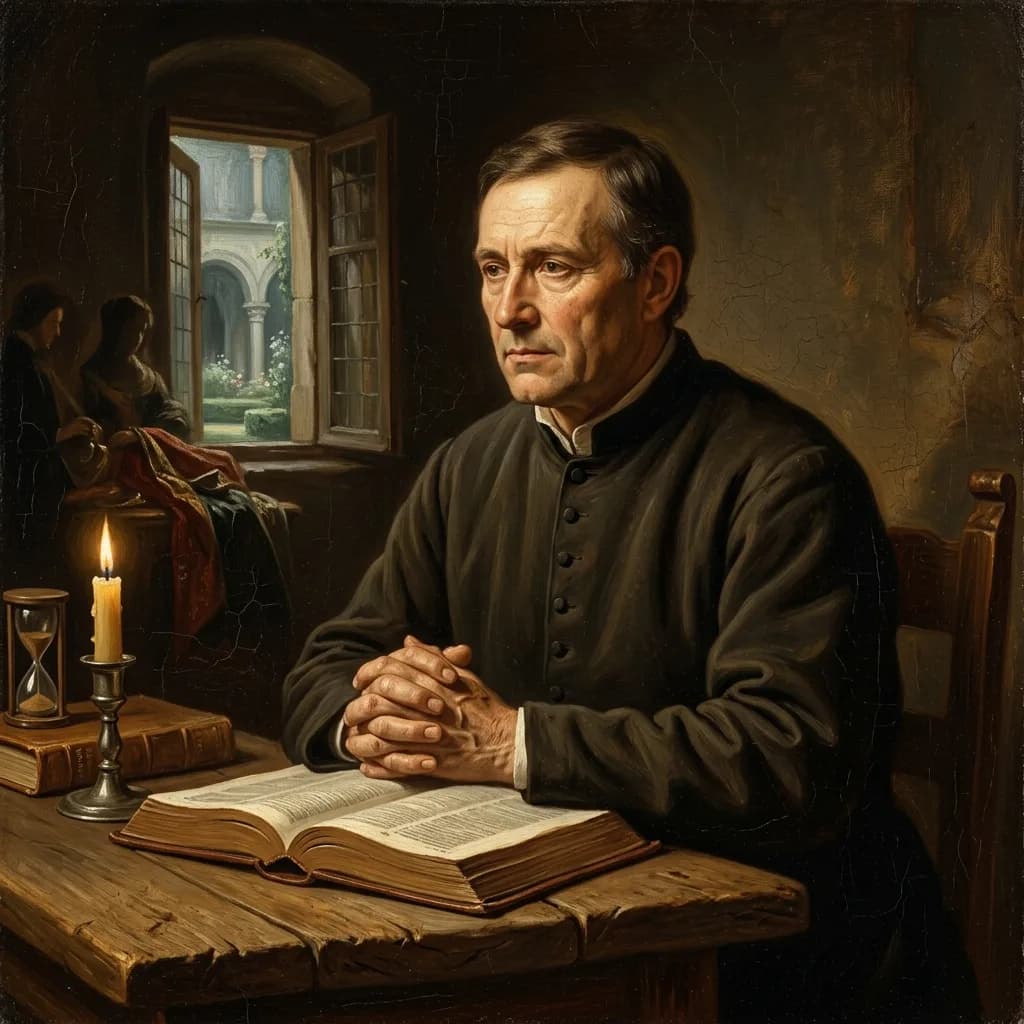
Celibacy of Clergy
Ascetic practices · Updated August 15, 2026
Overview
Clerical celibacy was not universally enforced in the early Christian church and evolved over centuries with regional differences. Many clergy, including bishops and priests, married. Celibacy was more an ideal than a rule, allowing for diverse practices, with some regions and communities adhering more strictly to the notion of Celibacy than others.
A turning point came in 306 AD with the Council of Elvira in Spain, one of the first gatherings to propose clerical Celibacy, although its decrees were far from universally adopted. The 11th century, during the papacy of Gregory VII, saw a concerted effort to enforce celibacy as part of the broader Gregorian Reforms. Gregory VII's push aimed at moral and institutional reform, partly to prevent church property from becoming hereditary through married priests. This movement culminated in the Second Lateran Council of 1139, which made celibacy a mandatory requirement for all priests in the Western Church, effectively cementing the practice.
Today, the Roman Catholic Church maintains this tradition of celibacy among its clergy, while the Eastern Orthodox Church follows a different path. In the Orthodox tradition, married men can become priests, although bishops must remain celibate. This distinction reflects the historical and ongoing diversity within Christian practices regarding clerical Celibacy, shaped by centuries of theological, social, and political influences.
The practice of celibacy among clergy was not universally enforced in the early Christian church and evolved over centuries with significant regional differences.
Why Fighting Over Celibacy of Clergy Was a Big Deal
The debate over clerical celibacy was about more than just whether priests should marry. It was a battle for authority and identity within the Church. By enforcing celibacy, the papacy sought to consolidate its power, drawing a clear line between clergy and laity. This distinction reinforced the Church's claim to spiritual and moral leadership. Celibacy became a symbol of dedication and purity, setting priests apart as special intermediaries between God and the faithful. For the Church, this was a way to assert control and ensure that its leaders were solely devoted to their spiritual duties, free from familial ties that might divide their loyalties.
The First Lateran Council in 1123 marked a formal step in this struggle. Pope Callixtus II and Church leaders gathered to officially prohibit clerical marriage, reinforcing the Celibacy mandate. On one side, reformers like Pope Gregory VII argued that celibacy was essential for maintaining the Church's spiritual purity and integrity. They believed that a celibate priesthood was less likely to be swayed by earthly concerns. On the other side, traditionalists, represented by figures like Bishop Ulric of Augsburg, contended that celibacy was not a biblical requirement. They argued that married clergy could better relate to laypeople and that marriage humanized the priesthood. Secular rulers, such as Henry IV, Holy Roman Emperor, supported clerical Marriage for political reasons, fearing that celibate priests would be more loyal to Rome than to local authorities. The council's decision to uphold celibacy signaled a victory for the reformers, but enforcement would remain inconsistent, leaving room for ongoing debate.
The Celibacy conflict was never truly settled, as it raised direct questions about Church authority and human nature. The issue of whether celibacy is necessary for clergy remains a topic of discussion even today. Debates continue over whether this practice enhances spiritual focus or imposes an unrealistic burden on priests. The Roman Catholic Church still requires Celibacy for its priests, while other branches of Christianity allow for married clergy. This ongoing debate reflects the difficulty of balancing tradition with the evolving needs of the Church and its followers.
Continue reading with a Scholar plan
Upgrade to ScholarCommon questions
- What is the celibacy of clergy?
- Celibacy of clergy is the practice where members of the clergy abstain from marriage and sexual relations. It is intended to allow clergy to dedicate themselves fully to their spiritual duties.
- Why are Catholic priests celibate?
- Catholic priests are celibate to maintain spiritual purity and focus entirely on their religious duties without familial distractions. This practice also helps prevent church property from becoming hereditary.
- Is celibacy required for all clergy in Christianity?
- No, celibacy is not required for all clergy in Christianity. While the Roman Catholic Church mandates celibacy for its priests, other branches like the Eastern Orthodox Church allow married men to become priests.
- What is the historical reason for celibacy in the Catholic Church?
- Historically, celibacy in the Catholic Church was enforced to consolidate papal authority and prevent church property from being passed down to priests' descendants. It also aimed to reinforce the spiritual and moral leadership of the clergy.
- Are there any exceptions to celibacy in the Catholic Church?
- Yes, there are exceptions to celibacy in the Catholic Church. For example, married Anglican priests who convert to Catholicism can be ordained as Catholic priests and remain married.
- How does celibacy impact a priest's life and duties?
- Celibacy impacts a priest's life by allowing them to devote themselves fully to their parish and spiritual responsibilities. It can also be challenging, as it requires them to forego personal relationships and family life.
- What is the difference between celibacy and chastity?
- Celibacy refers specifically to abstaining from marriage and sexual relations, often for religious reasons. Chastity is a broader term that involves maintaining sexual purity according to one's state in life, which can include celibacy for the unmarried.
- Why do some Eastern Orthodox priests marry while Catholics do not?
- In the Eastern Orthodox Church, married men can become priests, reflecting a different tradition that allows clergy to have families. However, bishops in the Orthodox Church are required to be celibate, highlighting a distinction in clerical practices.
- What are the arguments against clerical celibacy?
- Arguments against clerical celibacy include the belief that it is not a biblical requirement and that married clergy can better relate to laypeople. Critics also argue that celibacy imposes an unrealistic burden on priests and may contribute to a shortage of clergy.
- Can clergy in other religions be celibate?
- Yes, clergy in other religions can be celibate. For example, Buddhist monks and nuns take vows of celibacy as part of their religious commitment.
- How does the vow of celibacy affect the recruitment of priests?
- The vow of celibacy can affect the recruitment of priests by potentially limiting the number of candidates willing to commit to a celibate life. It may deter individuals who wish to marry and have families from pursuing a vocation in the priesthood.
- What is the role of celibacy in monastic life?
- In monastic life, celibacy is a key component of the vows taken by monks and nuns, allowing them to focus entirely on spiritual growth and community service. It is seen as a way to live a life of simplicity and devotion to God.