Hesychasm
Ascetic practices · Updated August 15, 2026
Overview
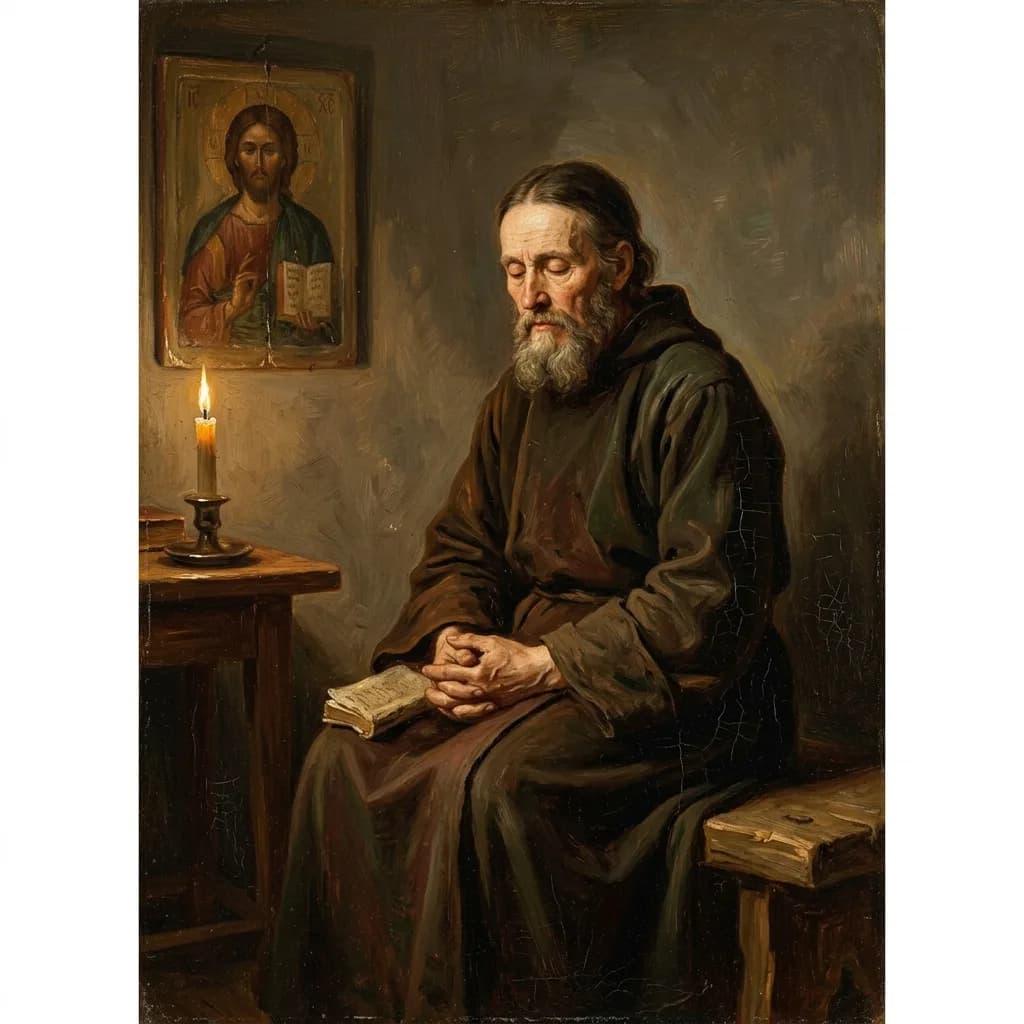
Hesychasm was so controversial in the 14th century that it sparked a series of church councils aimed at resolving disputes over its legitimacy. Hesychasm, a mystical tradition within the Eastern Orthodox Church, emphasized achieving inner stillness and divine communion through the repetitive recitation of the Jesus Prayer. Contemplative prayer had its roots in the monastic communities of Mount Athos in Greece, where monks sought a direct experience of God’s presence. However, the bold claims of its practitioners, who reported encounters with an uncreated light believed to be the presence of God, drew criticism and theological debate.
A notable controversy surrounding Hesychasm erupted when Barlaam of Calabria, a learned critic from the West, challenged its foundational claims. Barlaam argued against the Hesychast assertion that humans could experience the divine light, which he deemed an impossible and misleading idea. Gregory Palamas, a monk from Mount Athos, became its staunchest advocate. The disagreement escalated, prompting a series of councils in Constantinople between 1341 and 1351. These gatherings, known today as the "Palamite Councils," upheld Gregory Palamas's teachings, affirming Hesychasm's theological basis and its place within Orthodox Christianity. This resolution granted official recognition to the practice, solidifying its status as an integral component of Eastern Orthodox spirituality.
Today, Hesychasm remains a respected and practiced tradition within the Eastern Orthodox Church. The councils of the 14th century not only secured its legitimacy but also underscored the rich diversity of spiritual expressions within Orthodoxy. The teachings of Gregory Palamas continue to influence Eastern Orthodox theology, and his defense of Hesychasm represents a crucial moment in the church's history. The practice endures in monastic communities and among lay practitioners, revered for its deep spiritual insights and its role in fostering a personal experience of God's presence.
The practice of Hesychasm was so controversial that it led to a series of church councils in the 14th century to resolve disputes over its legitimacy.
Why Fighting Over Hesychasm Was a Big Deal
The Hesychasm controversy in the 14th century was not merely a debate about a specific practice within the Eastern Orthodox Church; it was a clash over the broader issue of how humans can experience and understand the divine. At its heart was a fundamental question: Could mystical experiences like those claimed by the Hesychasts hold as much authority as the established doctrines of rational theology? This matter called into question the very nature of divine knowledge — whether it could be directly accessed through personal experience or only understood through intellectual reasoning and theological study.
In 1341, the Synod of Constantinople became the focal point of this intense debate. On one side stood Gregory Palamas, representing the Hesychasts, who argued passionately for the authenticity of mystical encounters and the inner prayer's power. Opposing him was Barlaam of Calabria, a scholar from the West, who dismissed these experiences as irrational and potentially heretical. For Palamas and his supporters, victory meant securing the legitimacy of their spiritual practices and preserving a rich mystical tradition within Orthodoxy. For Barlaam, triumph would safeguard the Church's intellectual rigor and prevent what he saw as a drift into unreason. Gregarious arguments and influential supporters, including Emperor Andronikos III, were crucial in the synod's decision to uphold Palamas's views, granting Hesychasm an official place in Orthodox theology.
Despite the synod's ruling, the underlying tension between mystical experience and rational theology was never fully resolved. This ongoing challenge in religious thought touches on how people perceive and engage with the divine. Even today, this tension persists within various religious traditions, showing that the debate over the balance between experiential spirituality and intellectual theology is far from finished. The enduring practice of Hesychasm within Eastern Orthodoxy highlights the complexity and ongoing relevance of these questions in the spiritual lives of believers.
Continue reading with a Scholar plan
Upgrade to ScholarCommon questions
- What is Hesychasm in Orthodox Christianity?
- Hesychasm is a mystical tradition within the Eastern Orthodox Church that emphasizes achieving inner stillness and divine communion through contemplative prayer, particularly the repetitive recitation of the Jesus Prayer. It aims to foster a direct experience of God's presence.
- How does Hesychasm relate to inner peace?
- Hesychasm seeks to cultivate inner peace by focusing on stillness and quietude, allowing practitioners to experience a deep sense of tranquility and connection with the divine. This inner peace is achieved through the disciplined practice of prayer and meditation.
- What are the practices involved in Hesychasm?
- The primary practice of Hesychasm involves the repetitive recitation of the Jesus Prayer, 'Lord Jesus Christ, Son of God, have mercy on me, a sinner.' This is accompanied by techniques of controlled breathing and maintaining a posture conducive to deep meditation.
- Why is the Jesus Prayer important in Hesychasm?
- The Jesus Prayer is central to Hesychasm as it serves as a focal point for meditation, helping practitioners concentrate their thoughts and open their hearts to the presence of God. Its repetition is believed to lead to inner stillness and divine communion.
- What is the historical origin of Hesychasm?
- Hesychasm originated in the monastic communities of Mount Athos in Greece, where monks developed this contemplative practice to seek a direct experience of God's presence. It has deep roots in the Eastern Orthodox monastic tradition.
- How did Hesychasm develop over time?
- Hesychasm developed through the teachings and practices of monks on Mount Athos and was later defended and systematized by Gregory Palamas during the 14th-century controversies. It became an integral part of Eastern Orthodox spirituality, recognized officially by the church.
- What controversies surrounded Hesychasm in the Byzantine Empire?
- The main controversy involved Barlaam of Calabria, who challenged the Hesychast claim of experiencing the divine light, leading to a series of church councils. Gregory Palamas defended Hesychasm, and the councils ultimately affirmed its legitimacy within Orthodox Christianity.
- Who was Gregory Palamas and what was his role in Hesychasm?
- Gregory Palamas was a monk from Mount Athos who became the leading defender of Hesychasm during the 14th-century controversies. He argued for the authenticity of mystical experiences and helped secure Hesychasm's place in Orthodox theology through the Palamite Councils.
- How does Hesychasm differ from other forms of Christian mysticism?
- Hesychasm is distinct in its emphasis on the Jesus Prayer and the pursuit of inner stillness to experience the divine light, which is considered the presence of God. It is deeply rooted in Eastern Orthodox tradition, whereas other forms of Christian mysticism may focus on different practices and theological interpretations.
- What is the significance of Mount Athos in Hesychasm?
- Mount Athos is significant as the birthplace of Hesychasm, where monastic communities developed and practiced this form of contemplative prayer. It remains a spiritual center for Eastern Orthodox monasticism and Hesychastic practice.
- How is Hesychasm practiced today?
- Today, Hesychasm is practiced in Eastern Orthodox monastic communities and by laypeople who seek a deeper spiritual life. It continues to involve the Jesus Prayer, meditation, and the pursuit of inner stillness as a means to experience God's presence.
- What role does silence play in Hesychasm?
- Silence is crucial in Hesychasm as it helps practitioners focus inwardly, quieting the mind and heart to facilitate a deeper connection with God. It is through silence that one can achieve the inner stillness necessary for divine communion.
- How did Hesychasm influence Eastern Orthodox theology?
- Hesychasm influenced Eastern Orthodox theology by emphasizing the experiential knowledge of God through mystical encounters, as defended by Gregory Palamas. It reinforced the legitimacy of personal spiritual experiences alongside traditional theological study.
- What are the spiritual goals of Hesychasm?
- The spiritual goals of Hesychasm include achieving inner stillness, experiencing the divine presence, and attaining a transformative union with God. It seeks to deepen one's spiritual life through contemplative prayer and meditation.
- Can Hesychasm be practiced by non-Orthodox Christians?
- While Hesychasm is rooted in Eastern Orthodox tradition, its practices, such as the Jesus Prayer and meditation, can be adapted by non-Orthodox Christians seeking a contemplative spiritual path. However, its theological context is specific to Orthodoxy.