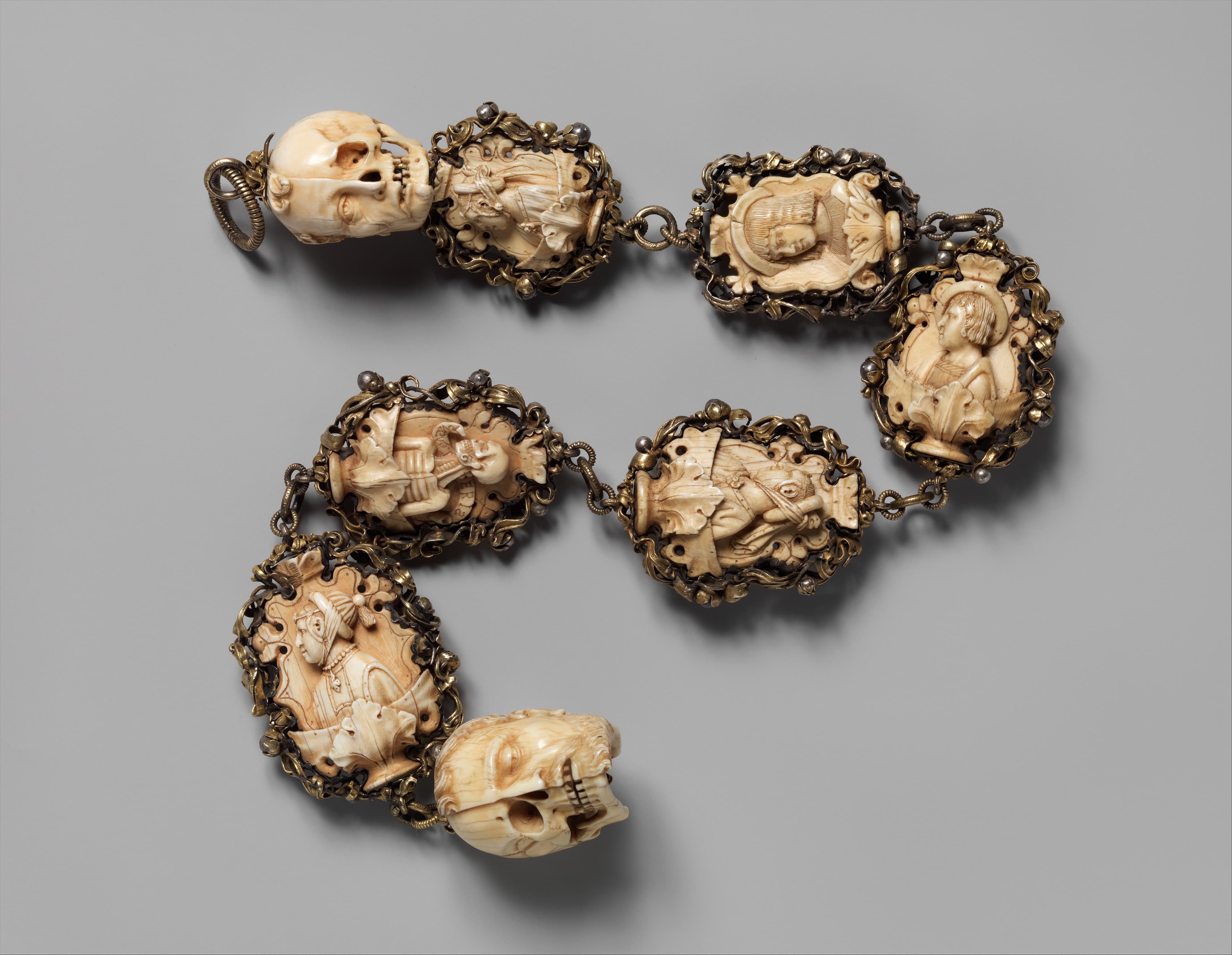
The Rosary
Prayer traditions · Updated August 15, 2026
Overview
The Rosary, once considered a substitute for the Psalms, provided a way for those who couldn't read to engage in prayer. During medieval times, the 150 Psalms were a staple of monastic life, but their length and complexity made them inaccessible to the average layperson, many of whom were illiterate. The Rosary offered an alternative: a repetitive, meditative prayer cycle that mirrored the structure of the Psalms. By reciting a series of prayers, largely the "Hail Mary," interspersed with "Our Fathers," even those without the ability to read or memorize long texts could partake in a similar spiritual rhythm.
The Rosary's development is rich with tradition and historical milestones. In 1214, St. Dominic received The Rosary from the Virgin Mary as a spiritual weapon against heresy. Although this legend lacks concrete historical evidence, it highlights the Rosary's early association with combating spiritual challenges. By the 12th century, the Rosary had already begun to take shape as a means of counting prayers, evolving over time to include 15 Mysteries that highlight key events in the lives of Christ and the Virgin Mary. These Mysteries were organized into three sets: Joyful, Sorrowful, and Glorious. In 1569, Pope Pius V officially codified the structure of the Rosary, promoting its use across the Catholic Church. This papal endorsement solidified The Rosary's place in Catholic devotion.
Today, the Rosary remains a central element of Catholic prayer life, with its traditional structure largely intact. In 2002, Pope John Paul II expanded The Rosary by introducing the Luminous Mysteries, which focus on the public ministry of Jesus. This addition brought the total number of Mysteries to 20, offering a more comprehensive meditation on the life of Christ. The Rosary continues to serve as a powerful tool for personal reflection and communal prayer, bridging centuries of tradition with the spiritual needs of contemporary believers.
The Rosary was once considered a substitute for the Psalms, allowing those who couldn't read to participate in prayer.
Why Fighting Over The Rosary Was a Big Deal
The struggle over The Rosary was a clash over the soul of the Church itself, with competing visions of what it meant to practice authentic Christianity. Traditionalists like Pope Pius V defended The Rosary as a component of Catholic devotion that maintained continuity with the Church's past. Reformers such as Martin Luther criticized the practice and advocated for a return to a scripture-based Christianity. Moderates like Desiderius Erasmus sought a compromise that would preserve unity while accommodating diverse expressions of faith. The dispute centered on who got to define Christian practice and identity.
October 7, 1571, marked the Battle of Lepanto, a decisive moment in this broader conflict. The Holy League's naval victory over the Ottoman Empire became a symbolic win for traditionalists, who attributed the outcome to the intercession of the Virgin Mary through The Rosary. Pope Pius V had rallied the faithful to pray The Rosary for victory, and when the battle concluded in their favor, it reinforced his faction's stance that The Rosary was an instrument of divine intervention. For reformers, the battle presented a challenge. Their vision of a Christianity focused on scripture rather than ritual seemed to lose ground as the victory was publicly celebrated for traditional devotion. The struggle was about maintaining or redefining the Church's identity.
The conflict over The Rosary remained unresolved and reflected tensions within Christianity between tradition and reform and between personal spirituality and institutional authority. The Rosary holds a place in Catholic prayer life, and the questions it raised persist. The Catholic Church faces the task of honoring its traditions while adapting to the spiritual needs of its followers. The debates ignited by The Rosary's history continue as modern believers navigate the landscape of faith.
Continue reading with a Scholar plan
Upgrade to ScholarCommon questions
- What is the Rosary and how is it used in prayer?
- The Rosary is a string of beads used by Catholics to count prayers. It involves the recitation of specific prayers, primarily the 'Hail Mary,' interspersed with 'Our Fathers,' while meditating on the Mysteries of the Rosary, which reflect key events in the lives of Jesus and Mary.
- How do you pray the Rosary step by step?
- To pray the Rosary, start with the Sign of the Cross, then recite the Apostles' Creed, one Our Father, three Hail Marys, and a Glory Be. For each decade, announce the mystery, pray one Our Father, ten Hail Marys, and one Glory Be, concluding with the Hail Holy Queen.
- What is the history of the Rosary in the Catholic Church?
- The Rosary developed as a way for the illiterate to engage in prayer, mirroring the 150 Psalms. It was popularized in the 12th century and officially structured by Pope Pius V in 1569, with the Luminous Mysteries added by Pope John Paul II in 2002.
- Why is the Rosary important to Catholics?
- The Rosary is important to Catholics as it offers a structured form of prayer that fosters meditation on the life of Christ and Mary. It is also a symbol of tradition and spiritual continuity within the Church.
- What prayers are said in the Rosary?
- The Rosary includes the Apostles' Creed, Our Father, Hail Mary, Glory Be, and the Hail Holy Queen. These prayers are recited in a specific sequence while meditating on the Mysteries.
- How often should you pray the Rosary?
- There is no strict rule on how often to pray the Rosary, but many Catholics aim to pray it daily or weekly. It is a personal devotion, so frequency can vary based on individual spiritual practice.
- What is the significance of each bead on the Rosary?
- Each bead on the Rosary represents a prayer to be recited, with the larger beads marking the Our Father and the smaller beads for the Hail Marys. The beads help keep track of the prayers and mysteries.
- What are the benefits of praying the Rosary?
- Praying the Rosary can provide spiritual peace, focus, and a deeper connection to the life of Christ and Mary. It is also believed to offer protection and grace through Mary's intercession.
- What is the difference between the Rosary and a chaplet?
- The Rosary is a specific form of prayer with a set structure and mysteries, while a chaplet is a general term for any string of prayer beads used in various devotions. Chaplets can vary in prayers and structure.
- How did the Rosary originate?
- The Rosary originated as a way for the illiterate to engage in prayer, modeled after the 150 Psalms. It evolved over time, with legends attributing its introduction to St. Dominic in the 13th century.
- What is the meaning behind the mysteries of the Rosary?
- The mysteries of the Rosary are meditations on significant events in the lives of Jesus and Mary, designed to deepen understanding and reflection on their spiritual significance. Each set of mysteries highlights different aspects of their lives and teachings.
- Why is the Rosary called the Rosary?
- The term 'Rosary' comes from the Latin 'rosarium,' meaning 'rose garden.' It symbolizes a spiritual bouquet of prayers offered to Mary, akin to presenting her with a garland of roses.