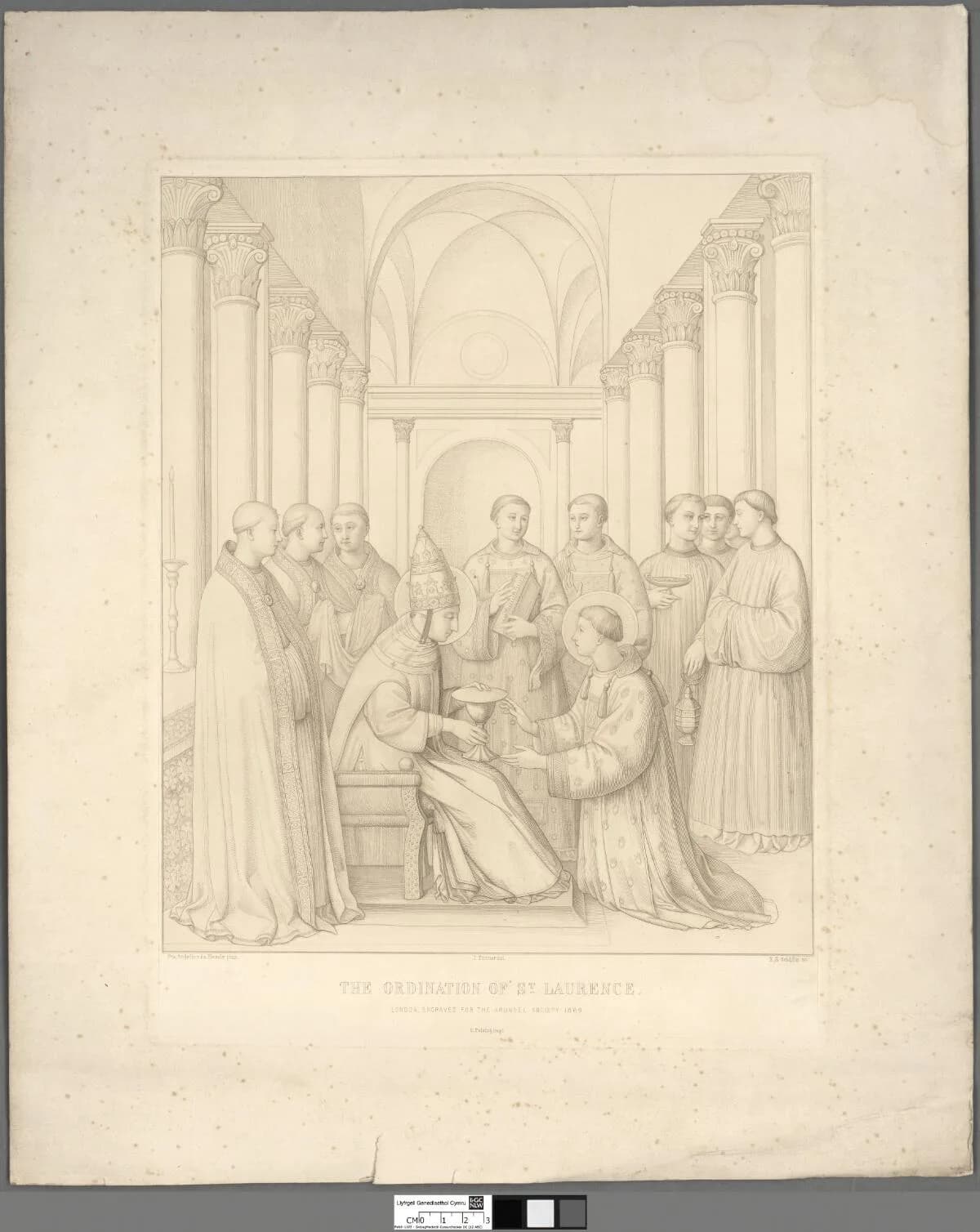
Ordination
Sacraments · Updated August 15, 2026
Overview
The practice of ordination has roots in ancient rituals that predate Christianity by thousands of years. In various early cultures, religious leaders were set apart through ceremonial acts that designated them as spiritual guides and intermediaries between the divine and the community. This tradition of designating individuals for religious service appears in ancient Egyptian, Sumerian, and Jewish customs. Within Judaism, the laying on of hands was a ritual used to confer authority and blessing, a practice that early Christians adopted and adapted for their ordination ceremonies.
As Christianity spread in the 2nd century, the church formalized roles within its expanding community. Christian Ordination initially drew from Jewish traditions but soon developed its own distinctive practices. The first formal ordinations established specific roles for deacons, priests, and bishops to maintain order and continuity in the growing faith. The Council of Nicaea in 325 AD further shaped Ordination practices by setting rules that required the involvement of bishops, ensuring a unified and authoritative church structure. Over time, ordination ceremonies in the Middle Ages became increasingly elaborate, reflecting the church's growing power and influence.
Today, ordination remains a core part of many Christian denominations, though its form and requirements vary widely. The Roman Catholic, Eastern Orthodox, and Anglican traditions continue to uphold traditional ordination practices involving bishops and ceremonial rites, while many Protestant groups have reshaped the concept. The Protestant Reformation introduced the idea of a "priesthood of all believers," challenging the necessity of formal Ordination and leading to more simplified practices. In contemporary Christianity, the diversity of ordination reflects broader theological and cultural shifts, with some denominations adopting inclusive practices that allow for the Ordination of women and LGBTQ+ individuals.
Why Fighting Over Ordination Was a Big Deal
The debate over ordination wasn't merely about who could wear a clerical collar. This conflict was about authority within the church: who held the power to interpret sacred texts and decide who could lead religious communities. The struggle over ordination became a proxy for deeper questions about the church's identity, pushing it to choose between a progressive or conservative path. The stakes were high because this wasn't just about individual roles but about the future direction of the church itself. As different factions within Christianity clashed over these issues, they were essentially arguing over who gets to shape the church's teachings and practices in a rapidly changing world.
The debate reached a momentous point on March 12, 1994, when the Church of England ordained its first female priests. This event, officiated by the Archbishop of Canterbury George Carey, marked a shift in church policy and inflamed tensions between different groups. Traditionalists, led by figures like Pope John Paul II, opposed the Ordination of women, arguing it contradicted long-standing interpretations of scripture and threatened to destabilize ecclesiastical authority. On the other side, reformists, championed by individuals like Bishop Barbara Harris, supported women's Ordination, advocating for a more inclusive church that reflected modern societal values. Moderates, such as Archbishop Desmond Tutu, navigated a middle path, seeking compromise to maintain church unity while allowing gradual change. This moment forced the church to confront these opposing visions, and in doing so, someone had to win, and someone had to lose.
Despite moments like the ordination of female priests in 1994, the conflict over ordination remains unresolved. This ongoing tension stems from fundamental disagreements about how to interpret scripture and balance tradition with progress. These are not merely theological debates but questions that cut to the heart of what the church aims to be today. As long as there are differing opinions on these core issues, the debate over ordination will continue to divide opinion within the global church. Even today, many Christian denominations continue to face these questions, illustrating the enduring complexity of this issue.
Continue reading with a Scholar plan
Upgrade to ScholarCommon questions
- What is ordination in the Christian church?
- Ordination in the Christian church is a ceremonial act that sets individuals apart for specific roles such as deacons, priests, or bishops. It involves rituals like the laying on of hands to confer authority and blessing.
- Why is ordination important in religious traditions?
- Ordination is important because it formalizes the roles of religious leaders, ensuring they have the authority to guide spiritual communities and interpret sacred texts. It helps maintain order and continuity within the faith.
- What are the different types of ordination in Christianity?
- The main types of ordination in Christianity include ordination as a deacon, priest, or bishop. Each role carries different responsibilities and levels of authority within the church.
- How does the ordination process work in the Catholic Church?
- In the Catholic Church, ordination involves a formal ceremony conducted by a bishop, including the laying on of hands and a prayer of consecration. Candidates must meet specific requirements, such as completing seminary education.
- What is the significance of laying on of hands during ordination?
- The laying on of hands is a significant ritual in ordination that symbolizes the transfer of spiritual authority and blessing. It is a tradition rooted in ancient Jewish customs, adopted by early Christians.
- Why do some denominations require ordination for ministry?
- Some denominations require ordination to ensure that their ministers are properly trained and authorized to lead religious services, interpret scripture, and provide spiritual guidance. It also helps maintain doctrinal consistency.
- What is the difference between ordination and consecration?
- Ordination refers to the process of setting someone apart for ministry roles like deacon, priest, or bishop, while consecration specifically refers to the act of making something sacred, often used for bishops or church buildings.
- How long does it take to become ordained?
- The time it takes to become ordained varies by denomination, but it typically involves several years of theological education and practical training. In the Catholic Church, it can take 6-8 years including seminary.
- What are the requirements for ordination in the Orthodox Church?
- In the Orthodox Church, candidates for ordination must be male, baptized, and usually married before ordination if they choose to marry. They must complete theological education and be approved by church authorities.
- Can women be ordained in all Christian denominations?
- No, not all Christian denominations ordain women. While some, like the Anglican and certain Protestant churches, do ordain women, others, such as the Roman Catholic and Orthodox churches, do not.
- What is an ordination ceremony like?
- An ordination ceremony typically includes the laying on of hands, prayers, and the presentation of symbols of the ordained role, such as a stole or chalice. It is often conducted by a bishop or senior church leader.
- What vows are taken during ordination?
- During ordination, candidates typically vow to uphold the teachings of the church, faithfully perform their duties, and live a life that reflects their commitment to their faith. Specific vows can vary by denomination.
- Why do some churches not practice ordination?
- Some churches, particularly those influenced by the Protestant Reformation, emphasize the 'priesthood of all believers' and may not require formal ordination, believing that all members can serve in ministry roles.
- What historical changes have occurred in the ordination process?
- Historically, ordination has evolved from simple Jewish-influenced practices to more elaborate ceremonies in the Middle Ages. The Protestant Reformation introduced simpler practices and challenged the necessity of formal ordination.
- What is the role of a bishop in ordination?
- A bishop plays a crucial role in ordination by conducting the ceremony, laying on hands, and ensuring the candidate meets the necessary requirements. Bishops maintain the continuity and authority of the church's leadership.