Crusades in the Bible
Secret Societies · Updated August 15, 2026
Overview
The Bible contains no mention of crusades, holy war, or military pilgrimage to the Holy Land, and the New Testament passages most relevant to The Crusades' theology of meritorious works actually command care for the poor and oppressed,not armed conquest. For a Christian reader, this cuts to the heart of how Scripture is read and applied. The Crusades ran from 1095 to 1291, launching a centuries-long project of armed pilgrimage and conquest driven by the medieval Vatican. Examining the relationship between crusading theology and biblical text forces a direct confrontation with a question of authority: did the Bible command this violence, or did medieval institutions invent it?
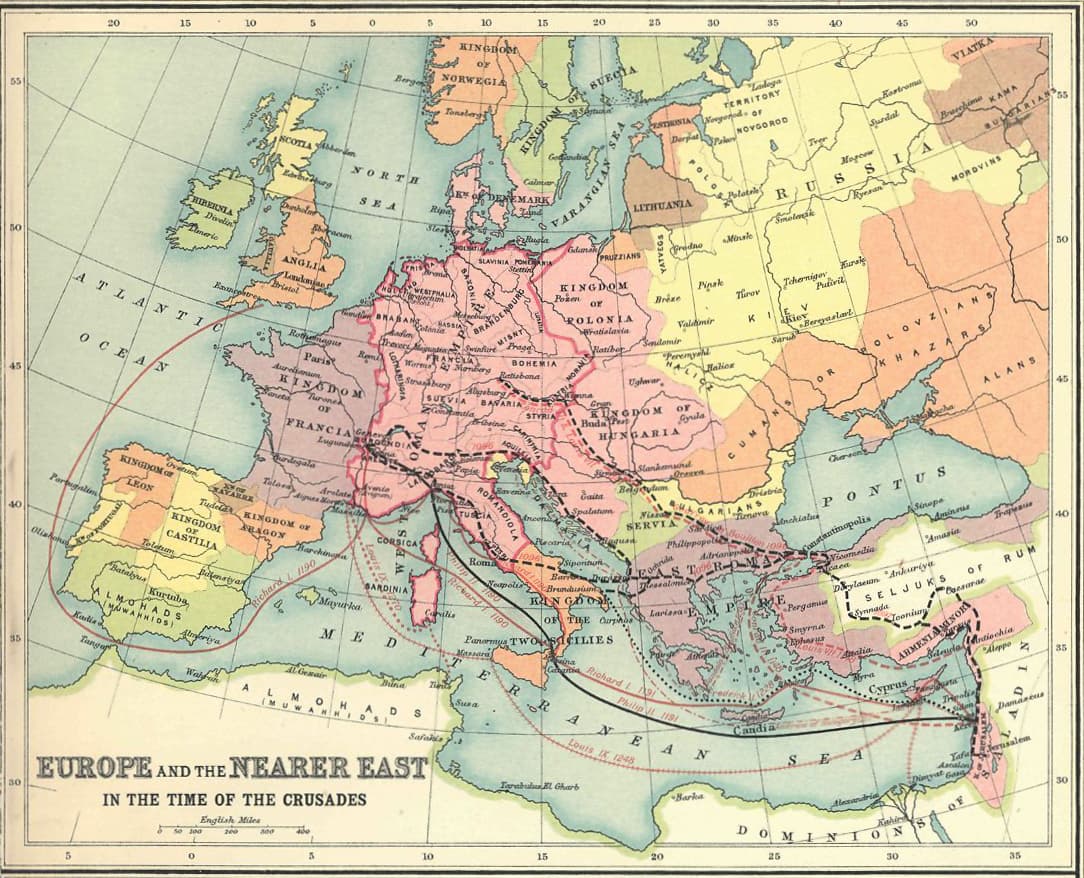
The Crusades were a medieval papal innovation with no biblical precedent. In November 1095, Pope Urban II launched the First Crusade at the Council of Clermont, offering spiritual rewards for military service. This papal proclamation drew on concepts of penance and pilgrimage, not direct biblical warrant. The Papacy developed crusade indulgences to promise remission of sins for armed participation, a system of spiritual reward for violence that had no biblical foundation and was not formalized until the late eleventh century. The Crusader States established after 1099 required constant military reinforcement from Europe to survive. When the city of Edessa fell in 1144, the papacy called the Second Crusade, which failed by 1148 and weakened support for crusading across Latin Christendom. Jesus and the apostles never called Christians to reclaim Jerusalem by force.
Scripture directly contradicts the theology of armed pilgrimage. The Bible's theology of works, as expressed in James 2:14-17, refers to charitable deeds toward the needy, not military action. James explicitly uses feeding the hungry and clothing the naked as the examples of works that validate faith. Galatians 6:2 frames burden-bearing as fulfilling the law of Christ, a command directed at personal sacrifice for others, not military violence. First John 3:17-18 insists that faith without concrete works of compassion is dead. The closest Old Testament passage to a crusading theme, Isaiah 58:6-7, defines acceptable religious devotion as freeing the oppressed and feeding the hungry. Matthew 25:35-40 identifies Christ with the vulnerable and the stranger, making mercy the criterion of righteousness. Church fathers such as Origen and Tertullian explicitly taught that Christians should not bear the sword. The crusading movement directly contradicted this uniform early church rejection of equating violence with piety.
The most common misunderstanding is that the Crusades were biblically mandated or that Scripture supports holy war. The Bible contains no command for Christians to wage war for Jerusalem, and the passages most cited in crusading theology actually command charity toward the poor. The institutional church spent three centuries directing armies to the Holy Land based on spiritual promises that no biblical text supports. The New Testament commands mercy, not warfare, as the proof of faith. Pope Urban II's 1095 proclamation at the Council of Clermont offered remission of sins for military service,a promise fabricated entirely from medieval theology, not Scripture.
The Bible contains no mention of crusades, holy war, or military pilgrimage to the Holy Land, and the New Testament passages most relevant to the Crusades' theology of meritorious works actually command care for the poor and oppressed—not armed conquest.