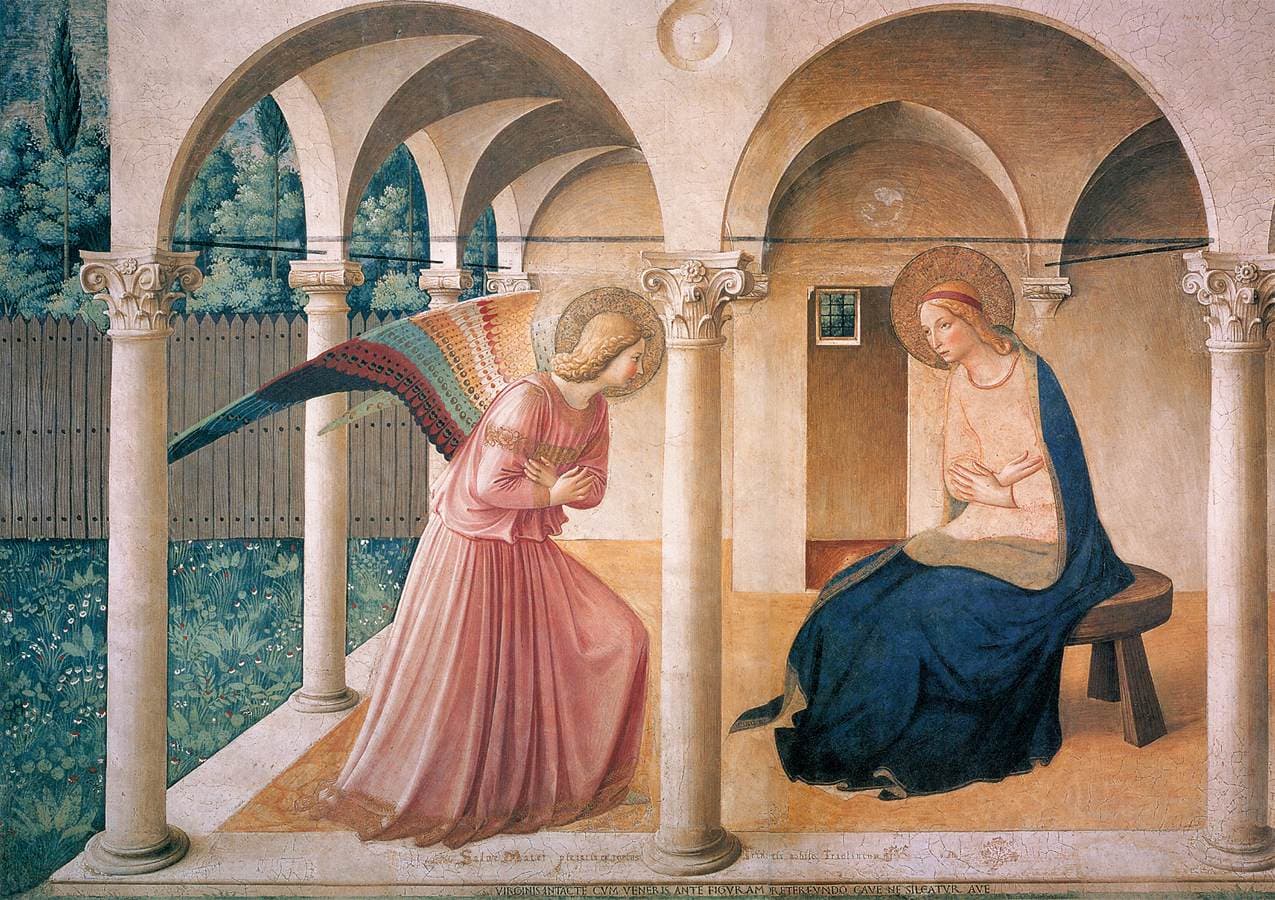
The Incarnation
Theology · Updated August 15, 2026
Overview
The Incarnation was a debated concept in early Christianity, not universally accepted initially. It holds a central role in contemporary Christian theology. In the first centuries of Christianity, followers grappled with the nature of Jesus Christ: was he divine, human, or both. These debates influenced the theological and political landscape of the time. The early church faced the challenge of articulating a coherent doctrine amid diverse interpretations, which often led to conflicts and schisms. The establishment of a unified doctrine of the Incarnation contributed to the cohesion and survival of early Christianity.
The path to a defined doctrine of the Incarnation was neither swift nor straightforward. One of the earliest figures to address the nature of Christ was Ignatius of Antioch, around 110 AD. He emphasized the real human suffering of Jesus, countering the docetic view that Christ's physical body was an illusion. This early concern preceded more structured debates in the following centuries. The Arian Controversy in the 4th century, spearheaded by Arius, argued that Jesus was not co-eternal with God, triggering a theological conflict that necessitated The Council of Nicaea in 325 AD. It was not until the Council of Chalcedon in 451 AD that the dual nature of Christ, fully God and fully man, was definitively codified. This decision marked a new phase for the church, as it sought to reconcile the divine and human aspects of Christ, addressing both theological concerns and the practical need for unity within the growing Christian community.
The biblical foundation for the Incarnation appears in several key New Testament passages. John 1:14 states, "The Word became flesh," a declaration of God entering human existence. This verse directly supports the doctrine by asserting the tangible reality of God's presence in the world. Philippians 2:7 further elaborates on this by describing Jesus as "taking the form of a servant," identifying his humility and humanity. Colossians 2:9 proclaims, "In Christ all the fullness of the Deity lives," affirming the divine nature of Jesus. Hebrews 2:14 notes that Jesus "shared in their humanity," stating his full participation in human experience. These passages collectively underpin the doctrine of the Incarnation, though interpretations have varied. Some early scholars debated whether these texts should be understood metaphorically or literally, a discussion that continues in certain theological circles today.
Theologically, the Incarnation signifies God entering human history in the person of Jesus Christ, uniting divine and human natures. This doctrine is essential for Salvation theology, as it bridges the gap between God and humanity. For believers, the Incarnation demands acceptance of Jesus as both fully God and fully man. This belief is held across various Christian traditions. For Catholics, the Incarnation is celebrated in the Eucharist, where Christ's presence is seen as both spiritual and physical. Protestant traditions often emphasize the scriptural basis of the Incarnation, focusing on its role in salvation history. The Eastern Orthodox Church, with its emphasis on theosis, views the Incarnation as the means by which humans can partake in divine nature. Each tradition, while sharing the core belief, brings its own specific doctrines to the understanding of this mystery.
Many believe the Incarnation implies Jesus was only divine, neglecting his full humanity. This misunderstanding conflicts with the Christian narrative, which emphasizes Jesus' humanity as much as his divinity. Today's interfaith dialogues, especially with Islam and Judaism, often grapple with this doctrine. Islam, for instance, respects Jesus as a prophet but rejects his divinity, posing a challenge for mutual understanding. The Incarnation also influences Christian ethical teachings on human dignity and the sanctity of life, as God becoming human elevates the value of humanity. This is reflected in contemporary debates, such as those surrounding bioethics and human rights, where the intrinsic worth of human life is supported by the belief in God taking on human form. The ongoing conversation about the Incarnation continues to shape not only theological discourse but also the lived experience of faith communities around the world.
Common questions
- What is the Incarnation in Christianity?
- The Incarnation in Christianity refers to the belief that Jesus Christ, the Son of God, took on human flesh and became fully human while remaining fully divine. This doctrine asserts that God became man in the person of Jesus Christ.
- How does the Incarnation relate to the concept of the Trinity?
- The Incarnation is integral to the Trinity as it involves the second person of the Trinity, the Son, becoming human. It emphasizes the unity and distinct roles within the Trinity, with Jesus being both fully God and fully human.
- Why is the Incarnation important in Christian theology?
- The Incarnation is crucial because it signifies God's direct intervention in human history for the purpose of salvation. It affirms that Jesus is both fully divine and fully human, enabling Him to bridge the gap between God and humanity.
- What are the biblical references to the Incarnation?
- Key biblical references to the Incarnation include John 1:14, which states, 'The Word became flesh and dwelt among us,' and Philippians 2:6-7, which describes Jesus taking on human form. These passages highlight the divine nature of Christ becoming human.
- How do different Christian denominations view the Incarnation?
- Major Christian denominations such as Roman Catholicism, Eastern Orthodoxy, and Protestantism uphold the Incarnation as a central doctrine. While there may be theological nuances, all agree on the core belief that Jesus is both fully divine and fully human.
- What is the significance of the Incarnation for the celebration of Christmas?
- The Incarnation is central to Christmas as it celebrates the birth of Jesus Christ, marking the moment God became human. Christmas commemorates this divine act of love and the beginning of Christ's earthly life.
- How did early Church councils define the doctrine of the Incarnation?
- The Council of Nicaea in 325 AD affirmed Jesus as 'true God from true God,' countering Arian views, and the Council of Chalcedon in 451 AD declared Jesus as one person in two natures, fully divine and fully human. These councils solidified the orthodox understanding of the Incarnation.
- What role does the Virgin Mary play in the doctrine of the Incarnation?
- The Virgin Mary plays a crucial role in the Incarnation as the mother of Jesus, through whom God became human. Her role emphasizes the human aspect of Jesus's birth and the divine intervention in her conception by the Holy Spirit.
- How do the Incarnation and the Resurrection connect in Christian belief?
- The Incarnation and Resurrection are connected as both are central to the Christian understanding of salvation. The Incarnation allowed Jesus to live a human life and die, while the Resurrection demonstrates His victory over death and His divine nature.
- What are some common misconceptions about the Incarnation?
- Common misconceptions include the idea that Jesus was only partially divine or human, or that the Incarnation implies a change in God's nature. The orthodox view maintains that Jesus is fully God and fully man, without division or confusion.
- How do theologians explain the mystery of the Incarnation?
- Theologians explain the Incarnation as a mystery of faith, emphasizing that it transcends human understanding while affirming its truth through scripture and tradition. They use terms like 'hypostatic union' to describe the union of divine and human natures in Christ.
- What is the hypostatic union in relation to the Incarnation?
- The hypostatic union is the theological term describing the union of Christ's two natures, divine and human, in one person. It asserts that Jesus is fully God and fully man, without mixing or altering either nature.
- How did the Incarnation influence Christian art and literature?
- The Incarnation has profoundly influenced Christian art and literature, inspiring depictions of the Nativity, the life of Christ, and theological writings exploring the mystery of God becoming human. It serves as a central theme in countless works throughout history.
- What is Anselm's argument about the necessity of the Incarnation?
- Anselm argued that the Incarnation was necessary for salvation because only a being who was both fully divine and fully human could atone for humanity's sins. His work 'Cur Deus Homo' explores this necessity, asserting that Jesus's dual nature was essential for redemption.
- How is the Incarnation celebrated in liturgical traditions?
- The Incarnation is celebrated in liturgical traditions through feasts like Christmas and the Annunciation, as well as in the recitation of the Nicene Creed. These celebrations emphasize the mystery and significance of God becoming human in Jesus Christ.