Library
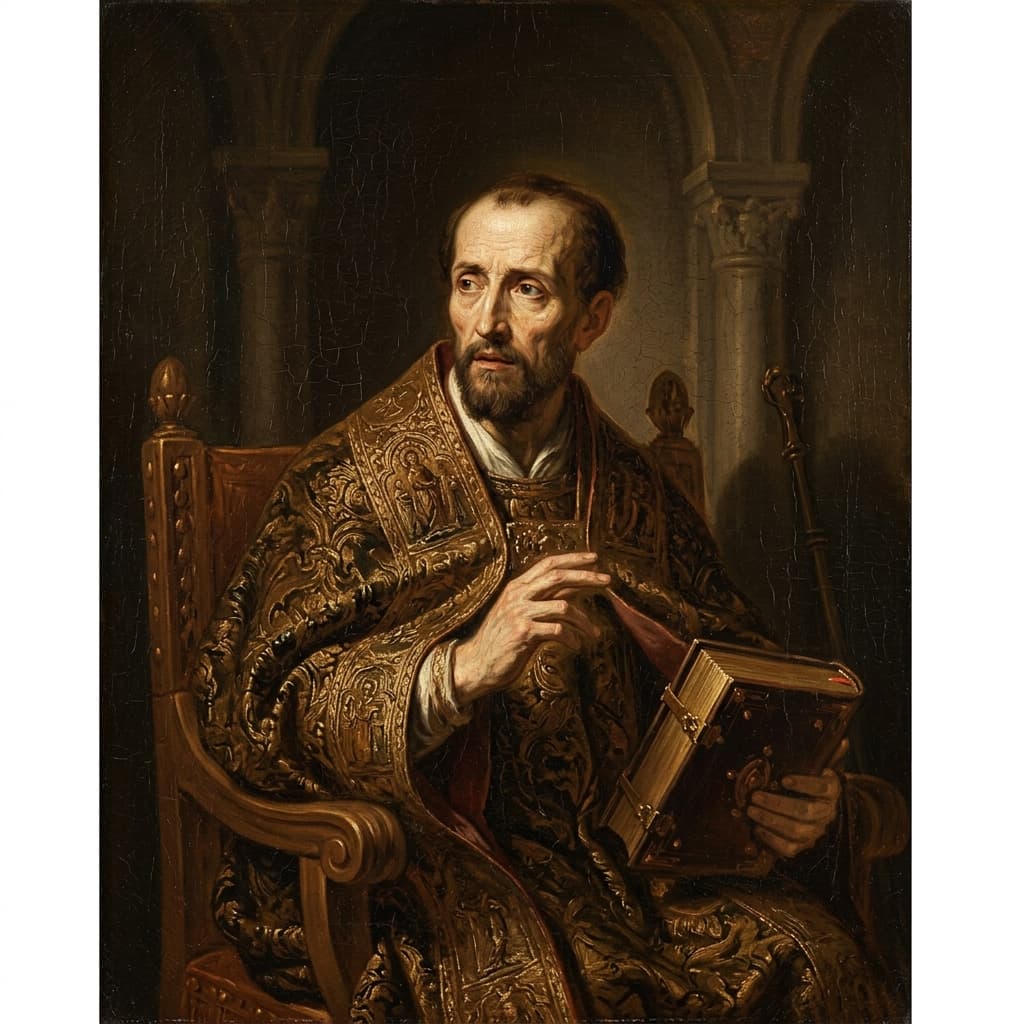
AI-generated illustration
Library
Post-Nicene Patristic (4th-5th C) · c. 349-407 CE · Updated April 8, 2026
John Chrysostom was an influential early Christian preacher and Archbishop of Constantinople during the late 4th and early 5th centuries CE. Known for his eloquent sermons and moral teachings, he earned the nickname "Chrysostom," meaning "golden-mouthed" in Greek. His powerful oratory and dedication to Christian ethics made him a prominent figure in the Christian Church, especially in Antioch and later in Constantinople, where he served as archbishop.
Born around 349 CE in Antioch, John Chrysostom was deeply rooted in one of early Christianity's major centers. He became the Archbishop of Constantinople in 398 CE, a significant role given the city's importance in the Roman Empire. Chrysostom is best remembered for his extensive homilies, including 90 sermons on the Gospel of Matthew and many on the letters of Paul. His career was marked by controversy, notably his conflict with Empress Eudoxia, which led to his deposition at the Synod of the Oak in 403 CE. This tension resulted in his exile, and he died in 407 CE at Comana.
During Chrysostom's lifetime, the Christian Church was increasingly entwined with the Roman state, creating friction between religious and imperial authorities. His outspoken criticism of wealth and corruption put him at odds with powerful figures like Empress Eudoxia. The era was also marked by theological debates between different schools of thought, such as those from Antioch and Alexandria, contributing to the complex religious landscape. Despite these challenges, Chrysostom's legacy endured, and he was later recognized as a Doctor of the Church for his profound impact on Christian theology and preaching.
What does fidelity to the gospel require of a bishop who serves in the most powerful city in the world — and when does speaking truth to power become a fatal provocation?
John Chrysostom dedicated his life to addressing the moral and ethical demands of the Christian gospel. He was deeply concerned with how Christians, especially those with wealth and power, should live their faith in practical and transformative ways. Chrysostom saw the gospel not just as a set of beliefs to be professed but as a call to action, particularly in the realm of social justice. His ministry focused on bridging the gap between professed faith and lived ethics, challenging the comfortable norms of his time and urging a more compassionate and equitable society.
One of Chrysostom's key ideas was that Scripture should be the central guide and sustenance for Christians. He argued that personal engagement with the Bible was crucial for moral decision-making, a notion that was both empowering and revolutionary in an era when many relied on church leaders for interpretation. Another major idea was his insistence on the radical commitment to social justice, particularly concerning wealth and care for the poor. Living in the affluent yet unequal city of Constantinople, he challenged the wealthy to reconsider their responsibilities toward the marginalized. Chrysostom also held a high view of the priesthood, seeing it as a vocation demanding immense personal sacrifice and moral integrity. His own experiences as a bishop informed this view, setting high expectations for clergy as moral exemplars.
Beyond these central ideas, Chrysostom contributed significantly to biblical interpretation by advocating a literal and historical approach to Scripture. This method, which he championed as a leading figure of the Antiochene school, offered a grounded alternative to the allegorical interpretations popular in the Alexandrian school. His approach helped to shape a more direct understanding of biblical texts. Chrysostom was also known for his confrontations with authority, most notably his conflicts with Empress Eudoxia and the Synod of the Oak. He believed that fidelity to the gospel sometimes required challenging those in power, even at great personal cost, reinforcing the prophetic role of church leaders.
Chrysostom's signature argument was that the true measure of a Christian's faith is found in their treatment of the poor and marginalized. He uniquely combined rigorous scriptural interpretation with a passionate call for social justice, urging that wealth be used to alleviate suffering and promote equality. This argument was compelling because it directly addressed the glaring social inequalities of his time, offering a practical application of the gospel's ethical demands. Chrysostom's insistence on using wealth for the common good challenged the prevailing attitudes of the wealthy and set a powerful precedent for future Christian teachings on social justice.
Before John Chrysostom, Christian thought leaned heavily on allegorical interpretations of Scripture, particularly influenced by the Alexandrian school. This approach sought hidden spiritual meanings, often overshadowing the text's plain sense. Bishops largely focused on administrative duties, with less emphasis on their roles as moral and spiritual leaders. Wealth and social status were commonly regarded as signs of divine favor, leading to little scrutiny of moral obligations related to wealth distribution. This environment often left unresolved questions about the moral responsibilities of Christians, both in understanding Scripture and in addressing social inequalities.
John Chrysostom transformed these assumptions by advocating for a literal-historical interpretation of Scripture. He argued that understanding the plain meaning and historical context of biblical texts allowed for a more direct application of their teachings. Chrysostom also challenged the notion that wealth signified divine favor, emphasizing instead the moral duty of Christians to care for the poor. He redefined the role of bishops and priests, highlighting the spiritual and moral demands of their vocation as a calling with immense responsibility. Additionally, Chrysostom's confrontations with secular power, notably with Empress Eudoxia, demonstrated the potential for bishops to serve as moral critics of political authority.
Chrysostom's influence extended far beyond his time. His emphasis on the moral demands of the gospel shaped later Christian social ethics, contributing to the development of Catholic social teaching. His approach to Scripture laid the groundwork for exegetical methods that became central to the Western church. His confrontations with secular power foreshadowed later church-state conflicts, influencing figures like Thomas Becket and contributing to the tensions seen in the Investiture Controversy. Without Chrysostom's legacy, the church's role as a moral authority over political power might have evolved very differently.
John Chrysostom, a revered Church Father, is not without serious controversies. His sermons contained harsh rhetoric against Jews, which has been criticized for fueling anti-Semitic attitudes throughout history. This inflammatory language is seen as contributing significantly to a legacy of Christian anti-Semitism. His writings on women also reveal negative views, portraying them as morally weaker and more prone to sin. These perspectives have been criticized for reinforcing harmful stereotypes and perpetuating gender inequality. Furthermore, Chrysostom's confrontational approach to political authority, particularly with Empress Eudoxia, led to his deposition and exile. His lack of political tact is viewed as a strategic failure by those who value diplomatic engagement. Additionally, his strict adherence to a literal interpretation of Scripture has been criticized for its rigidity, lacking the flexibility to embrace allegorical meanings.
The darkest chapter of Chrysostom's legacy is undoubtedly his anti-Jewish rhetoric. His sermons against Jews are difficult to defend and have been condemned for their role in fostering a long-standing tradition of Christian anti-Semitism. This rhetoric contributed to a climate of hostility and discrimination that had damaging effects on Jewish communities. While some argue that his intent was to strengthen Christian identity, the consequences of his words are clear. They left a stain on his legacy, overshadowing his contributions to Christian thought.
Some scholars attempt to contextualize Chrysostom's rhetoric within his time, suggesting his primary aim was to fortify Christian identity rather than incite violence. However, these arguments are often seen as insufficient to absolve the harm his words caused. The criticism against his harsh rhetoric and its lasting impact stands firm. His language against Jews remains a significant blemish on his reputation, illustrating the power of words to shape attitudes and the importance of responsible rhetoric.
After the Synod of the Oak condemned John Chrysostom, he was exiled to the remote town of Cucusus in Armenia. Despite the harsh conditions, Chrysostom remained resilient. He continued to write letters to his supporters, offering encouragement and guidance, which helped maintain his influence. His health deteriorated due to the severe living conditions and a forced march intended to move him to an even more distant location. He died in 407 CE, but his dedication to his faith and his written works ensured that his voice continued to be heard long after his death.
Chrysostom's teachings and sermons did not fade away with his passing. His followers preserved his writings, spreading them throughout the Byzantine Empire. The Eastern Orthodox Church, in particular, embraced his works, recognizing him as a saint and a Doctor of the Church. His focus on moral integrity and social justice inspired monastic movements and spurred reforms in church practices. Chrysostom's ideas reached beyond the Byzantine borders, influencing Christian thought in various regions, as leaders and theologians drew from his emphasis on ethical living and compassion.
Today, John Chrysostom's impact is most visible in the liturgical practices of the Eastern Orthodox Church. The Divine Liturgy of St. John Chrysostom, a service named in his honor, is regularly celebrated and central to Orthodox worship. His teachings on wealth and social justice continue to inform modern Christian discussions on economic ethics and community responsibility. Chrysostom's legacy remains not just in the words he left behind, but in the practices and values that still guide millions of believers around the world.
Continue reading with a Scholar plan
Upgrade to ScholarAI-generated illustration