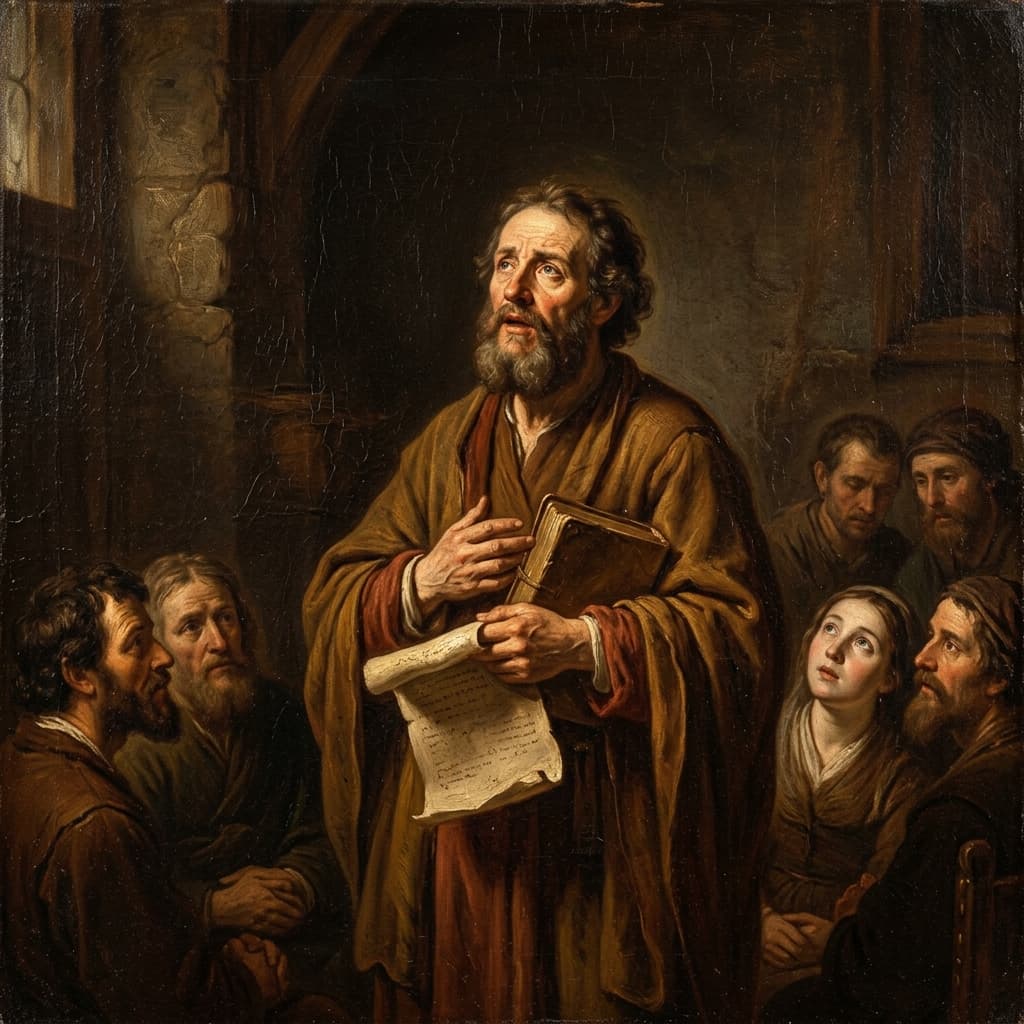
Montanus
hereticEarly Church (2nd-3rd C) · fl. c. 155-180 CE · Updated April 9, 2026
Biography
Montanus was the founder of the Montanist movement, also known as the New Prophecy, in Phrygia, Asia Minor, during the Early Church era of the 2nd and 3rd centuries CE. He emerged as a central figure in a theological controversy that challenged the early Christian community's understanding of prophecy and church authority. Known for claiming direct and authoritative messages from the Holy Spirit, Montanus, along with his followers Priscilla and Maximilla, positioned themselves as vessels of divine revelation.
Montanus started his movement in the small region of Phrygia, which is present-day Turkey, around 172 CE. He and his followers proclaimed new prophecies that they believed supplemented or even superseded apostolic teachings. This radical approach attracted a devoted following but also significant opposition. The movement emphasized extreme asceticism and declared that sins committed after baptism could not be forgiven. Such teachings alarmed church leaders, leading to the condemnation of Montanism by Asian synods around 177 CE and its eventual rejection by the church of Rome.
The early Christian world grappled with defining orthodoxy, with debates over the continuity of prophecy after the apostolic age at the forefront. This environment allowed Montanus’s claims to gain traction among those yearning for spiritual renewal and clearer divine guidance. The emergence of Montanism highlighted the struggle within the church to balance new spiritual expressions with established doctrine. By 177 CE, the church had condemned Montanism, reinforcing the boundary between accepted teachings and those deemed heretical.
Has the age of prophecy closed with the apostles, or does the Spirit continue to speak through new prophets with binding authority — and what are the consequences of each answer?
The question
Montanus felt the Spirit's fire. He believed that he carried the torch of prophecy, a direct line to the divine, just as the prophets of old did. He saw the Spirit moving in his life with urgency and power. This calling was not a whim but a conviction formed from a deep reading of scripture and the pressing needs of the early church. Montanus believed the Spirit hadn't gone silent after the apostles. Instead, the Spirit continued to speak, guiding believers through new revelations. His position came from a sense that the church needed this ongoing divine dialogue to remain vibrant and alive.
If prophecy ended with the apostles, the church stands firm on their foundation alone. It clings to the teachings of those who walked with Jesus and witnessed his ministry. This approach guards the church's unity and doctrinal purity. But it comes at a price: it risks turning the church into a museum of ancient words rather than a living, breathing entity. Without the Spirit's fresh voice, faith could become rigid, unable to respond to new challenges or insights. The community of believers might find itself trapped in a perpetual past, unable to engage with the present.
If the Spirit's voice still echoes through new prophets, then the church must listen and adapt. This path invites change, innovation, and the possibility of evolving truth. It acknowledges that God still speaks, offering guidance tailored to contemporary issues. But this openness comes with danger. New revelations can disrupt unity, with each prophet potentially pulling the faithful in different directions. The church risks becoming a battleground of competing voices, each claiming divine authority. This could shatter the shared understanding and coherence that binds believers together.
Both paths present dilemmas that demand resolution. The church couldn't discard the apostles' authority without losing its historical and spiritual anchor. Yet, denying the Spirit's ongoing voice could stifle its growth and relevance. For ordinary believers, these debates were not abstract. They influenced how they lived their faith day by day. Should they trust ancient texts alone, or also the words of new prophets? Their prayers, moral choices, and understanding of God's will all hinged on this decision. The struggle to hear God's voice in their lives was real and immediate.
The teaching
Montanus taught that the Holy Spirit continued to speak directly and authoritatively through living prophets, including himself and his companions Priscilla and Maximilla. He believed that these new revelations could supplement or even supersede the teachings of the apostles. Montanus insisted that the end times were near and urged his followers to adopt a lifestyle of strict asceticism in preparation. He saw this ongoing prophetic revelation as necessary for guiding the church through these final days.
Montanus used scripture to support his claims. He pointed to John 16:13, arguing that the Spirit's guidance was not limited to the apostles but was an ongoing process. Acts 2:17 also bolstered his position, as it spoke of prophecy continuing in the last days. Montanus stressed the urgency of his message by citing Matthew 24:44, warning that the Son of Man could return at any moment, thus demanding readiness and moral purity. In his work, the "Oracles of Montanus," he laid out these beliefs, emphasizing that the Holy Spirit was actively providing new revelations for the church.
Montanus's teachings attracted those dissatisfied with what they saw as a complacent and worldly church. His call for direct spiritual experience and rigorous moral discipline struck a chord with believers seeking a more immediate connection with the divine. The movement spread quickly in Phrygia, where it originated, and found followers throughout the Roman Empire. Its influence was significant enough to prompt early church councils to address and condemn its teachings, illustrating the widespread impact of Montanus's prophetic claims.
The counterargument
The decisive argument against Montanus hinged on the belief that the canon of Scripture and apostolic tradition were complete and closed. This meant any new revelations claiming equal authority were inherently suspect. Apostles, uniquely chosen by Christ, delivered the final revelation. Apollonius of Ephesus, a bishop and vocal critic of Montanism, articulated this stance in his treatise against Montanism around 180 CE. He argued that Montanist prophecies contradicted apostolic teachings, emphasizing that the apostles were the ultimate and authoritative voices on Christian doctrine. By asserting this, Apollonius reinforced the idea that any message claiming to be from God must align with what the apostles had already established.
Montanus cited specific scriptural texts to support his claims of ongoing revelation. He referred to John 16:13, where the Spirit of truth would lead into all truth. Orthodox interpreters countered that this promise was made only to the apostles, securing their exclusive role in laying the church's foundation. Montanus also appealed to Acts 2:17, which spoke of God pouring out His Spirit in the last days. Orthodoxy answered that Pentecost fulfilled this prophecy, marking the church's start without endorsing new prophets. In 1 Corinthians 14:1, Paul's encouragement to desire prophecy was interpreted within the context of orderly worship, not as a basis for new doctrines. Montanus's claim that the Holy Spirit continued to speak through new prophets undermined his reliance on apostolic tradition. If new revelations could override apostolic teachings, then Montanus's own revelations faced the same threat, creating a cycle of instability.
The orthodox counter-argument demanded a firm stance on the closure of the canon and apostolic teaching's finality. This stance risked stifling legitimate expressions of spiritual gifts within the church, as it required a more rigid ecclesiastical structure to safeguard doctrinal purity. While this preserved the integrity of established teachings, it imposed limits on prophetic expression and innovation. The Church Fathers had to navigate this delicate balance to maintain order without quenching spiritual enthusiasm. By the end of the second century, Montanism's downfall demonstrated orthodoxy's commitment to a closed canon, but it came at the cost of curbing the spontaneity that Montanism tried to revive.
The resolution
In 177 CE, a group of bishops and church leaders convened in Asia Minor to address a pressing theological dispute. This gathering, known as the Asian Synods, sought to resolve the controversy surrounding Montanism, a movement led by Montanus, Priscilla, and Maximilla. These self-proclaimed prophets claimed that the Holy Spirit continued to provide new revelations, challenging the prevailing belief that such prophecy had ceased with the apostles. The synods aimed to clarify the source of authoritative Christian teaching, a question that held deep implications not only for theology but also for the social order. Local rulers, while not directly involved in church decisions, were keen to maintain stability and supported efforts to curb movements like Montanism, which they saw as potentially disruptive.
The debate at the synods revolved around the legitimacy of 'new prophecy' versus 'apostolic tradition.' Montanists insisted on the ongoing authority of new prophecies, arguing that the Holy Spirit had not ceased to speak. Their opponents, however, maintained that the teachings of the apostles were final and could not be superseded. Language played a crucial role in this debate, as it defined the boundaries of orthodoxy. The synods ultimately condemned Montanism as heretical, declaring that the age of prophecy had ended with the apostles. This decision affirmed the primacy of apostolic tradition and rejected any new revelations that claimed equal authority.
Despite the synods' decisive condemnation, Montanism did not vanish. It retained followers in certain regions and continued to influence other groups, like the Novatianists and Donatists, who grappled with similar questions about prophecy and charismatic gifts. The controversy lingered, as debates over the Holy Spirit's role in the church persisted. The question of new prophecy versus established tradition remained unresolved for centuries. Montanism's influence waned over time, but it highlighted an enduring tension in Christian thought. The issue of how the Holy Spirit operates within the church still invites discussion, showing that while the synods settled the immediate dispute, they did not close the door on future theological exploration.
Legacy
After being condemned by Asian synods and rejected by the church of Rome, Montanus continued to gather followers in Phrygia. Despite facing increasing opposition, he remained a central figure for his movement, which became isolated as mainstream Christianity distanced itself. Montanus preached new prophecies and a strict moral code, which appealed to those disenchanted with what they saw as a growing laxity within the church. Over time, however, his influence waned. The movement's isolation led to its decline, as the broader Christian community viewed Montanism with suspicion and ultimately dismissed it as heretical.
Yet, the teachings of Montanus did not vanish overnight. Montanism survived in pockets, especially in Phrygia, for several centuries. The movement's emphasis on prophetic gifts and rigorous asceticism influenced later Christian sects, such as the Novatians and Donatists, who also valued strict discipline and purity. Although Montanism gradually faded as Christian orthodoxy became more defined, its core ideas found echoes in these groups. They kept alive the spirit of Montanus's vision, resisting the mainstream church's authority and maintaining a focus on personal holiness and spiritual experiences.
Today, the legacy of Montanism is visible in modern charismatic and Pentecostal movements. These groups share the Montanist belief in ongoing prophecy and the dynamic presence of the Holy Spirit. The idea of direct communication with the divine resonates with many, offering a spiritual immediacy that organized religion often lacks. This enduring appeal underscores the lasting impact of Montanus's teachings. In 1906, the Azusa Street Revival in Los Angeles, a cornerstone of the Pentecostal movement, demonstrated this influence by igniting a global interest in spiritual gifts and ecstatic expressions of faith.
Continue reading with a Scholar plan
Upgrade to ScholarCommon questions
- Why was Montanism (New Prophecy) considered dangerous?
- Montanism was considered dangerous because it claimed ongoing direct revelation from the Holy Spirit, which challenged the authority of established church teachings and hierarchy. The movement's strict asceticism and belief in the imminent end of the world also threatened social order and ecclesiastical control.
- What exactly did Montanus teach?
- Montanus taught that the Holy Spirit continued to speak directly through living prophets, including himself and his followers Priscilla and Maximilla. He emphasized strict ascetic practices, such as fasting and celibacy, and preached that the end times were near, urging believers to prepare for Christ's return.
- Why did Montanism (New Prophecy) spread so widely?
- Montanism spread widely due to its charismatic leaders and the appeal of direct, personal revelation from the Holy Spirit. Its message of imminent eschatological fulfillment resonated with many early Christians who were disillusioned with the established church's perceived worldliness.
- Who opposed Montanus, and what was their argument?
- Montanus was opposed by church leaders such as the bishops of Asia Minor and eventually the church of Rome. They argued that Montanism's claims of new prophecy undermined the finality of apostolic teaching and threatened church unity by introducing unauthorized doctrines.
- Was Montanus excommunicated, exiled, or executed?
- Montanus was excommunicated by the church, particularly after being condemned by synods in Asia Minor around 177 CE. There is no historical evidence that he was exiled or executed.
- Which council condemned Montanism (New Prophecy), and what did it decide?
- Montanism was condemned by several synods in Asia Minor around 177 CE. These councils decided that Montanism's teachings were heretical, rejecting its claims of ongoing prophecy and its strict ascetic practices.
- Did Montanus ever recant?
- There is no historical evidence that Montanus ever recanted his teachings. He remained committed to his beliefs until his death.
- What is the difference between Montanism (New Prophecy) and orthodox Christianity?
- The primary difference is that Montanism claimed ongoing direct revelation from the Holy Spirit, which could supersede apostolic teachings, while orthodox Christianity held that revelation was complete with the apostles. Montanism also emphasized strict asceticism and an imminent end of the world, which were not central to orthodox doctrine.
- Are there modern versions of Montanism (New Prophecy)?
- While there are no direct modern versions of Montanism, some charismatic and Pentecostal movements share similarities, such as the belief in ongoing prophecy and direct communication with the Holy Spirit.
- Is there anything Montanus got right?
- Montanus emphasized the active role of the Holy Spirit in the life of believers, which is a concept that remains important in many Christian traditions today. His call for a deeper spiritual commitment also resonates with those seeking a more profound faith experience.
- Why does Montanism (New Prophecy) still matter today?
- Montanism matters today as it highlights the tension between institutional authority and personal spiritual experience. It serves as a historical example of how new movements can challenge established religious structures and provoke discussions on the nature of revelation and authority in Christianity.
- Why did Montanus sincerely believe his position was correct? What was he actually defending — and why did he see the alternatives as worse?
- Montanus believed his position was correct because he felt directly inspired by the Holy Spirit, which he saw as a continuation of the prophetic tradition. He was defending the immediacy and vitality of spiritual experience, viewing the alternatives as a lifeless adherence to tradition without the dynamic presence of the Spirit.