Library
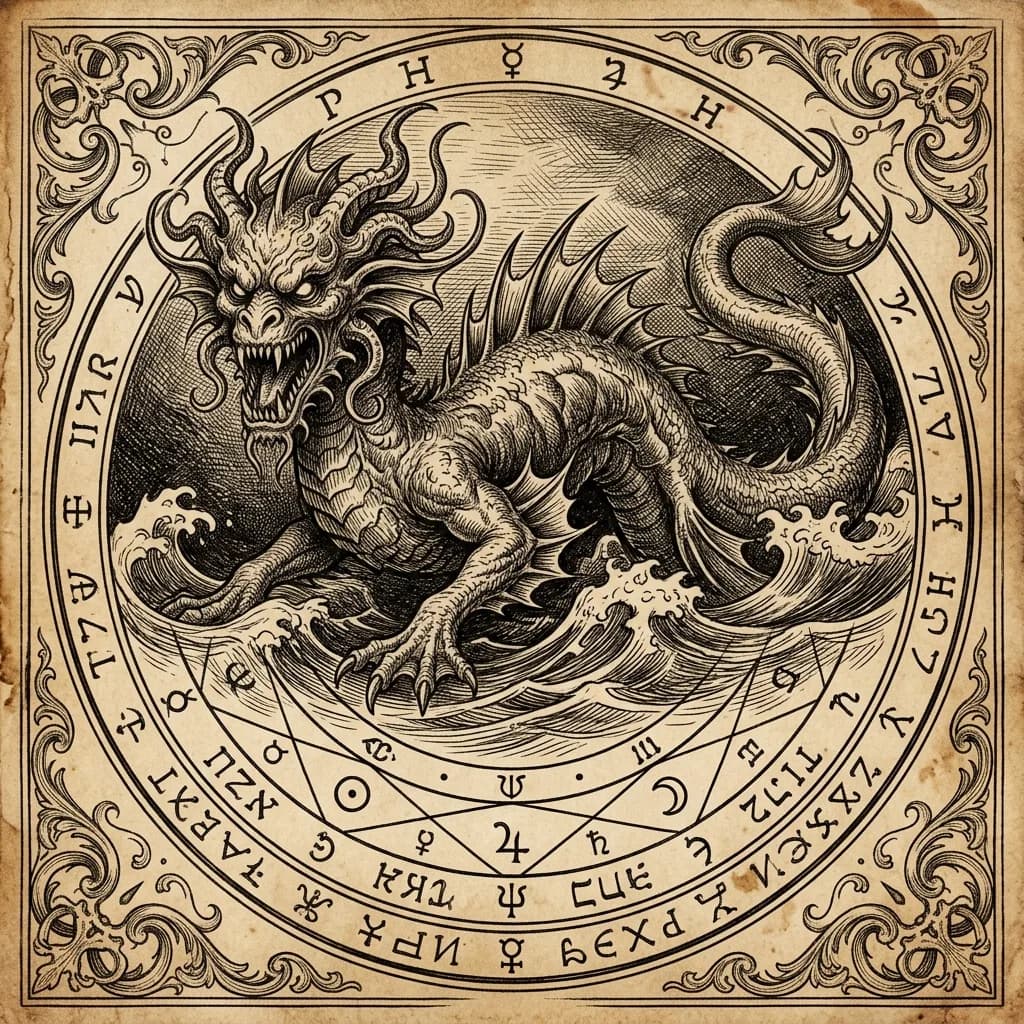
Forneus
MarquisSpirit #30 of the Ars Goetia · 29 legions
Description
Forneus is the 30th Spirit, holding the dual rank of Marquis and Earl of Hell. He appears as a great sea monster. He teaches rhetoric and languages. He gives men a good name and a good report among their enemies. He makes enemies of friends and friends of enemies. He commands twenty-nine legions of spirits.
Symbolic interpretation
Teaches rhetoric and languages. Rhetoric is the systematic art of constructing speech that produces specific effects in listeners - not merely communication, but engineered persuasion. To teach rhetoric is to transfer the mechanism by which raw thought is converted into social force. Language, more broadly, is the grid through which reality is parsed and transmitted between minds; to teach languages is to multiply the number of grids a person can operate within, expanding both their reach and their ability to inhabit foreign conceptual structures. What Forneus imparts is not information but the underlying machinery of influence: the capacity to shape how others receive, interpret, and act upon what they hear. The person who gains this capacity does not merely speak better - they gain structural leverage over the minds of others, because they understand how language frames, conceals, and propels meaning before the listener has any awareness of being moved.
Gives men a good name and a good report among their enemies. Reputation is not a passive reflection of action - it is an active construct that precedes a person into every room they enter. To give a man a good report among his enemies is to alter the interpretive lens through which those enemies process everything he does. The mechanism here is the management of narrative at the level of social transmission: what is said, how it travels, what emotional valence it carries by the time it arrives. The consequential effect on those who receive this altered report is that their hostility loses its fuel; they find themselves unable to sustain a coherent negative account of someone who keeps generating favorable testimony even through adversarial channels. This is not mere flattery - it is the reorganization of how a person is categorized within the social mind of those most motivated to see him fail.
Makes enemies of friends and friends of enemies. This power operates on the bonds of relationship as a structural material - stretching, severing, and rewiring the connections between people. The mechanism is the selective manipulation of information, framing, and perceived loyalty: what allies believe about each other, what rivals come to understand they share. The person who possesses this capacity does not need to act overtly; they need only control the flow of representation between parties. The full chain of effect is profound: trust, once dissolved between allies, rarely reconstitutes in its original form, while the strange intimacy that develops between former enemies carries its own binding charge. Forneus does not merely rearrange social furniture - he rewrites the emotional contracts that hold groups together or apart.
Appearance as a great sea monster. The sea monster is not a random terror - it is a specific structural statement about the kind of entity Forneus is. The ocean represents the vast, undifferentiated medium of collective communication: the total field of language, reputation, and social meaning in which human beings are perpetually submerged. A monster within that medium is a force that moves through it natively and at depth, invisible until it surfaces, operating below the threshold of conscious social awareness. The commanded form - the human shape that contains the sea monster beneath it - describes Forneus's operational mode precisely: legible, even civilized on the surface, deploying the full weight of a primordial, pressurized force underneath. The duality is not cosmetic. It signals that the most dangerous operations of language and reputation management are conducted in recognizably human registers while the actual mechanism remains oceanic, pressurized, and largely invisible to those it acts upon.
Archetype
Forneus derives to Fixed Water - Scorpio. The Water element emerges from the combination of Diffuse expression and Collective orientation: there is no single declaration, no nameable act of persuasion or reputation-management that a target can locate and contest, and the force runs on whoever occupies the relevant social position rather than on a specific named individual. The mechanism is atmospheric and systemic - reputation travels through networks before the subject of that reputation has any awareness it is moving, and the restructuring of friend-enemy bonds operates through what people believe they are perceiving independently. This is the Diffuse-Collective medium exactly: the force is already inside the system before it is recognized as a force. The Fixed modality then describes what Forneus does with that medium: not initiates a rupture, not reads and translates a transitional state, but holds a condition in place. A good name among enemies is not a one-time event - it is a maintained state, a reputation that keeps regenerating favorable testimony across adversarial channels without requiring active intervention at each node. The legions commanded, the languages taught, the bonds severed or fused - each operates as a sustained structural condition rather than a discrete act. The direction is Generative: Forneus distributes outward through social networks, seeding the medium rather than drawing targets inward toward a center. The specific mechanical consequence is that the Fixed posture within a Water medium produces a force that does not merely alter relationships but locks the altered state, making the new configuration of trust and enmity self-perpetuating within the collective field.