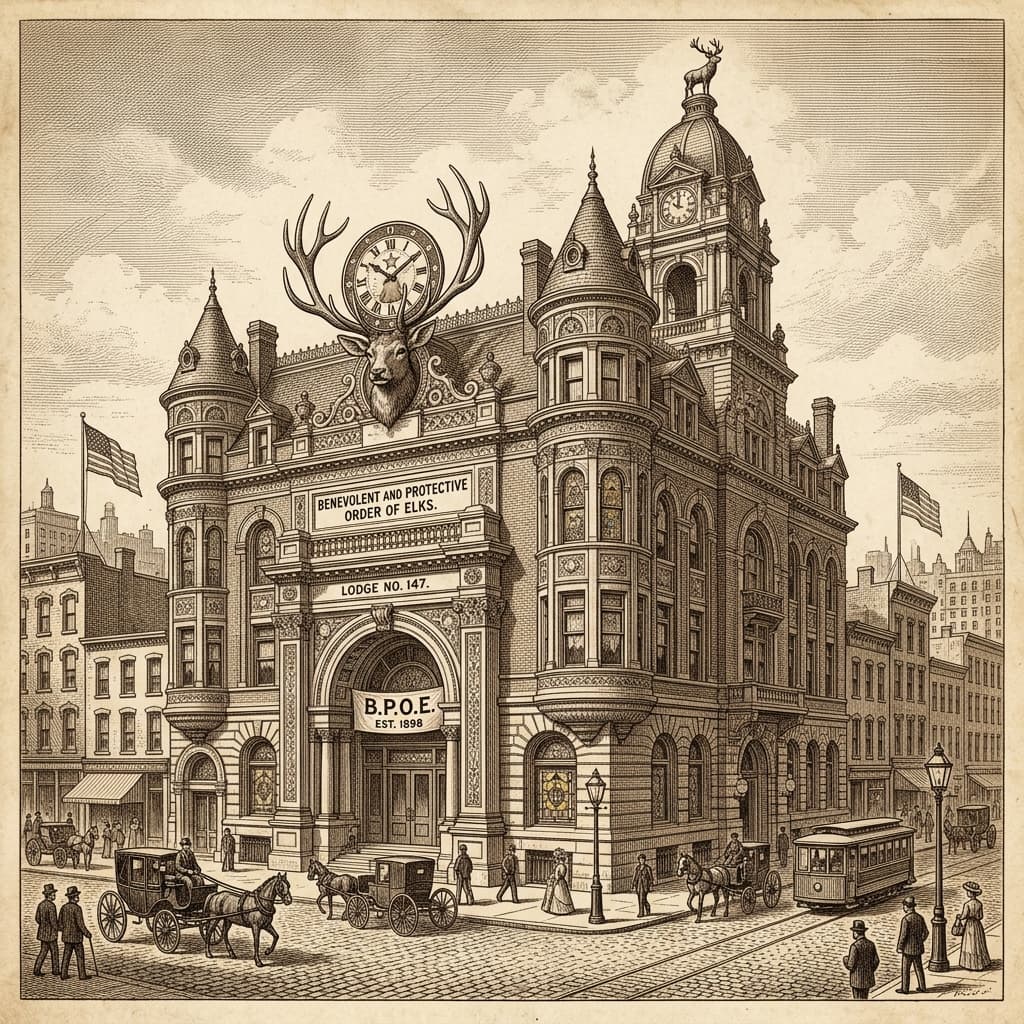
The Elks
Fraternal Orders · Updated August 15, 2026
Overview
The Elks began not as a charitable brotherhood but as a drinking club for minstrel show performers called the "Jolly Corks," and only adopted their animal name because a member thought the elk's traits suited a group that had outgrown its theatrical origins. In 1867, an English-born performer named Charles Algernon Sidney Vivian arrived in New York City and started gathering fellow entertainers for late-night drinks and camaraderie. The Jolly Corks named themselves after a parlor trick Vivian played with a cork, and their ranks included actors, singers, and stagehands who wanted a private space to unwind after curtain calls. Within months, the informal gatherings attracted a broader mix of professionals, and the group's shifting makeup pushed early members to consider a more permanent structure.
On February 16, 1868, the club formally organized as the Benevolent and Protective Order of Elks, adopting a constitution and electing John G. Senter as its first Exalted Ruler. George F. McDonald, an early member, championed the elk as the order's symbol, arguing the animal's strength, speed, and vigilance reflected the kind of fraternity they wanted to build. The new organization built itself around four pillars,Charity, Justice, Brotherly Love, and Fidelity,and established a nightly "Hour of Recollection" toast to honor absent and deceased members. Like other American fraternal groups of the era, including the Freemasons and the Odd Fellows, the Elks offered men a network of mutual aid and social connection in a rapidly industrializing nation. The order also required members to affirm a belief in God, a religious test that aligned with the broad ethical expectations of 19th-century fraternal life.
The Elks expanded aggressively through the late 19th and early 20th centuries, growing into one of the largest fraternal organizations in the United States with more than 1,700 lodges. The growth came with strict boundaries: membership remained restricted to white males, and the order resisted desegregation until sustained pressure during the civil rights era forced leadership to remove racial barriers. Women gained full admission only in the late 20th century. Today the Benevolent and Protective Order of Elks reports over 750,000 members and funds veterans' programs, youth scholarships, and disaster relief. The organization still requires every member to affirm belief in God, and the nightly Hour of Recollection toast continues at lodges across the country.
The Elks began not as a charitable brotherhood but as a drinking club for minstrel show performers called the 'Jolly Corks,' and only adopted their animal name because a member thought the elk's traits suited a group that had outgrown its theatrical origins.