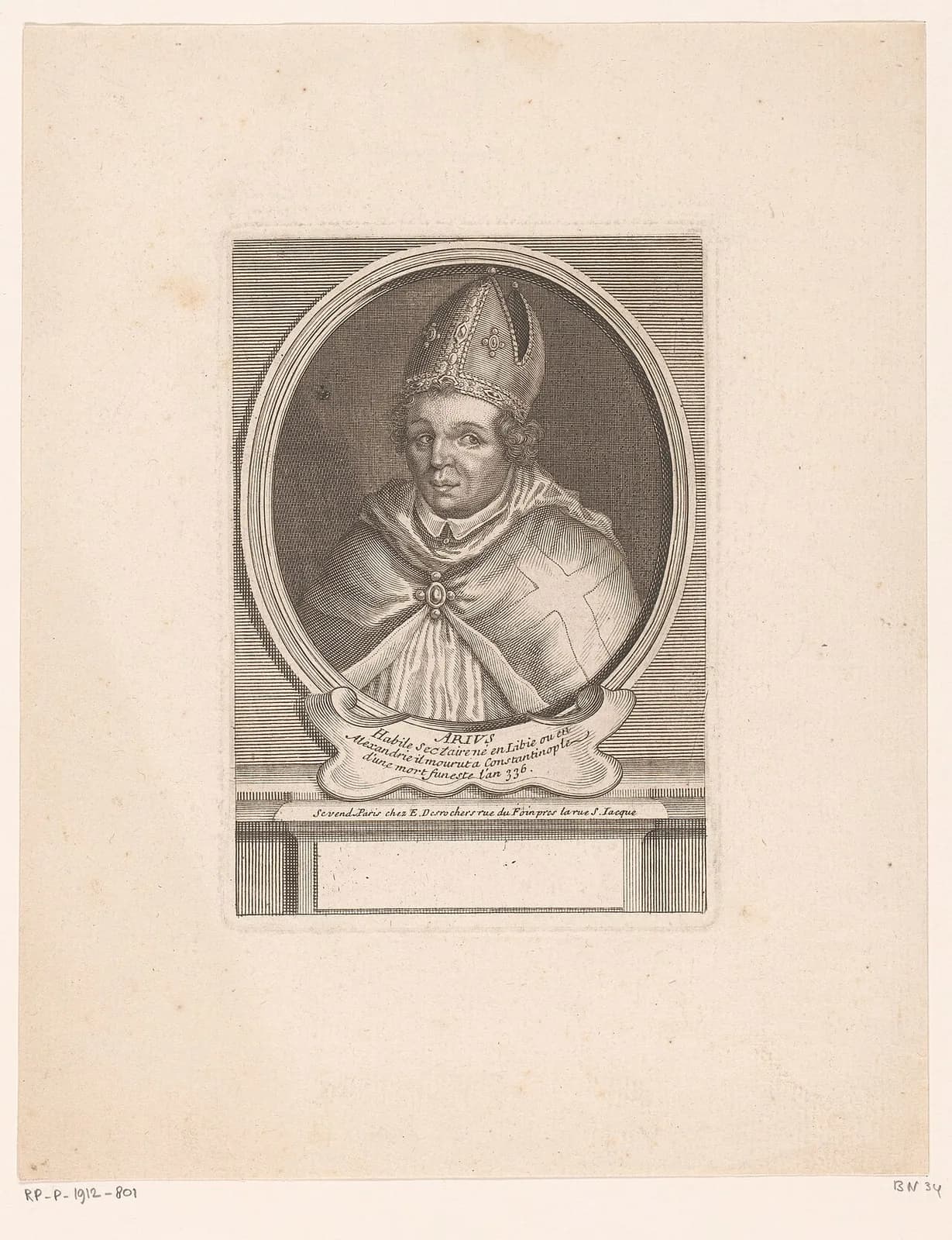
Arius
Church history · Updated August 15, 2026
Overview
Arius's teachings stirred such controversy that they led to the first ecumenical council in Christian history, the Council of Nicaea, held in 325 AD. Arius, a Christian presbyter from Alexandria, was born around 256 AD and rose to prominence as a church leader in the early 4th century. His views on the nature of Christ sparked intense debate among early Christians. Arius argued that Jesus Christ was not co-eternal with God the Father, implying that there was a time when Christ did not exist. This concept created a rift within the Christian community.
Emperor Constantine convened the Council of Nicaea in 325 AD to resolve the discord caused by Arius's teachings. Key figures from across the Christian world gathered to address the theological crisis. After much deliberation, the Nicene Creed was formulated. The creed articulated that Jesus Christ is "of the same substance" as God the Father, a direct rebuttal to Arius's assertions. Declaring Arius's teachings heretical, the council decided to exile him, with Emperor Constantine enforcing the banishment.
Today, the Nicene Creed remains a central element of Christian orthodoxy, recited in churches worldwide as a declaration of faith. The debate initiated by Arius's teachings continues to be a moment in church history, illustrating the early church's struggle to define the nature of Christ and the relationship between God the Father and Jesus Christ. Arius's legacy is complex. Although his views were rejected, his role in shaping theological discourse is recognized. The Council of Nicaea set a precedent for future councils, establishing a pattern for addressing theological disputes within Christianity.
Arius's teachings were so controversial that they led to the first ecumenical council in Christian history, the Council of Nicaea, in 325 AD.
Common questions
- Who was Arius and what did he believe?
- Arius was a Christian presbyter from Alexandria, born around 256 AD, who became a prominent church leader in the early 4th century. He believed that Jesus Christ was not co-eternal with God the Father, suggesting there was a time when Christ did not exist.
- What was the Arian controversy?
- The Arian controversy was a theological dispute in early Christianity centered around Arius's teachings that Jesus Christ was not of the same substance as God the Father. This debate led to significant division within the Christian community.
- Why was Arius considered a heretic?
- Arius was considered a heretic because his teachings contradicted the prevailing Christian belief that Jesus Christ was co-eternal and of the same substance as God the Father. His views were formally rejected at the Council of Nicaea.
- What is Arianism in Christianity?
- Arianism is a theological belief that asserts Jesus Christ is not of the same substance as God the Father and is not co-eternal with Him. It was named after Arius, whose teachings sparked the controversy.
- How did the Council of Nicaea address Arius's teachings?
- The Council of Nicaea addressed Arius's teachings by formulating the Nicene Creed, which declared that Jesus Christ is 'of the same substance' as God the Father. This creed directly refuted Arius's assertions and led to his teachings being declared heretical.
- What impact did Arius have on early Christianity?
- Arius's teachings led to significant theological debate and division within early Christianity, prompting the first ecumenical council, the Council of Nicaea. His ideas forced the early church to clarify and formalize its doctrine regarding the nature of Christ.
- Why did Arius's teachings lead to a major church council?
- Arius's teachings led to a major church council because they caused widespread controversy and division within the Christian community over the nature of Christ. Emperor Constantine convened the Council of Nicaea to resolve the discord and establish a unified doctrine.
- What were the main arguments against Arius's beliefs?
- The main arguments against Arius's beliefs were that they contradicted the traditional Christian doctrine of the Trinity, which holds that Jesus Christ is co-eternal and of the same substance as God the Father. His views were seen as undermining the divine nature of Christ.
- How did Arius's views differ from mainstream Christian beliefs?
- Arius's views differed from mainstream Christian beliefs in that he argued Jesus Christ was not co-eternal with God the Father and was a created being, rather than of the same substance as God. This contrasted with the orthodox view of the Trinity.
- What happened to Arius after the Council of Nicaea?
- After the Council of Nicaea, Arius's teachings were declared heretical, and he was exiled by Emperor Constantine. His exile was part of the enforcement of the council's decisions against his views.
- How did the Arian controversy influence the development of the Nicene Creed?
- The Arian controversy directly influenced the development of the Nicene Creed, as the council sought to counter Arius's teachings by affirming that Jesus Christ is 'of the same substance' as God the Father. This creed became a foundational statement of Christian orthodoxy.
- What role did Emperor Constantine play in the Arian controversy?
- Emperor Constantine played a crucial role in the Arian controversy by convening the Council of Nicaea in 325 AD to resolve the theological disputes caused by Arius's teachings. He enforced the council's decisions, including the exile of Arius.
- How did the Arian controversy affect the relationship between church and state?
- The Arian controversy affected the relationship between church and state by highlighting the role of the Roman Emperor in religious matters, as Emperor Constantine actively intervened to resolve the theological dispute. This set a precedent for future imperial involvement in church affairs.