The Carmelites
Monastic Orders · Updated August 15, 2026
Overview
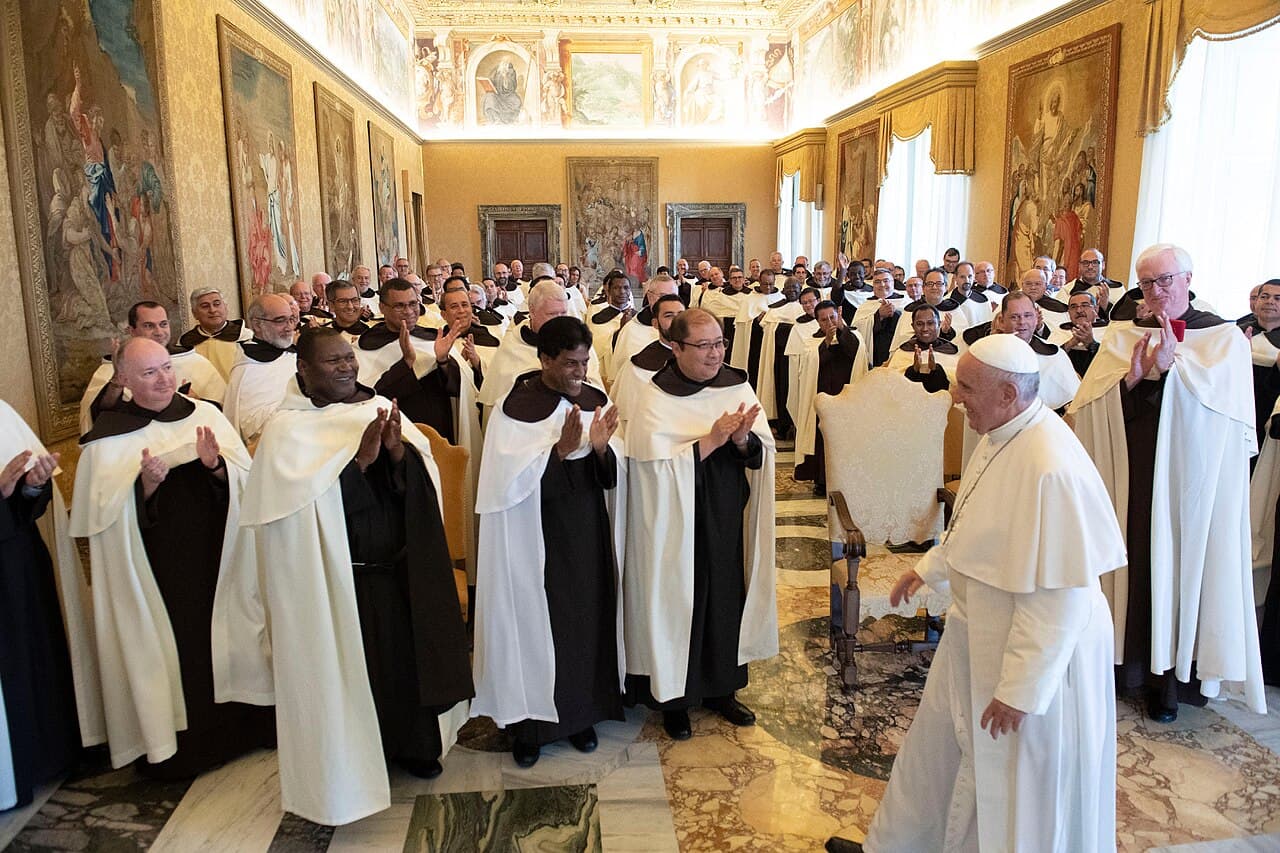
The Carmelites originated not in Europe like most mendicant orders but on a remote mountain in the Holy Land, founded by former crusaders and pilgrims who chose to live as hermits in caves on Mount Carmel. The community took shape in the 12th century during the Crusader period, when European forces controlled parts of the eastern Mediterranean. No definitive founding document survives, but the men who gathered on that coastal ridge in northern Israel sought a life of solitude and prayer rather than warfare. They drew spiritual inspiration from the prophet Elijah, who according to biblical tradition confronted pagan prophets on the same mountain. The order's full name, the Order of the Brothers of the Blessed Virgin Mary of Mount Carmel, reflects its early devotion to Mary as patroness.
Around 1209, Albert of Jerusalem, the Latin Patriarch of Jerusalem, wrote the Carmelite Rule, giving the hermit community a formal governing structure. Albert's rule directed the brothers to live individually in separate cells, pray ceaselessly, and hold all goods in common. Two decades later, Muslim forces began pushing back against the Crusader States, and The Carmelites started migrating to Europe around 1238. The transition from Holy Land hermits to European friars was difficult. The order adopted a mendicant structure similar to the Franciscans and Dominicans, relying on charity and begging rather than landed wealth. In England, Simon Stock served as prior general in the mid-13th century and became associated with the Brown Scapular, a garment devotionally linked to a vision of the Virgin Mary. The order expanded to include both male and female religious communities, a structure that set it apart from the military orders of the same era.
In 1562, the Spanish nun Teresa of vila founded the first Discalced Carmelite convent in vila, launching a reform movement that split the order into two branches: the original Carmelites and the stricter Discalced Carmelites, who embraced barefoot simplicity and enclosed contemplative life. Both branches continue today, operating monasteries and convents worldwide and retaining the shortened name "Carmel" as shorthand for the mountain that started everything.
The Carmelites originated not in Europe like most mendicant orders but on a remote mountain in the Holy Land, founded by former crusaders and pilgrims who chose to live as hermits in caves on Mount Carmel.