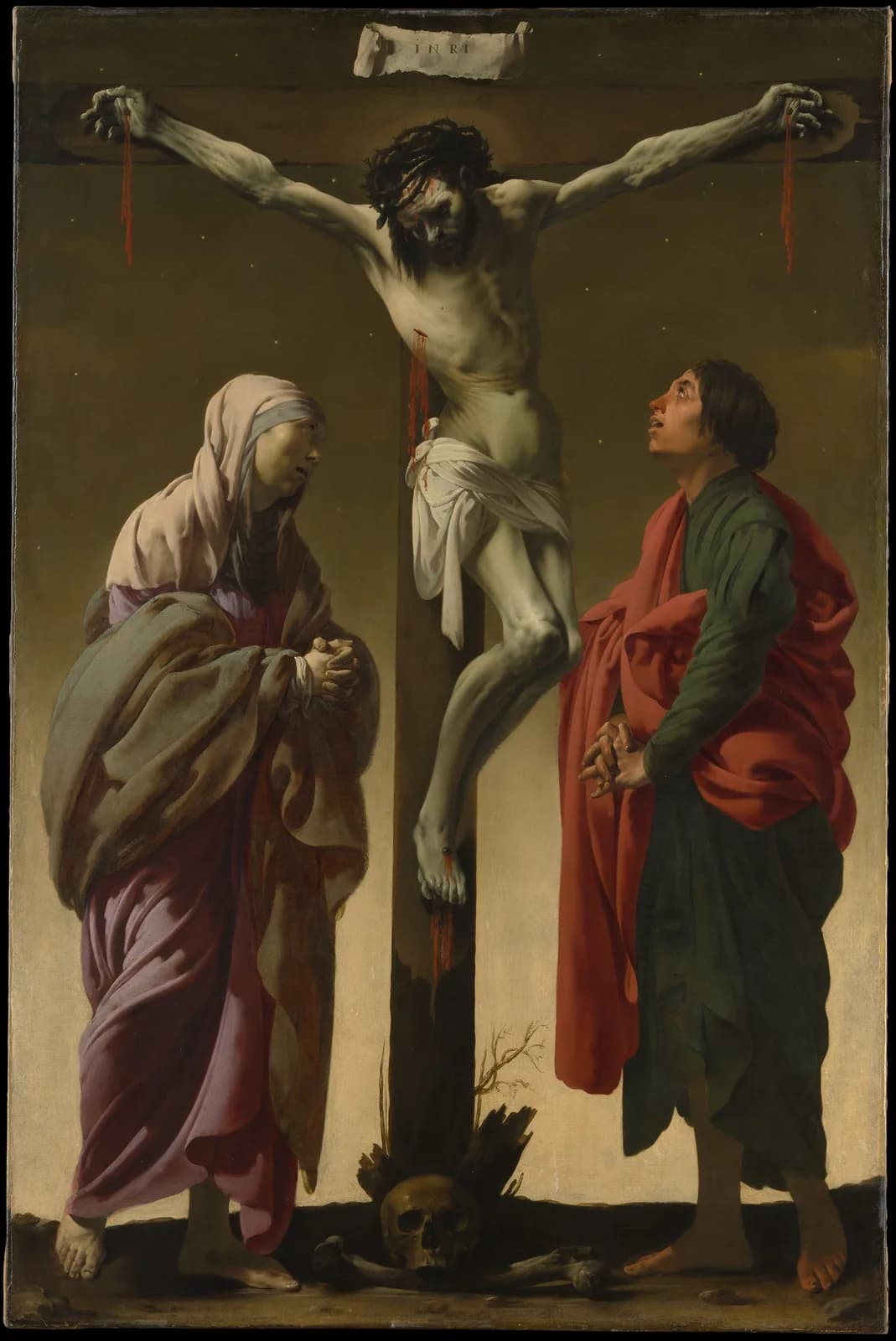
Romans 5:12-21 · Romans · Updated April 25, 2026
Adam & Christ
In Romans 5:12-21, Paul explains how sin and death entered the world through Adam, and contrasts this with the grace and justification brought by Jesus Christ. Through Adam's disobedience, many were made sinners, but through Christ's obedience, many will be made righteous.
Summary
Romans 5:12-21 is part of a letter written by the Apostle Paul to the Christians in Rome. It addresses the impact of two key figures in biblical history: Adam and Jesus Christ. Paul explains how sin entered the world through Adam, leading to death for all humanity. Sin was present even before the law was given through Moses, indicating that death reigned from Adam's time onward (5:12-14).
Paul contrasts the actions of Adam and Jesus Christ. Through Adam's disobedience, many became sinners, and death came to all (5:15, 5:19). In contrast, Jesus Christ's obedience brings Grace and the gift of righteousness, leading to life for many. While Adam's offense resulted in condemnation, the Grace given through Jesus results in justification (5:15-17). This grace is abundant and overcomes the multitude of offenses, offering righteousness and life (5:20).
The passage concludes by establishing the final state of affairs. Sin reigned through Adam, leading to death, but grace now reigns through righteousness, leading to eternal life through Jesus Christ (5:21). The text presents the conclusion that while sin brought death, grace through Jesus brings life. The primary conclusion of Romans 5:12-21 is the contrast of Adam's impact on humanity with that of Jesus Christ. Through Adam's disobedience, sin and death permeated human existence, affecting all people. Conversely, through Jesus Christ's obedience and sacrifice, grace and the possibility of righteousness are extended to all. This passage shows the power of grace, which not only counters the condemnation brought by Adam but also establishes a new state where righteousness and eternal life are available through Jesus (5:21).
Chiastic structure
ⓘRomans 5:12
“Wherefore, as by one man sin entered into the world, and death by sin;”
Romans 5:15-17
“But not as the offence, so also the free gift... much more the grace of God, and the gift by grace, by one man, Jesus Christ, hath abounded unto many.”
Romans 5:21
“That as sin hath reigned unto death, even so might grace reign through righteousness unto eternal life by Jesus Christ our Lord.”
The passage begins with the entrance of sin and death through Adam and concludes with the reign of grace and eternal life through Jesus Christ, showing a reversal from condemnation to justification.
Interpretation and theological stakes
Continue reading with a Scholar plan
Upgrade to Scholar