Revelation 18:1-24 · Revelation · Updated April 25, 2026
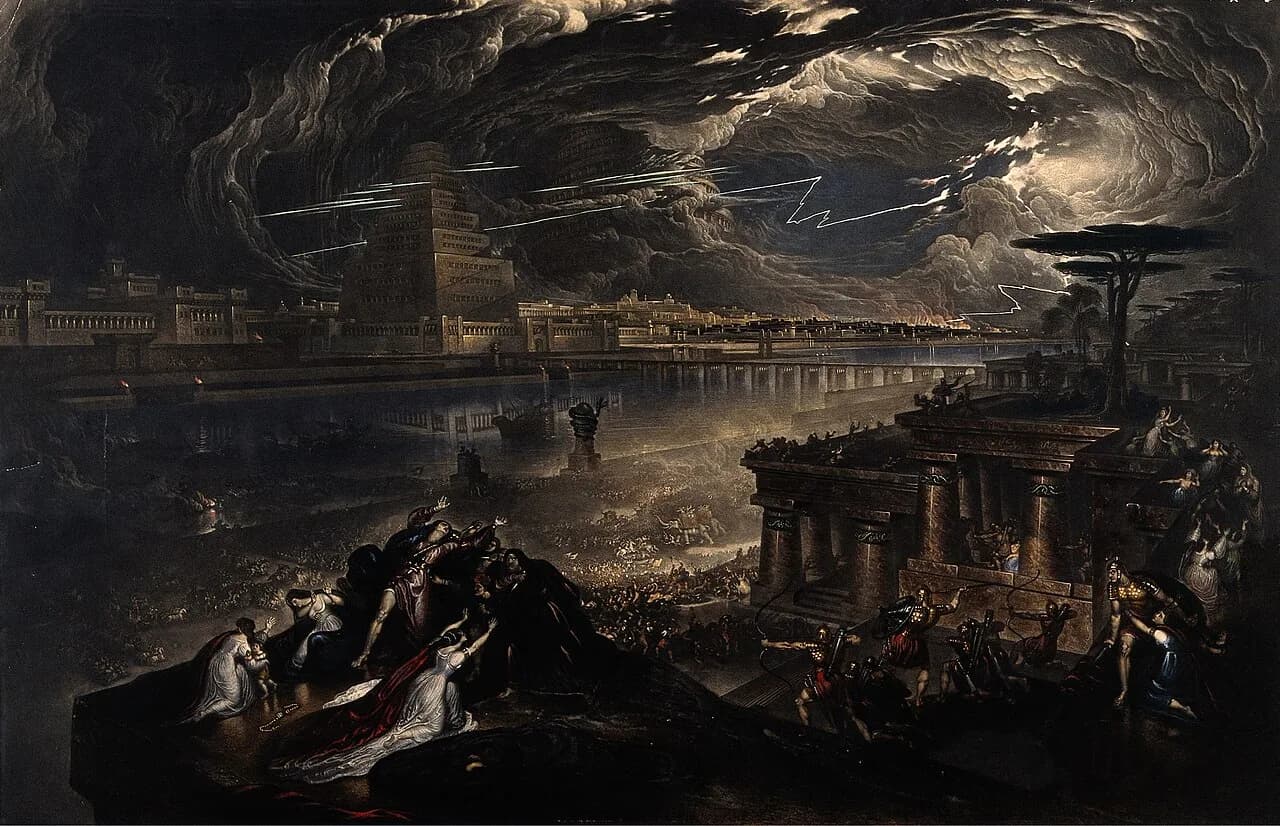
Babylon Fallen
An angel announces the fall of Babylon, declaring it a dwelling place for demons and unclean spirits. The nations and merchants mourn her destruction, while a voice from heaven calls for God's people to separate from her sins. Babylon's judgment is swift, and her wealth and splendor are reduced to nothing.
Summary
Revelation 18:1-24 is a prophetic vision describing the fall of Babylon, symbolizing a powerful and corrupt entity. It portrays divine judgment on a city that has led nations astray. An angel descends from Heaven, illuminating the earth with his glory (18:1). The angel declares the fall of "Babylon the great," describing it as a place overrun by evil spirits and unclean creatures (18:2). Another voice from Heaven warns God's people to leave Babylon to avoid sharing in its sins and plagues, as its iniquities have reached heaven, and God has remembered them (18:4-5).
Various groups lament Babylon's destruction. The kings of the earth, who lived luxuriously with Babylon, mourn its downfall from a distance, fearing its torment and acknowledging that its judgment has come swiftly (18:9-10). Merchants grieve over the loss of trade and wealth, as no one buys their goods anymore (18:11). They list the luxurious items once traded, now lost forever (18:12-14). Shipmasters and sailors also lament, witnessing the desolation of the city that enriched them (18:17-19). Meanwhile, heaven, apostles, and prophets rejoice, for God has avenged them (18:20).
A mighty angel casts a millstone into the sea, symbolizing Babylon's violent and irreversible destruction (18:21). The city will no longer hear music, crafts, or the joy of weddings (18:22-23). Babylon's merchants were influential, but their deceptions led nations astray (18:23). The passage ends by stating that Babylon is responsible for the blood of prophets, saints, and all who were slain on earth (18:24). The text presents the fall of Babylon as the final judgment on a city guilty of widespread corruption and violence. The primary conclusion drawn from Revelation 18:1-24 is the total and irrevocable judgment on Babylon, a symbol for a corrupt power that has led nations into immorality and excess. The passage emphasizes the divine nature of this judgment, showing that Babylon's sins have accumulated to such an extent that they demand a direct response from God. Babylon is depicted as a dwelling place for evil (18:2), and its fall is not only inevitable but also swift and complete, marked by divine retribution for its role in misleading and exploiting the world (18:21).
Chiastic structure
ⓘRevelation 18:2
“Babylon the great is fallen, is fallen”
Revelation 18:20
“Rejoice over her, O heaven, and ye holy apostles and prophets; for God hath avenged you on her.”
Revelation 18:21
“Thus with violence shall that great city Babylon be thrown down, and shall be found no more at all.”
The fall and destruction of Babylon (A) mirrors the finality and completeness of its desolation (A'). Both emphasize the totality of Babylon's demise.
Interpretation and theological stakes
Continue reading with a Scholar plan
Upgrade to Scholar