Matthew 5:3-12 · Matthew · Updated April 25, 2026
Beatitudes
In the Beatitudes, Jesus delivers a series of blessings to various groups of people, highlighting the virtues and rewards of the kingdom of heaven. He speaks to the poor in spirit, the mourners, the meek, and others, promising them comfort, inheritance, and divine favor.
Summary
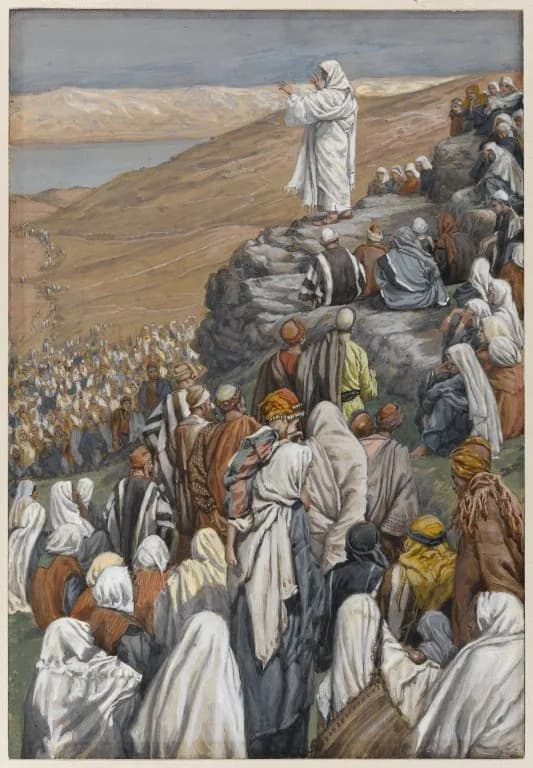
The Beatitudes, found in Matthew 5:3-12, are part of Jesus' Sermon on the Mount, a foundational teaching in the New Testament. This passage outlines a series of blessings that convey the values of the kingdom of heaven. Jesus is the main character, and he addresses a crowd of his disciples and followers. On a mountainside, Jesus begins to teach about the nature of true happiness and spiritual fulfillment.
In this passage, Jesus lists a series of statements, each beginning with "Blessed are," followed by a description of people who embody certain virtues or circumstances. He states that the poor in spirit are blessed because theirs is the kingdom of heaven (5:3). Those who mourn will be comforted (5:4), and the meek will inherit the earth (5:5). He continues by stating that those who hunger and thirst for righteousness will be filled (5:6), the merciful will receive mercy (5:7), and the pure in heart will see God (5:8). Peacemakers will be called the children of God (5:9), and those persecuted for righteousness' sake will again have the kingdom of Heaven (5:10). Jesus concludes by blessing those who face persecution and false accusations for his sake, encouraging them to rejoice because their reward in heaven will be great (5:11-12).
Jesus urges his listeners to be glad and rejoice despite persecution, as their reward in heaven will be great. He reminds them that the prophets before them faced similar persecution (5:12). The events presented in the text show that true blessedness and reward come from embodying these qualities and enduring hardships for righteousness and Jesus' sake. The main conclusion of the Beatitudes passage in Matthew 5:3-12 is that true blessedness comes from embodying specific spiritual virtues and enduring hardship for righteousness. Jesus' teaching challenges conventional views of happiness by linking it to spiritual states rather than external circumstances. He emphasizes qualities such as poverty of spirit, meekness, and a hunger for righteousness, presenting them as pathways to experiencing the kingdom of heaven both now and in the future. This foundational message conveys the values of the kingdom of heaven, characterized by humility, mercy, and peace, and promises divine reward for those who face persecution for their faith.
Chiastic structure
ⓘMatthew 5:3
“Blessed are the poor in spirit: for theirs is the kingdom of heaven.”
Matthew 5:6
“Blessed are they which do hunger and thirst after righteousness: for they shall be filled.”
Matthew 5:10
“Blessed are they which are persecuted for righteousness' sake: for theirs is the kingdom of heaven.”
Both A and A' refer to the kingdom of heaven as a reward for specific attitudes and actions.
Interpretation and theological stakes
Continue reading with a Scholar plan
Upgrade to Scholar