Matthew 26:26-30 · Matthew · Updated April 25, 2026
Last Supper Institution
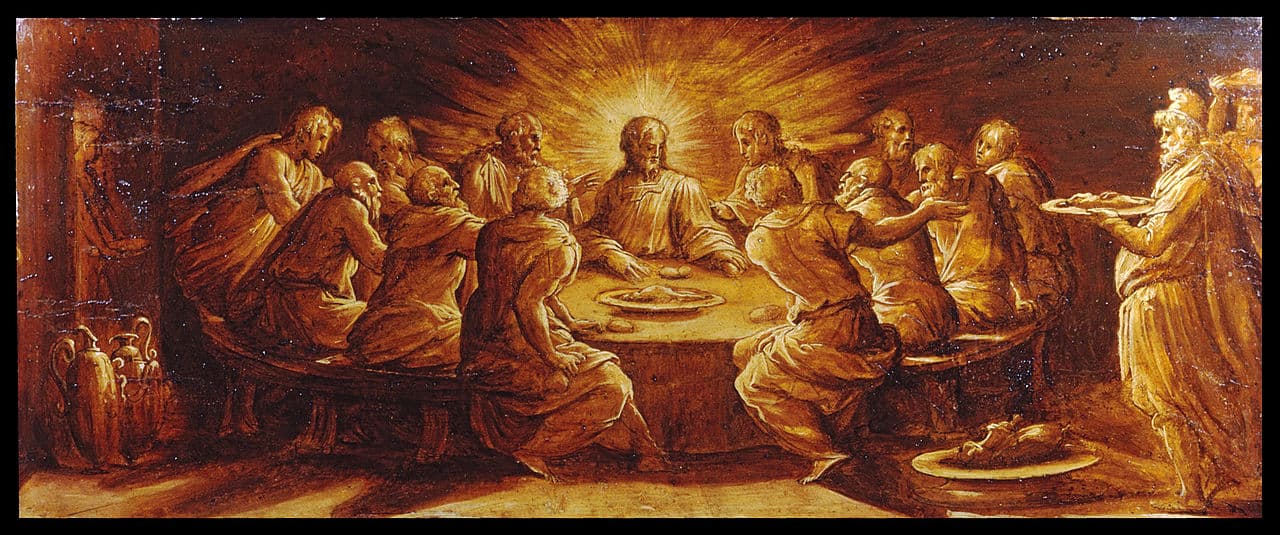
During the Last Supper, Jesus took bread, blessed it, broke it, and gave it to his disciples, declaring it as his body. He then took a cup, gave thanks, and shared it with them, calling it his blood of the new testament. After singing a hymn, they went to the Mount of Olives.
Summary
Matthew 26:26-30 describes the institution of the Last Supper, a moment in the New Testament where Jesus establishes a New Covenant with his disciples. The setting is a meal shared by Jesus and his disciples in Jerusalem, shortly before his arrest and Crucifixion. As they gather, the atmosphere is intimate and solemn, with Jesus aware of the events that are about to unfold.
During the meal, Jesus takes bread, blesses it, breaks it, and gives it to the disciples, instructing them to eat it as it represents his body (26:26). He then takes a cup of wine, gives thanks, and shares it with them, saying it represents his blood of the New Covenant, shed for the remission of sins (26:27-28). Jesus tells them he will not drink wine again until he drinks it anew with them in his Father’s kingdom (26:29). Jesus uses the bread and wine to convey a deeper message to his followers.
The passage concludes with Jesus and the disciples singing a hymn before they leave for the Mount of Olives (26:30). This marks the end of the meal and the beginning of the events leading to Jesus' arrest. The text presents these actions as establishing a new covenant between Jesus and his followers, signifying the importance of the Last Supper in the Christian tradition. The main conclusion drawn from Matthew 26:26-30 is the establishment of a new covenant between Jesus and his followers. Jesus' actions and words during the meal signify a shift in the relationship between God and humanity. By using bread and wine to represent his body and blood, Jesus institutes a sacramental act that signifies his impending sacrifice for the remission of sins. This passage marks the transition from the old covenant, based on the law, to a new covenant grounded in Grace and redemption through Jesus' sacrifice.
Chiastic structure
ⓘMatthew 26:26
“Jesus took bread, and blessed it, and brake it, and gave it to the disciples”
Matthew 26:28
“For this is my blood of the new testament, which is shed for many for the remission of sins.”
Matthew 26:29
“I will not drink henceforth of this fruit of the vine, until that day when I drink it new with you in my Father's kingdom.”
Both A and A' involve communal actions and the sharing of significant elements (bread and wine) that symbolize Jesus' body and blood, framing the institution of the new covenant.
Interpretation and theological stakes
Continue reading with a Scholar plan
Upgrade to Scholar