2 Samuel 12:1-15 · 2 Samuel · Updated April 25, 2026
Nathan's Rebuke
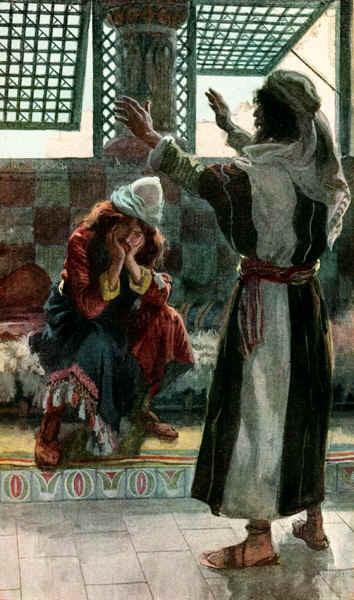
Nathan the prophet confronts King David with a parable about a rich man who takes a poor man's only lamb. David, angered by the story, condemns the rich man, only for Nathan to reveal that David is the man, having taken Uriah's wife and arranged Uriah's death. Nathan declares God's judgment on David, leading to David's repentance and the death of his child with Bathsheba.
Summary
The passage from 2 Samuel 12:1-15 addresses King David's moral failings and the consequences that follow. Key figures include Nathan, a prophet sent by God, and David, the king of Israel. Prior to this, David had committed adultery with Bathsheba and orchestrated the death of her husband, Uriah the Hittite. God sends Nathan to confront David through a parable about a rich man who unjustly takes a poor man's beloved lamb (12:1-4).
Nathan tells David the story of the rich man and the poor man, provoking David's anger. David declares that the rich man deserves to die and must repay fourfold for his lack of pity (12:5-6). Nathan then reveals to David that he is the man in the story, accusing him of despising God's commandments by killing Uriah and taking his wife (12:7-9). Nathan conveys God's judgment, stating that violence will plague David's family, and his wives will be taken by someone close to him as a public consequence of his secret sin (12:10-12).
David acknowledges his sin against the Lord (12:13). Nathan reassures David that God has forgiven him and that he will not die, but he warns that the child born to David and Bathsheba will die as a result of David's actions (12:13-14). Nathan departs, and the child becomes very sick (12:15). The passage establishes the gravity of David's sin and the severe repercussions that follow, as declared by God through Nathan. The primary conclusion of 2 Samuel 12:1-15 is that David's actions have violated God's commandments, resulting in divine judgment. Nathan's parable exposes David's sin in a way that bypasses his defenses. This confrontation reveals the seriousness of David's transgressions, specifically adultery and murder, and the inevitable consequences of sin. Despite David's power as king, he is not above God's law, and his actions have led to a series of tragic repercussions, both personal and familial.
Chiastic structure
ⓘ2 Samuel 12:1-4
“There were two men in one city; the one rich, and the other poor... but took the poor man's lamb, and dressed it for the man that was come to him.”
2 Samuel 12:13
“And David said unto Nathan, I have sinned against the LORD. And Nathan said unto David, The LORD also hath put away thy sin; thou shalt not die.”
2 Samuel 12:9-10
“Thou hast killed Uriah the Hittite with the sword, and hast taken his wife to be thy wife.”
Both A and A' involve the theme of taking what is not rightfully one's own, leading to consequences.
Interpretation and theological stakes
Continue reading with a Scholar plan
Upgrade to Scholar