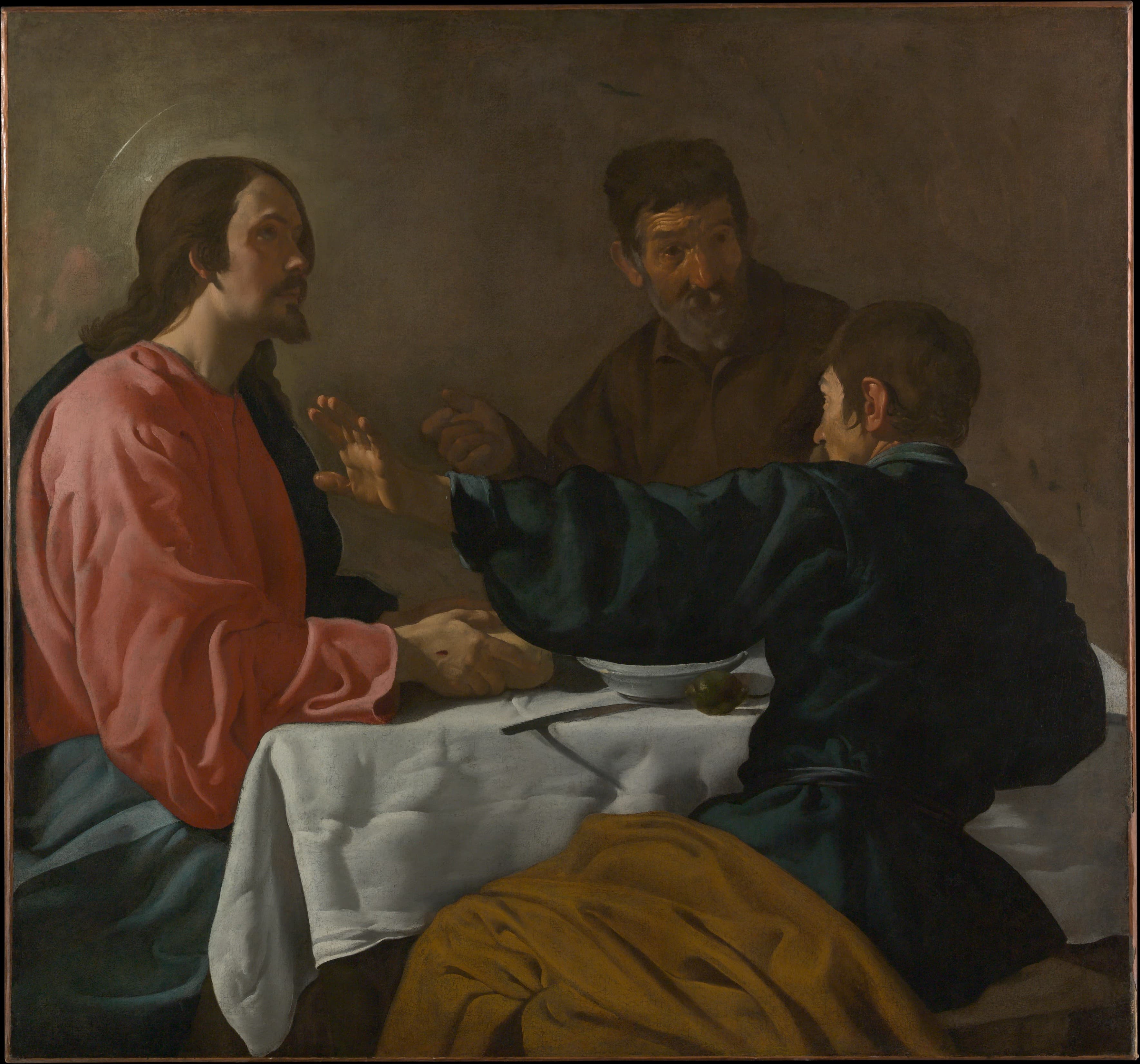
Luke 24:13-35 · Luke · Updated April 25, 2026
Road to Emmaus
Jesus joins two disciples on the road to Emmaus unrecognized, revealed only in the breaking of bread — the encounter that shows how Scripture points to Christ.
Summary
The Road to Emmaus passage in Luke 24:13-35 recounts an encounter on the day of Jesus' resurrection. Two of Jesus' followers, one named Cleopas, are traveling from Jerusalem to a village called Emmaus. As they walk, they discuss the recent events surrounding Jesus' crucifixion and the reports of his resurrection. While they talk, Jesus approaches and begins to walk with them, though they do not recognize him (24:15-16).
As they continue their journey, Jesus asks them about their conversation, and Cleopas expresses surprise that the stranger seems unaware of recent events in Jerusalem. They recount the story of Jesus of Nazareth, his crucifixion, and the astonishing news from some women in their group who claimed Jesus' tomb was empty and that angels announced he was alive (24:18-24). Jesus then explains the scriptures, starting from Moses and the prophets, about the necessity of the Messiah's suffering and subsequent glory (24:27). Upon reaching Emmaus, the two invite Jesus to stay with them, and during a meal, Jesus blesses and breaks bread. At that moment, their eyes open, and they recognize him, but he vanishes from their sight (24:30-31).
Following this revelation, the two disciples immediately return to Jerusalem to share their experience with the eleven apostles and others gathered there. They confirm that the Lord is risen and has appeared to Simon (24:34). The passage concludes with the disciples recounting their encounter on the road and how they recognized Jesus in the breaking of the bread (24:35). The Road to Emmaus passage in Luke 24:13-35 establishes the power of encounter with the risen Jesus. This meeting is not just about physical recognition; it is tied to understanding and experiencing Jesus’ resurrection through both scripture and fellowship. The disciples' realization of Jesus' identity during the breaking of bread shows the fusion of insight and experience, which propels them to return to Jerusalem with renewed faith and urgency. This encounter matters because it marks the shift from doubt and confusion to faith and proclamation, marking a moment of belief in the risen Christ.
Chiastic structure
ⓘLuke 24:16
“But their eyes were holden that they should not know him.”
Luke 24:25-27
“Ought not Christ to have suffered these things, and to enter into his glory?”
Luke 24:31
“And their eyes were opened, and they knew him; and he vanished out of their sight.”
The opening of eyes and recognition of Jesus in both A and A' mirror each other, highlighting the transition from ignorance to understanding.
Interpretation and theological stakes
Continue reading with a Scholar plan
Upgrade to Scholar