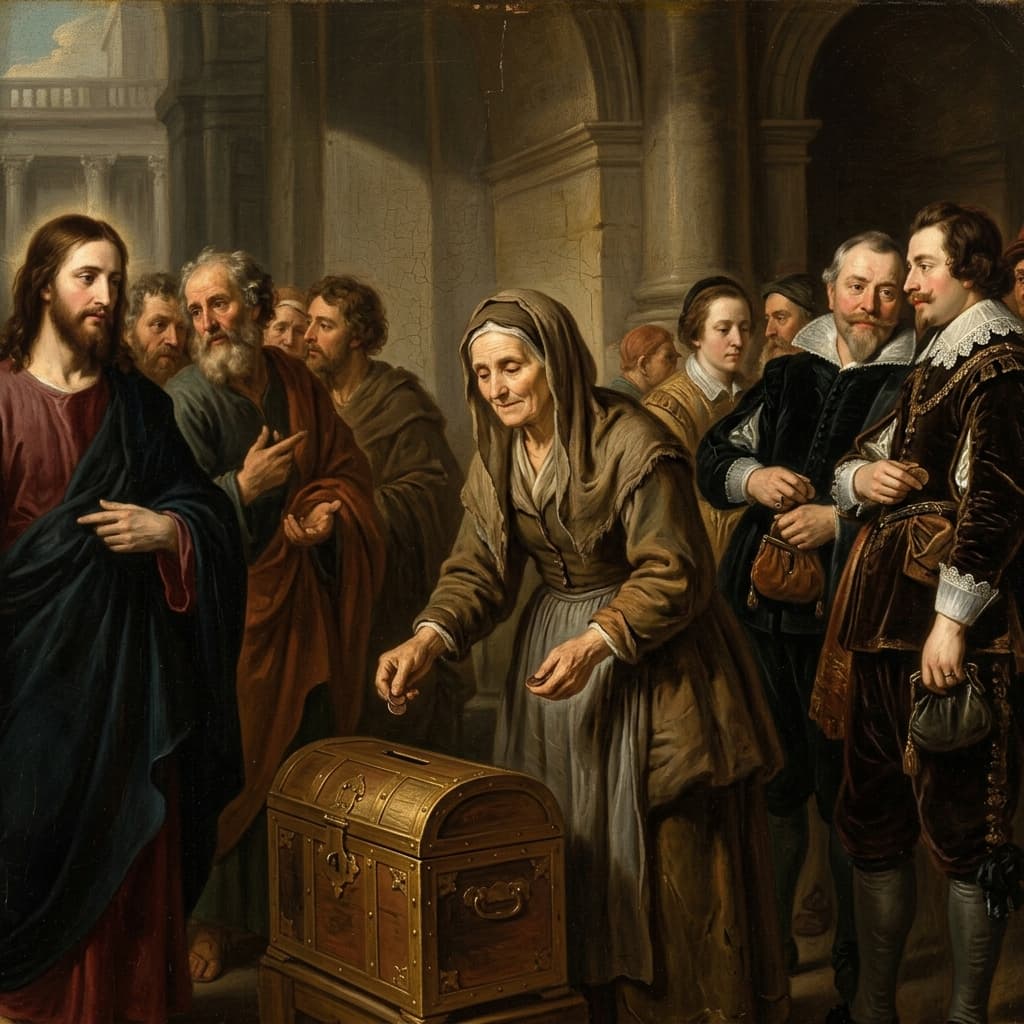
Tithing
Ascetic practices · Updated August 15, 2026
Overview
Tithing in Christianity has roots that extend beyond biblical commands, tracing back to ancient Mesopotamian practices. In Mesopotamia, giving a tenth of one's produce to the gods was a recognized way to honor and appease the divine. This practice of setting aside a portion for religious purposes created a cultural precedent that influenced later religious traditions, including Judaism and Christianity. The act of tithing as a demonstration of faith and devotion became embedded in religious life long before it was codified in biblical texts.
The biblical narrative of Tithing begins with the story of Abraham in Genesis 14:20, where he offers a tenth of his war spoils to Melchizedek, a priest-king. This gesture set a precedent for Tithing as a way to express gratitude and allegiance to God. The practice was later formalized in the laws given to Moses, which prescribed tithes as support for the Levites, the priestly class without land of their own. By the Middle Ages, the Christian Church had institutionalized tithing as a mandatory levy, often collected in the form of produce or livestock, to sustain church functions and clergy. This system of enforced tithing persisted until the Protestant Reformation in the 16th century. Reformers like Martin Luther challenged many church traditions, including compulsory tithing, arguing that faith should not be tied to financial obligation.
Today, the practice of Tithing varies widely among Christian denominations. While some churches still encourage members to give ten percent of their income, others view tithing as a voluntary act rather than a requirement. In some cases, Tithing has been replaced with general offerings or donations, reflecting a shift towards personal choice in financial giving. Despite these variations, the concept of Tithing remains a primary mechanism of Christian financial support, funding church operations and clergy salaries across denominations.
Why Fighting Over Tithing Was a Big Deal
The debate over tithing in the Christian Church was never just about money. It was about authority and freedom. Church leaders, such as bishops, saw tithing as a necessary practice to ensure the church's stability and to strengthen their own hold on power. On the other hand, many believers felt that Tithing should be a personal choice, not a compulsory tax, and they wanted the freedom to interpret religious teachings for themselves. This clash was a struggle over who held the reins of power within the Christian community. Leaders wanted to dictate financial obligations, while lay members fought for their right to make personal decisions about their faith and finances.
The Council of Macon in 585 AD marked a turning point in this ongoing battle. On one side were the ecclesiastical authorities, led by figures like Bishop Ambrose of Milan, who argued that Tithing was a divine mandate essential for maintaining the church's infrastructure. They pushed for the council to declare tithing as a divine law, which would bolster their authority. On the opposing side were reformist believers, inspired by thinkers like John Wycliffe, who insisted that financial giving should be an act of personal faith, not a forced levy. If the council sided with the church authorities, it would cement their power and control over the faithful. But if the reformists won, it would signify a shift towards individual autonomy. The council's decision to enforce tithing as divine law strengthened the church's position but also fueled further resistance from those who viewed this as an overreach of authority.
Despite the council's decision, the issue of tithing was never fully resolved. The conflict continued to simmer because it touched on broader questions that have persisted throughout church history. How should scripture be interpreted? What is the role of religious institutions versus personal belief? And where does the balance lie between communal obligations and individual freedoms? These questions remain relevant today, as different denominations continue to address how to approach financial giving. In some churches, Tithing remains a steadfast requirement, while in others, it has evolved into a more flexible, voluntary practice.
Continue reading with a Scholar plan
Upgrade to ScholarCommon questions
- What is tithing in Christianity?
- Tithing in Christianity is the practice of giving a tenth of one's income or produce to the church as a form of financial support and religious devotion. It has historical roots in ancient practices and was later formalized in biblical texts.
- Why do Christians tithe?
- Christians tithe as an expression of faith, gratitude, and allegiance to God. It is also seen as a way to support the church's functions and clergy.
- How is tithing calculated?
- Tithing is traditionally calculated as ten percent of a person's income or produce. This percentage is based on biblical precedent.
- Is tithing mandatory for all Christians?
- Tithing is not mandatory for all Christians. While some denominations encourage it, others view it as a voluntary act of giving.
- What does the Bible say about tithing?
- The Bible mentions tithing in several passages, such as Genesis 14:20, where Abraham gives a tenth of his spoils to Melchizedek. It is also formalized in the Mosaic Law as a support for the Levites.
- How did tithing originate?
- Tithing originated from ancient Mesopotamian practices where a tenth of produce was given to the gods. This cultural precedent influenced later religious traditions, including Judaism and Christianity.
- What is the difference between tithing and offerings?
- Tithing is a specific practice of giving ten percent of one's income, while offerings are additional, voluntary gifts given beyond the tithe. Offerings can be of any amount and are not bound by a specific percentage.
- Do all churches require tithing?
- Not all churches require tithing. Some denominations see it as a requirement, while others consider it a voluntary act of giving.
- How is tithing used by churches?
- Tithing is used by churches to support their operations, pay clergy, maintain facilities, and fund various ministries and charitable activities.
- Can tithing be considered a tax deduction?
- In many countries, donations to religious organizations, including tithes, can be considered tax-deductible. This depends on the country's tax laws and the church's status as a registered charitable organization.
- What are the benefits of tithing?
- Benefits of tithing include supporting church activities, fostering a sense of community, and expressing personal faith and devotion. It can also encourage financial discipline and generosity.
- What happens if you don't tithe?
- If you don't tithe, there are generally no formal consequences in most churches, especially where tithing is seen as voluntary. However, some denominations may emphasize the spiritual importance of tithing as part of one's faith practice.
- How do modern churches view tithing?
- Modern churches have varied views on tithing; some see it as a vital practice, while others emphasize voluntary giving. The approach often depends on the denomination's teachings and cultural context.
- What percentage of income should be tithed?
- Traditionally, tithing is ten percent of one's income, based on biblical precedent. However, some churches encourage members to give according to their ability and personal conviction.
- How to start tithing if you have never done it before?
- To start tithing, determine a percentage of your income to give regularly, ideally ten percent, and set up a consistent method for donating to your church. Begin with a commitment that aligns with your financial situation and gradually increase as you feel comfortable.