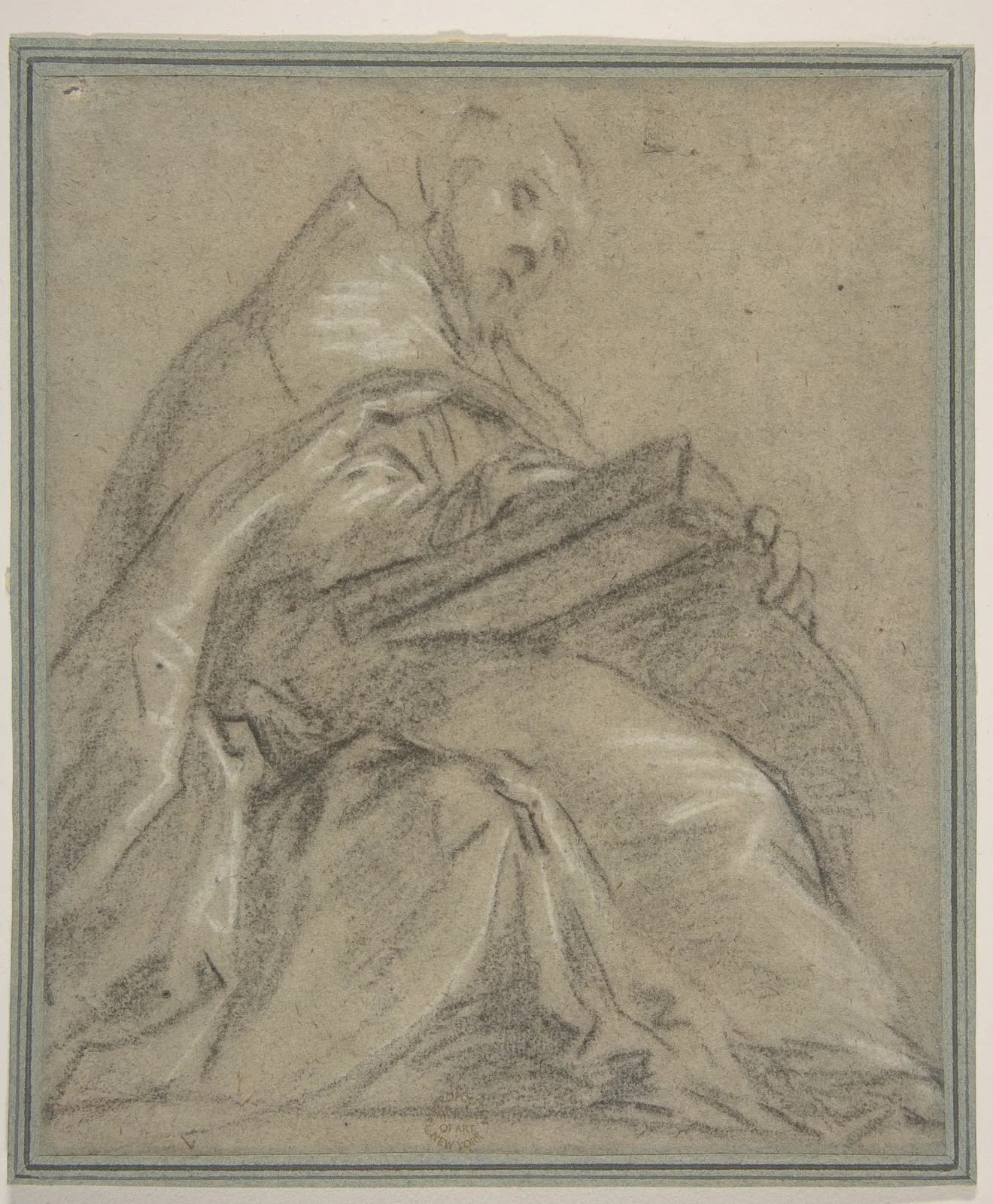
Library
Library
Post-Nicene Patristic (4th-5th C) · c. 340-397 CE · Updated April 9, 2026
Ambrose of Milan was a prominent bishop in the late Roman Empire, serving as the Bishop of Milan from around 374 to 397 CE. He became known for his significant influence on Christian theology and his bold assertion of church authority over imperial power. As bishop, Ambrose stood at the intersection of religious and political change, navigating the complex relationship between a fading pagan Rome and the rising Christian Church. His tenure in Milan marked a pivotal period in which the Church began to assert itself not just spiritually but also politically.
Ambrose's life was one of unexpected turns. Born into a Roman Christian family around 340 CE, he pursued a career in law and quickly rose through the ranks of the Roman administration, eventually becoming governor of Liguria and Emilia, with Milan as his seat. In 374 CE, in a dramatic turn of events, the people of Milan clamored for him to become their bishop, despite him not yet being baptized. Ambrose accepted and was baptized, ordained, and consecrated as bishop all within a week. His tenure was marked by a firm stance against Arianism, a theological doctrine that denied the full divinity of Christ. Ambrose's confrontation with Emperor Theodosius after the massacre in Thessalonica in 390 CE demonstrated his resolve; he excommunicated the emperor until Theodosius showed public repentance. This act set a powerful precedent for the moral authority of the Church over imperial actions.
Ambrose lived during a time of intense theological debate and transition. The Roman Empire was shifting from its polytheistic roots to embrace Christianity, leading to conflicts between traditional religious practices and the burgeoning influence of the Church. The nature of the Trinity and the challenge of Arianism dominated theological discourse. Ambrose defended Nicene Trinitarian theology, which affirmed the co-equal divinity of the Father, Son, and Holy Spirit, and opposed Arian beliefs. His writings, such as "On the Duties of Ministers" and "On the Sacraments," became cornerstones of Western Christian thought. Ambrose's contributions to liturgical hymnody also left a lasting legacy, with some hymns still sung today. His struggle with Empress Justina, who sought to promote Arianism, highlighted the era's religious and political tensions. By the time of his death in 397 CE, Ambrose had firmly established the bishopric of Milan as a powerful force in both ecclesiastical and secular affairs.
Where is the boundary between imperial and ecclesiastical authority — and when the state acts unjustly, does the church have the standing to call it to account?
Ambrose of Milan grappled with a fundamental question: How should the Church relate to state power? He observed the immense authority wielded by emperors and feared its potential for moral corruption. His life's work revolved around establishing a framework where the Church guided society's ethical compass. He believed that the Church must have a voice that could hold rulers accountable, ensuring that justice and morality prevailed over mere political expedience.
Ambrose's key ideas centered on Church authority, clerical ethics, and Trinitarian orthodoxy. He argued that the Church had the right, even the duty, to challenge the state when it acted unjustly. This was not just a theoretical stance but a response to real events, like his confrontation with Emperor Theodosius after the Thessalonica massacre. Ambrose also emphasized that clergy should live by a strict ethical code, shaping the laity's moral standards. His influential work, "On the Duties of Ministers," drew from classical ethics to propose a Christian model for clerical conduct. Finally, Ambrose championed the Nicene Creed's definition of the Trinity, vigorously opposing Arian beliefs that threatened to fracture the Church. His defense of Nicene orthodoxy became a cornerstone of Western Christianity.
Beyond these ideas, Ambrose contributed significantly to Christian worship and ethics. He introduced hymnody to the Western Church, recognizing music's power to engage congregations and affirm doctrinal truths. His hymns not only enriched the liturgical experience but also helped spread orthodox teachings. Additionally, Ambrose elevated the spiritual status of virginity, influenced by the burgeoning monastic movement. His writings celebrated virginity, shaping Christian views on celibacy and religious life.
Ambrose's most distinctive argument was that the Church must serve as the moral conscience of the state. This was vividly demonstrated in his bold stance against Emperor Theodosius. By insisting that the emperor perform public penance for the Thessalonica massacre, Ambrose asserted the Church's moral authority over imperial power. This confrontation was compelling because it established a precedent where the Church could demand accountability from rulers. It changed the dynamic between church and state, ensuring that moral considerations would not be subservient to political ambitions. Ambrose's legacy in this regard laid the groundwork for the Church's enduring role as a moral authority in Western society.
Before Ambrose of Milan, the church navigated an uncertain landscape. The relationship between church and state leaned heavily in favor of the state. Emperors often dictated theological outcomes and church practices, wielding immense influence over ecclesiastical matters. The Nicene Creed had been established, but Arianism still posed a considerable challenge, leaving the church divided. Clergy roles lacked clear definition, with no established code of ethics or societal expectations. Christian worship was informal, with hymns playing a minor role. This was a time of transition, with theological and societal elements still unsettled.
Ambrose of Milan reshaped this world. He confronted Emperor Theodosius, asserting the church's authority over the state in moral matters. This bold move set a precedent for ecclesiastical leaders to hold rulers accountable, laying the groundwork for medieval church authority. Ambrose also championed Nicene orthodoxy, arguing decisively against Arianism and helping to solidify the Creed's acceptance in the West. His introduction of hymns enriched the liturgical experience, transforming worship practices. Ambrose articulated a vision for clerical ethics, emphasizing moral and spiritual responsibilities, which influenced the development of church law and clerical expectations.
Ambrose's influence extended far beyond his lifetime. His assertion of church authority influenced the medieval church's power dynamics with secular rulers. The decline of Arianism and the dominance of Nicene Christianity owe much to his efforts. Ambrose's liturgical innovations became a cornerstone of Western worship traditions. His mentorship of Augustine, who would become a pivotal figure in Christian theology, underscores his lasting impact. Without Ambrose, Augustine's teachings might not have shaped the church as they did. Ambrose's legacy endures in the church's role as a moral guide and in its rich liturgical heritage.
Ambrose of Milan wielded significant influence in shaping early church doctrine and its relationship with the state, but his legacy is not without flaws. He asserted church authority over secular rulers, setting a precedent for ecclesiastical interference in political matters. This approach undermined secular governance and fueled centuries of church-state conflicts. Ambrose's rigid ethical standards for clergy, intended to promote holiness, instead fostered a culture of hypocrisy and clericalism. Reformers seeking realistic and transparent standards found his ideals unrealistic. His staunch defense of Nicene Trinitarianism marginalized Arian Christians, contributing to religious intolerance and persecution. Furthermore, Ambrose's exaltation of virginity over marriage promoted damaging views on sexuality, criticized by modern ethicists for being unrealistic and harmful.
Ambrose's confrontation with Emperor Theodosius over the Thessalonica massacre remains his most contentious act. After the emperor ordered the slaughter of thousands, Ambrose demanded Theodosius perform public penance or face excommunication. This dramatic clash underscored the church's power to hold rulers accountable but also established a dangerous precedent for ecclesiastical authority over political affairs. The long-term consequence was a church emboldened to excommunicate rulers, a power that risked being abused in later centuries. This episode highlighted the potential for overreach and manipulation, as the church's moral authority began to encroach on political sovereignty.
Despite the criticisms, some argue Ambrose's actions were necessary to challenge imperial excesses. His moral stance against Theodosius is seen by some as a pioneering act that laid the groundwork for later human rights advocacy. Yet, the criticisms of his influence stand firm. His actions undeniably complicated church-state relations, and his rigid doctrines fostered division and unrealistic expectations. Ambrose's legacy, while impactful, remains a cautionary tale of the dangers inherent in merging ecclesiastical and political power.
After the condemnation, Ambrose of Milan remained a towering figure until his death in 397 CE. He wielded considerable influence over both church and state, often challenging imperial authority when moral issues arose. Ambrose famously excommunicated Emperor Theodosius I after a brutal massacre in Thessalonica, demanding public penance before the emperor could rejoin the church. This act underscored his belief in the church's moral authority over secular rulers. Ambrose's leadership in Milan established a model for bishops who would follow, blending religious conviction with political acumen.
Ambrose's teachings on church authority and clergy ethics deeply influenced the Western Church. His insistence on the supremacy of church teachings over secular power laid the groundwork for medieval ecclesiastical structures. The principles he championed found a voice in the writings of theologians like Augustine of Hippo, whom Ambrose baptized and mentored. Ambrose's emphasis on Nicene Christianity reinforced the Trinitarian doctrine, which became a cornerstone of Western Christian theology. His contributions to liturgical hymnody, including the composition of hymns, enriched worship practices and were adopted across Europe by monastic communities and cathedrals.
Today, Ambrose's legacy persists in discussions about the separation of church and state, echoing his belief in the church's moral oversight. His influence on liturgical music remains evident as hymns continue to play a vital role in Christian worship across denominations, from Catholic to Anglican to Lutheran. Churches around the world still sing hymns attributed to Ambrose, such as "Veni Redemptor Gentium," illustrating how his impact resonates through centuries. Ambrose of Milan left an indelible mark on the church, shaping its music, theology, and interaction with state power.
Continue reading with a Scholar plan
Upgrade to Scholar