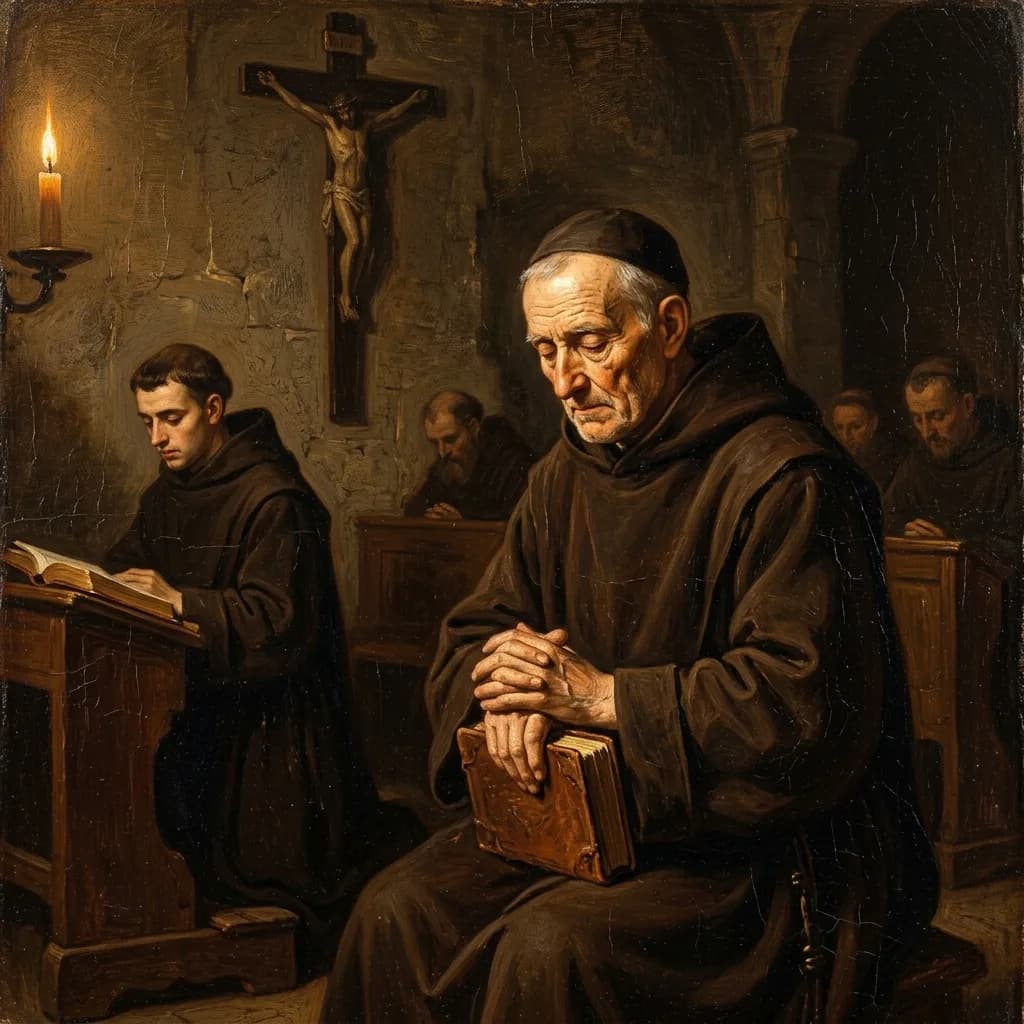
Compline
Prayer traditions · Updated August 15, 2026
Overview
Compline, the final church service of the day, began as a monastic tradition that gradually became part of the daily life of lay Christians during the Middle Ages. Originally a time for night prayers, Compline was designed to mark the completion of the day's work and the beginning of rest. It finds its roots in the 4th-century monastic communities, particularly among the Desert Fathers in Egypt, who sought a structured way to end their day with reflection and prayer. Over the centuries, this practice expanded beyond the secluded walls of monasteries, eventually being embraced by laypeople as a part of their spiritual routine.
The transformation of Compline from a monastic to a lay practice can largely be attributed to St. Benedict, who, in the 6th century, included it in his Rule, a set of guidelines for monastic life. St. Benedict formalized the structure of Compline, making it an integral part of daily rituals for his followers. As Benedictine monasteries grew in influence throughout Western Europe, particularly by the 9th century, so too did the spread of their practices, including Compline. By the Middle Ages, Compline had been incorporated into the Roman Breviary, the official liturgical book, which allowed clergy and laypeople alike to participate in this nightly prayer, signaling its deep integration into Christian worship.
Today, Compline remains a vital component of the Liturgy of the Hours, the canonical hours of prayer observed by many Christian denominations. The Second Vatican Council in the 1960s reformed these liturgical practices, encouraging the participation of all members of the Christian community, not just clergy and monastic communities. This reform has helped ensure that Compline continues to be a meaningful way for Christians to conclude their day with prayer and reflection, a tradition rooted in centuries of spiritual history.
Compline, the final church service of the day, was originally a monastic practice that became part of the daily life of lay Christians during the Middle Ages.
Common questions
- What is Compline in the Christian tradition?
- Compline is the final church service of the day in the Christian tradition, marking the completion of the day's work and the beginning of rest. It is a time for night prayers and reflection.
- How is Compline different from other prayer services?
- Compline is specifically designed as a night prayer service, focusing on reflection and preparation for rest. Unlike other services, it traditionally marks the end of the day's activities.
- What prayers are typically included in Compline?
- Compline typically includes prayers such as the Lord's Prayer, psalms, hymns, and a prayer for protection through the night. It often concludes with a blessing or a Marian antiphon.
- Why is Compline important in monastic life?
- In monastic life, Compline is important as it provides a structured way to end the day with prayer and reflection, fostering a sense of peace and spiritual discipline. It helps monks transition from daily work to rest.
- How did Compline originate in Christian liturgy?
- Compline originated in the 4th-century monastic communities, particularly among the Desert Fathers in Egypt, as a structured way to end the day with prayer. It was later formalized by St. Benedict in the 6th century.
- Can Compline be observed individually, or is it only communal?
- Compline can be observed both individually and communally. While it originated in monastic communities, laypeople also practice it as part of their personal spiritual routines.
- What time of day is Compline traditionally observed?
- Compline is traditionally observed at the end of the day, typically before retiring for the night. It marks the transition from daily activities to rest.
- How has Compline evolved over the centuries?
- Compline evolved from a monastic tradition to being part of the daily life of lay Christians, especially after its inclusion in the Roman Breviary during the Middle Ages. The Second Vatican Council further reformed it to encourage broader participation.
- What role does Compline play in the Liturgy of the Hours?
- Compline is a vital component of the Liturgy of the Hours, serving as the final prayer service of the day. It helps Christians conclude their day with prayer and reflection.
- How do different Christian denominations practice Compline?
- Different Christian denominations, such as Roman Catholics, Anglicans, and some Protestant groups, practice Compline with variations in prayers and hymns. However, the core focus on night prayer and reflection remains consistent.
- What are the spiritual benefits of praying Compline?
- Praying Compline offers spiritual benefits such as peace, reflection, and a sense of closure to the day. It helps individuals focus on gratitude and seek protection for the night.
- Why is Compline considered a night prayer?
- Compline is considered a night prayer because it is specifically designed to be the last prayer service of the day, focusing on ending daily activities and preparing for rest. It traditionally includes prayers for protection through the night.
- How can I incorporate Compline into my daily routine?
- To incorporate Compline into your daily routine, set aside time before bed for prayer and reflection. Use a prayer book or online resources to guide you through the traditional prayers and hymns of Compline.
- What are the common hymns sung during Compline?
- Common hymns sung during Compline include 'Te lucis ante terminum' and 'Salve Regina.' These hymns focus on themes of protection and peace.
- How does Compline help in preparing for sleep?
- Compline helps prepare for sleep by providing a calming and reflective end to the day. The prayers and hymns focus on seeking peace and protection, creating a tranquil mindset conducive to rest.