What is Freemasonry
Secret Societies · Updated August 15, 2026
Overview
Freemasonry's core principle of charity directly mirrors biblical commands in Matthew 25 and James 2, yet the fraternity forbids discussion of religion in its lodges, creating a tension between practicing Christian charity and suppressing Christian proclamation. For a Christian reader, this tension raises the question of whether good works remain valid when separated from doctrinal confession. The fraternity builds hospitals, funds orphanages, and feeds the hungry, acting out the exact commands of Christ to care for the least of these. The friction arises because the lodge demands that all such works be done in the name of a generic, unnamed deity rather than in the name of Jesus. A Christian must weigh whether charity stripped of doctrinal confession remains biblically valid.
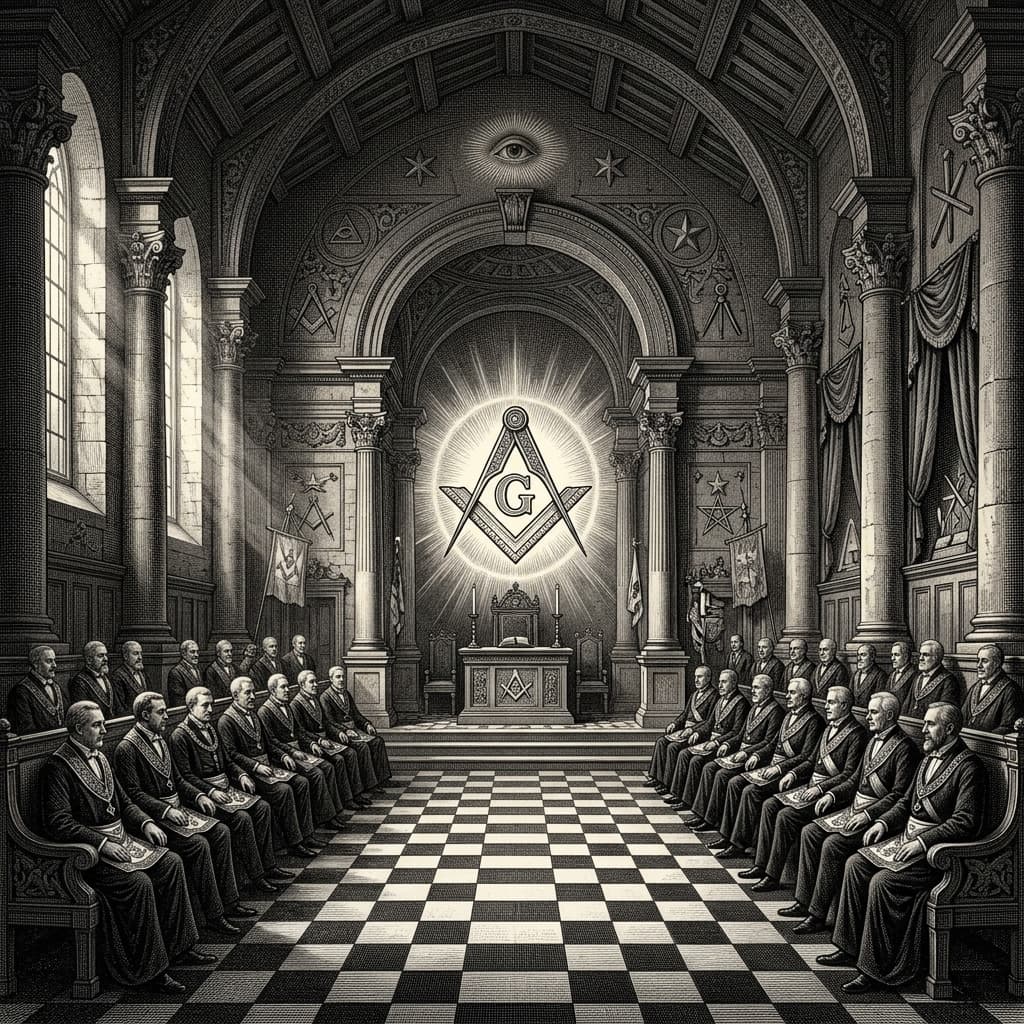
Freemasonry presents itself as the oldest secular fraternal organization in the world, tracing its origins to 14th-century stonemason guilds in Europe. These medieval builders formed guilds to protect their craft secrets, regulate training, and care for widows and orphans of deceased members. Modern speculative Freemasonry adopted those guild structures, transforming the working tools of stonemasons into moral allegories. Charity stands as a primary purpose across all Masonic traditions, raising millions of dollars annually for medical research, disaster relief, and community support. The fraternity frames this giving as a universal human obligation, requiring members to believe in a "supreme being" but refusing to define who that being is. Lodge rules strictly prohibit any discussion of sectarian religion or partisan politics, meaning a Christian cannot name Christ as the motivation for his charity inside the lodge room. This creates a direct paradox for the believer: the organization enacts the commands of Scripture while simultaneously suppressing the proclamation of the Scripture that commands them.
Scripture commands the exact works Freemasonry promotes. Matthew 25:35-40 declares that feeding the hungry, clothing the naked, and welcoming the stranger are acts of service directly to Christ himself. Galatians 6:2 commands believers to "bear one another's burdens, and so fulfill the law of Christ." Isaiah 58:6-7 defines true religion as loosing the bonds of injustice and sharing bread with the hungry. Proverbs 19:17 promises that whoever is generous to the poor lends to the Lord. The God of these texts is the covenant God of Israel, fully revealed in Jesus Christ, not an unnamed "supreme being" compatible with all religions. First John 3:17-18 demands that charity be done "in deed and in truth," tying the act directly to the truth of the gospel. James 2:14-17 declares that faith without works is dead, which implies that works without faith are equally incomplete. The Catholic Church condemned Freemasonry in multiple papal bulls beginning in 1738 under Pope Clement XII. Protestant traditions have raised parallel concerns about the fraternity's generic deity and its binding oaths. A Bible reader must conclude that anonymous, non-confessional charity falls short of the biblical standard.
Freemasonry is not a unified, single organization with one set of beliefs. It is fractured into three competing traditions that mutually declare each other irregular. The Anglo-American tradition requires belief in a supreme being and bans religious and political discussion in lodge. The Continental or Liberal tradition removes those restrictions entirely. Women's and Co-Freemasonry, including groups like Le Droit Humain and the Order of Women Freemasons, operate independently. Each tradition claims to be "Regular" and labels the others "Irregular," with no single governing authority to settle the dispute. The Grand Lodge of Scotland does not recognize the French Grand Orient, and the French Grand Orient does not recognize the women's orders. This fracture means there is no single Masonic answer to the question of how charity and faith interact. The tension between Biblical Charity and suppressed proclamation exists most acutely in the Anglo-American tradition, which enforces the ban on religious discussion while simultaneously claiming to practice the universal brotherhood that Christ explicitly rooted in confession of his name.