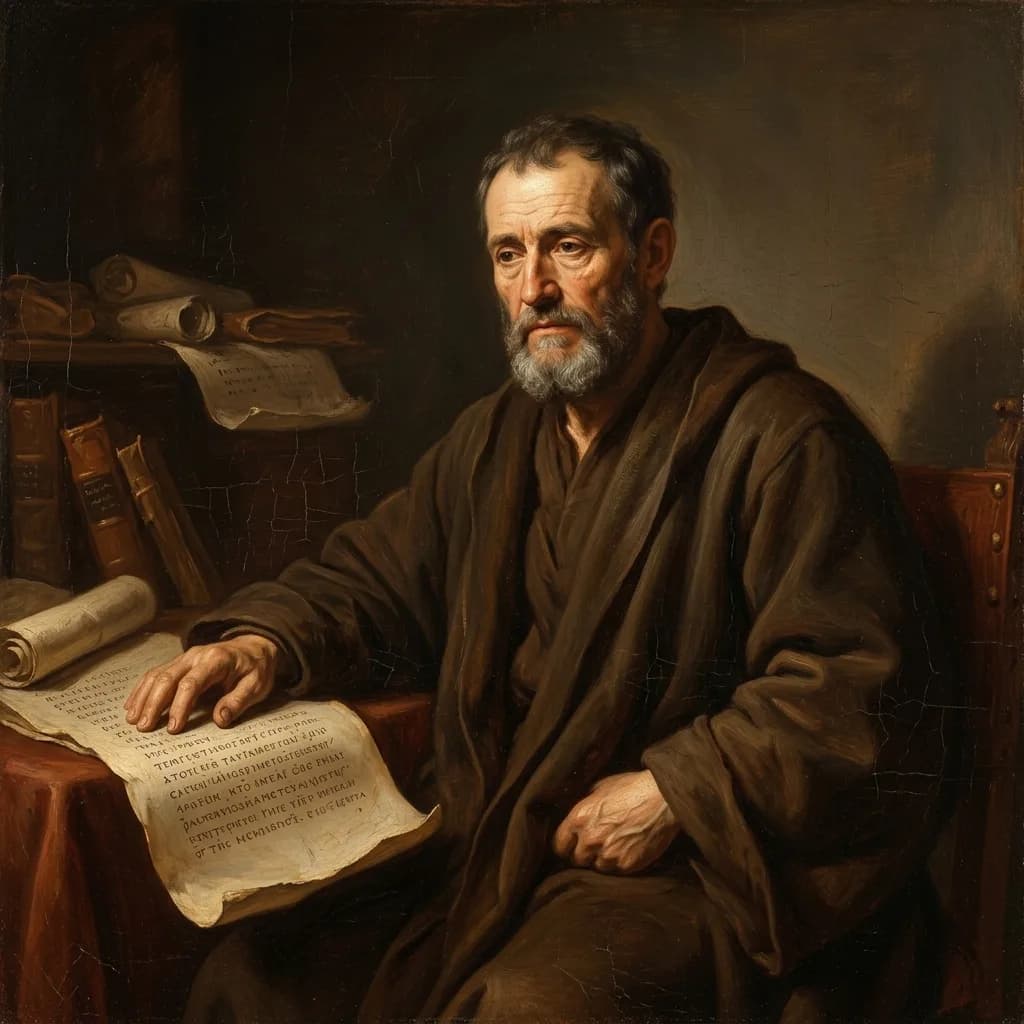
Cerdon
hereticEarly Church (2nd-3rd C) · fl. c. 140 CE · Updated April 9, 2026
Biography
Cerdon was a Syrian Gnostic teacher active in Rome around 140 CE, known for his teachings that differentiated between the God of the Old Testament and the God revealed by Christ. He played a precursor role to Marcion, another significant figure in early Christian Gnosticism. Cerdon gained attention in a period when Rome was a melting pot of religious ideas, making it a fertile ground for alternative interpretations of Christian doctrine. His approach to theology set him apart, challenging the emerging orthodox views with his distinct separation of the Old and New Testament deities.
Cerdon argued that the God of the Old Testament was different from and inferior to the God introduced by Christ. He asserted that the Old Testament God was just, but not good, contrasting with the benevolent God of the New Testament. This belief, later labeled Cerdonism, placed him at odds with the early church. Cerdon also taught that Christ was not truly born or embodied, aligning with certain Gnostic views that saw the material world as flawed. His teachings attracted followers and likely influenced Marcion, whose own doctrines would later stir significant controversy. Although church fathers like Irenaeus condemned Cerdon’s teachings, no formal council specifically addressed his views.
Cerdon’s ideas emerged during a time when early Christianity was still defining its core beliefs. The theological landscape was ripe with debates over the nature of God, Christ, and the relationship between the Old and New Testaments. This environment provided space for Gnostic movements, which often proposed dualistic interpretations of the divine. Cerdon’s teachings contributed to this broader Gnostic movement, questioning established notions of God’s identity in Christian theology. By challenging traditional views, Cerdon and his contemporaries forced the early church to clarify and solidify its doctrinal boundaries.
Is the God of the Old Testament the same God revealed in Christ — and if not, how do justice and goodness relate to each other in God?
The question
Cerdon observed a profound disparity between the Old Testament's stern laws and Jesus Christ's teachings of love and forgiveness. He was not a man acting out of rebellion but one seeking truth in the scriptures. The Old Testament depicted a God of strict justice, demanding sacrifices and adherence to rigorous laws. In contrast, Christ spoke of a God who offered mercy, embraced sinners, and preached love above all. This contradiction troubled Cerdon deeply. He saw it as an insurmountable inconsistency in the divine character. His solution was radical yet sincere: he concluded that the Old Testament God and the God revealed in Christ were not the same. He believed he was clarifying the true nature of the divine, making sense of what seemed irreconcilable.
Accepting that the God of the Old Testament is the same as the God revealed in Christ means embracing a complex and paradoxical understanding of God. This position demands that one holds together wrath and mercy, justice and goodness, within a single divine nature. It requires explaining how a God who demands justice and punishment could also embody unconditional love and forgiveness. This theological balancing act comes at a significant cost. It creates a God that is difficult to comprehend, a being whose actions and motivations seem contradictory and unsettling. It requires faith in a mystery that defies human logic, putting pressure on believers to accept what they cannot fully understand.
Rejecting the unity of the Old and New Testament Gods, as Cerdon proposed, leads to an even more contentious position. This view splits the divine into two distinct beings, each with its own attributes and agenda. Such dualism shatters the continuity of the biblical narrative, undermining the message of a single, cohesive scripture. It challenges the core tenet of monotheism, suggesting instead a cosmic battle between opposing deities. This division costs the believer a unified framework for understanding the divine and disrupts the harmony between the Old and New Testaments. It risks reducing the richness of biblical theology to a simplistic and fragmented worldview.
The commitment to monotheism traps both positions in untenable territories. Believers cannot easily accept two Gods without unraveling the fabric of their faith. Yet, they also struggle with a God whose nature appears divided against itself. This theological conundrum had real implications for ordinary people. It affected how they related to God in prayer, how they understood divine justice, and how they found hope in God's goodness. The stakes were personal and profound, touching every aspect of their spiritual lives. The challenge was not just intellectual but existential, demanding a resolution that honored both the complexity and the unity of the divine.
The teaching
Cerdon taught that the God of the Old Testament and the God revealed by Christ are two distinct entities. He viewed the Old Testament God as a figure of justice, strict and severe, while the God of the New Testament, as shown by Christ, embodied pure goodness and love. Cerdon argued that the God presented through the Law and Prophets could not be the same as the God of Jesus, who preached compassion and forgiveness. This teaching offered a straightforward answer to those questioning the consistency of God's nature across the two Testaments.
Cerdon relied on scripture to support his claims, notably using Isaiah 45:7 to highlight the harsh aspects of the Old Testament God. He contrasted this with Jesus' teachings in Matthew 5:44-45, which emphasize love and kindness even towards enemies. Cerdon saw John 1:17 as a pivotal verse, marking a shift from the justice associated with Moses to the grace brought by Jesus. In his treatise, "Teachings of Cerdon," he presented his view that the contradictions between the Testaments could only be reconciled by accepting two separate deities, each with distinct attributes and roles.
Cerdon's teachings resonated with early Christians who struggled with reconciling the Old Testament's sternness with the New Testament's message of grace. Those dissatisfied with traditional interpretations found clarity in Cerdon's distinction between the two gods. His ideas gained traction among believers seeking a more compassionate understanding of divinity, spreading through early Christian communities. By the mid-second century, his views had influenced significant theological debates, leaving a lasting mark on the development of early Christian thought.
The counterargument
The decisive intellectual move against Cerdon stemmed from the assertion that God's nature is unified, embodying both justice and goodness, as revealed in both the Old and New Testaments. Irenaeus of Lyons, an influential early Church Father, articulated this argument in his work "Against Heresies." He contended that the God of the Old Testament is the same God revealed in Christ, emphasizing the continuity of God's plan and the consistency of His nature across both Testaments. This reasoning made Cerdon's position untenable because it demonstrated that the characteristics of justice and goodness are not mutually exclusive but harmoniously integrated within the singular divine nature of God.
Cerdon's arguments relied on specific biblical texts, which orthodoxy systematically countered. He interpreted Isaiah 45:7 as evidence of a harsh, inferior Old Testament God, but the orthodox response highlighted God's sovereignty over all creation, showing how peace and calamity both serve His ultimate goodness and justice. Cerdon saw Matthew 5:17 as Christ's mission to abolish the Old Testament law, yet the orthodox view argued for continuity and fulfillment, not contradiction. Finally, Cerdon claimed John 1:18 implied a difference between the Old Testament God and Christ's revelation. Orthodoxy asserted that this verse reveals God's nature through Christ, who makes the invisible God known. Cerdon’s position trapped itself by implying that Christ, as a revelation of a different God, could not fulfill Old Testament prophecies, thus undermining Christ's messianic legitimacy.
The counter-argument demanded a deeper exploration of how justice and goodness coexist within God's nature, presenting a complex theological challenge. It required addressing the presence of evil and suffering in a world governed by a just and good God. This created a new problem that theologians had to grapple with, as they sought to reconcile these attributes of God with the reality of human experience. Despite these challenges, the orthodox view prevailed, reinforcing the coherence and fulfillment of the biblical narrative.
The resolution
Around 180 CE in Lyons, Irenaeus convened a gathering of early church leaders to tackle a theological challenge. The pressing question: Was the God of the Old Testament the same as the God revealed by Christ? Cerdon, a controversial figure, argued they were not. He saw the Old Testament God as just but lacking goodness, while the God of Christ embodied goodness. This debate held more than theological weight. The Roman Empire, though not directly involved, preferred a unified church doctrine to maintain social stability. A fractured church risked disrupting the empire's delicate balance, so resolving such disputes held broader implications.
The arguments focused on the nature of God. Cerdon's distinction between justice and goodness threatened the perceived unity of the divine character. The church fathers, led by Irenaeus, condemned Cerdon's views as heretical. They issued a declaration affirming the continuity of God's nature across both Testaments. This decision was not just a theological statement but a defense of the church's unity and its foundational beliefs. By condemning Cerdon's teachings, the early church leaders aimed to protect the integrity of Christian doctrine and its consistency from Old Testament to New.
Despite the condemnation, Cerdon's ideas didn't vanish. They persisted through the rise of Marcionism, which continued to question the church's doctrine. Marcion, building on Cerdon's ideas, gained followers and furthered the debate about the nature of God. This controversy lingered well beyond the initial condemnation, influencing later theological discussions and councils. The issue of God's nature and how to interpret the Testaments remained unresolved for centuries, shaping the landscape of Christian theology. Marcionism's challenge to orthodox beliefs continued until its influence waned in the later centuries, but its echoes remain in theological debates even today.
Legacy
After Cerdon faced condemnation by Irenaeus and other early church fathers, his presence in the Christian community of Rome faded. The records of his life and activities become sparse after this point. It's likely that he either receded into obscurity or continued spreading his ideas quietly among a smaller circle of followers. The lack of detailed accounts suggests that his influence in the broader public sphere diminished significantly, but the seeds of his teachings did not vanish entirely.
Cerdon's ideas found fertile ground in the mind of Marcion, a more influential figure who expanded on Cerdon's dualistic views. Marcion crafted a structured theology that distinguished between the God of the Old Testament and the benevolent God revealed in Jesus Christ. This thinking led to the formation of the Marcionite Church, a movement that defied orthodox Christianity and spread across the Roman Empire, especially in Asia Minor. Marcionism endured for several centuries, attracting followers despite strong opposition from mainstream Christian leaders.
Today, the echoes of Cerdon's dualistic theology appear in some modern Gnostic movements and New Age spiritualities. These groups often propose a division between a higher, benevolent deity and a flawed creator. Moreover, secular critiques of the Old Testament sometimes reflect Cerdon's view by contrasting the sternness of the Old Testament God with the compassion found in the New Testament. This enduring legacy highlights how Cerdon's ideas, though marginalized, continue to influence spiritual and secular thought.
Continue reading with a Scholar plan
Upgrade to ScholarCommon questions
- Why was Cerdonism considered dangerous?
- Cerdonism was considered dangerous because it challenged the foundational Christian belief in the unity of God. By proposing that the God of the Old Testament was different from the God revealed by Christ, it threatened the coherence of Christian doctrine and the authority of the Hebrew Scriptures.
- What exactly did Cerdon teach?
- Cerdon taught that there were two distinct gods: the just but not good God of the Old Testament and the good God revealed by Jesus Christ. He also claimed that Christ was not truly born or embodied, rejecting the incarnation and physical resurrection.
- Why did Cerdonism spread so widely?
- Cerdonism spread widely due to its appeal to those who struggled with the harsh depictions of God in the Old Testament. Its dualistic view offered a simpler, more palatable understanding of God, especially in the diverse and philosophically rich environment of early 2nd-century Rome.
- Who opposed Cerdon, and what was their argument?
- Cerdon was opposed by early church fathers like Irenaeus, who argued that his teachings contradicted the apostolic tradition and the unity of God. They maintained that the God of the Old Testament and the God revealed by Christ were one and the same, emphasizing the continuity of God's revelation.
- Was Cerdon excommunicated, exiled, or executed?
- Cerdon was excommunicated from the Christian community in Rome. There is no historical evidence to suggest that he was exiled or executed.
- Which council condemned Cerdonism, and what did it decide?
- Cerdonism was not condemned by a specific council but was denounced by early church fathers like Irenaeus. Their writings reinforced the orthodox position on the unity of God and the incarnation of Christ, effectively marginalizing Cerdon's teachings.
- Did Cerdon ever recant?
- Historical records suggest that Cerdon may have recanted his views at times to be readmitted into the church, but he continued to teach his doctrines secretly. This indicates a complex relationship with the church authorities and his own beliefs.
- What is the difference between Cerdonism and orthodox Christianity?
- The primary difference is that Cerdonism posits two separate gods, whereas orthodox Christianity maintains the belief in one God who is both just and good. Additionally, Cerdonism denies the true incarnation and physical resurrection of Christ, which are central tenets of orthodox Christianity.
- Are there modern versions of Cerdonism?
- While there are no direct modern versions of Cerdonism, some contemporary theological movements question traditional interpretations of the Old Testament God. However, these do not typically adopt the dualistic framework of Cerdonism.
- Is there anything Cerdon got right?
- Cerdon's critique of the harsh depictions of God in the Old Testament resonates with some modern readers who struggle with these texts. His emphasis on the goodness of God as revealed in Christ aligns with the Christian focus on love and grace.
- Why does Cerdonism still matter today?
- Cerdonism matters today as it highlights ongoing theological debates about the nature of God and the interpretation of scripture. It serves as a historical example of how early Christians grappled with complex theological issues that continue to be relevant.
- Why did Cerdon sincerely believe his position was correct? What was he actually defending — and why did he see the alternatives as worse?
- Cerdon likely believed his position was correct because he saw a stark contrast between the Old Testament depictions of God and the teachings of Jesus. He was defending a vision of God that emphasized goodness and love, viewing the alternative as a misrepresentation of God's true nature. For Cerdon, maintaining the unity of God with the harsh Old Testament depictions seemed inconsistent with the message of Christ.