Library
Library
Early Church (2nd-3rd C) · c. 130-202 CE · Updated April 20, 2026
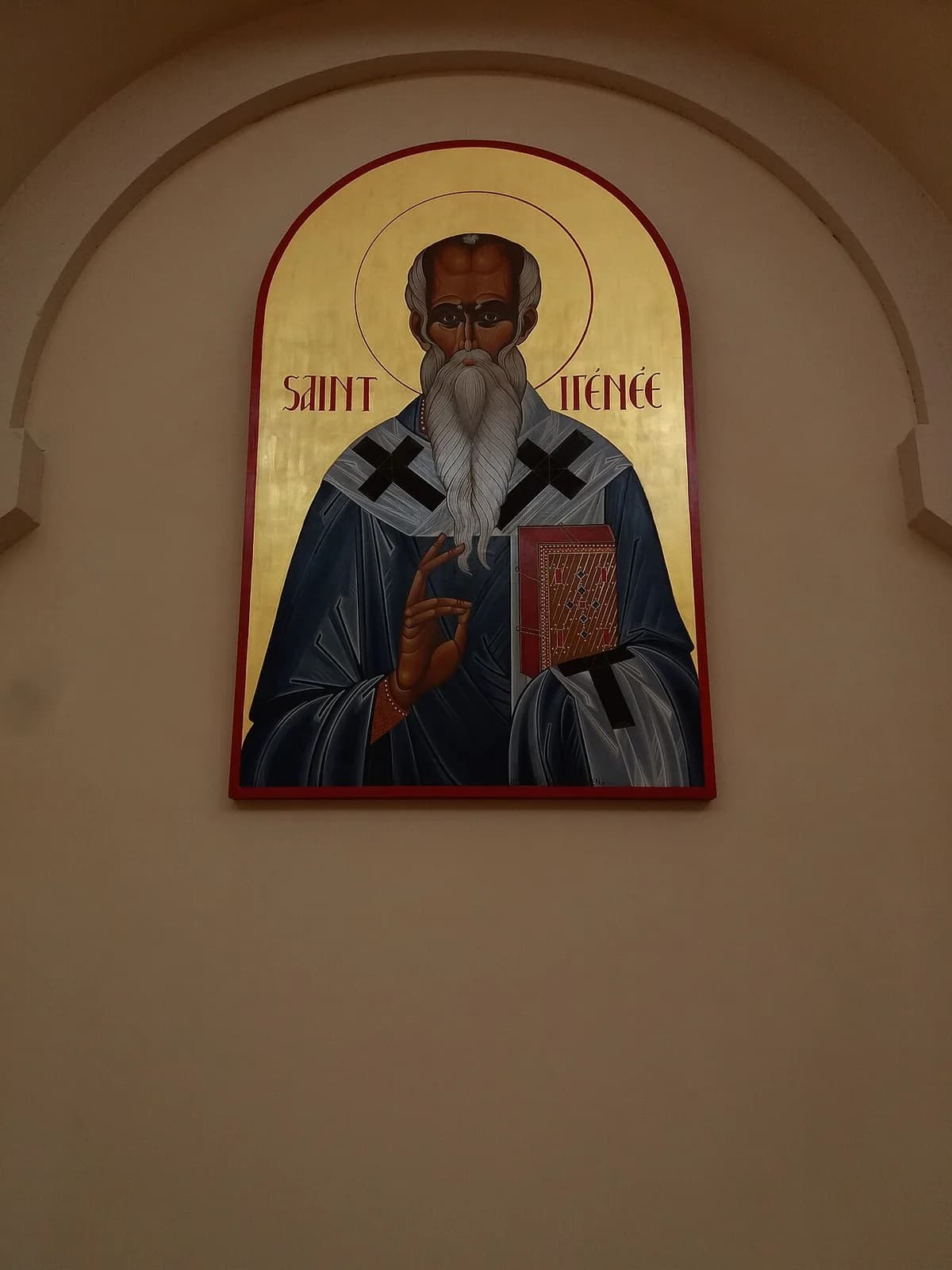
Irenaeus of Lyon was a bishop in the Early Church era, known for his role as a defender of orthodox Christianity against Gnosticism in the 2nd century. He served as the Bishop of Lyons, a crucial position in the Christian community of Gaul, an area that faced significant religious and cultural challenges. His work laid the groundwork for how the church would confront and clarify its beliefs in the face of heresy.
Born around 130 CE in Smyrna, Asia Minor, Irenaeus grew up in a region rich with early Christian activity. He studied under Polycarp, a direct disciple of the Apostle John, which deeply influenced his commitment to apostolic tradition. By 177 CE, he had moved to Lyons, where he succeeded the martyred Bishop Pothinus. Around 180 CE, Irenaeus wrote "Against Heresies," a critical text that methodically refuted the Gnostic teachings of figures like Valentinus and Marcion, which he saw as serious distortions of Christian doctrine.
Irenaeus lived in a time when the church faced the challenge of defining its core beliefs amidst competing theological ideas. Gnosticism, with its disdain for the material world and complex cosmology, threatened the unity and authenticity of Christian teaching. Without a formalized New Testament, diverse interpretations flourished. Irenaeus argued for the unity of the Old and New Testaments and emphasized the importance of apostolic tradition as a safeguard against heretical interpretations. His efforts ensured that the church maintained a coherent theological framework, affirming the goodness of creation and the consistency of God's revelation.
Is the God of the Old Testament the same God who sent Christ — and is the material world good, or the creation of an inferior deity from which the soul must escape?
Irenaeus faced a crisis. The Gnostic teachings of Valentinus and Marcion spread rapidly, questioning the very roots of Christian belief. These teachings suggested a split between the God of the Old Testament and the God revealed in Christ. Irenaeus believed this division threatened the core of the Christian faith. To him, this was not just a theological dispute; it was a battle for the soul of Christianity. The idea that the material world and the God behind it were somehow inferior or irrelevant drove Irenaeus to defend the unity of God's revelation. He saw the Gnostic position as a dangerous deviation that needed addressing to preserve the integrity of Christian doctrine.
If one accepts that the God of the Old Testament is different from the God who sent Christ, the entire foundation of Christian faith crumbles. This position denigrates the Old Testament, stripping it of its authority and relevance. The Jewish roots of Christianity become a mere shadow, discarded remnants of a past God. The biblical narrative loses its coherence, fragmenting into disconnected pieces. The apostolic tradition, grounded in the continuity of God's revelation, becomes suspect. A faith built on such a division lacks the fullness of divine revelation and surrenders its claim to the truth. It is a fragmented belief, unable to stand on the unified witness of scripture.
On the other side, affirming that the God of the Old Testament is the same as the God who sent Christ means embracing the material world as good. This position insists on the goodness of creation and the profound significance of Christ's incarnation. It demands the rejection of dualism, which views the material as corrupt. This costs the appeal of an easy escape from the world's imperfections. It forces believers to grapple with the messiness of a world that is part of God's redemptive plan. The faith that emerges is unified, seeing both Testaments not as opposing forces but as a continuous revelation guiding humanity. It embraces the material world as integral to God's purpose.
The commitment to monotheism and the apostolic tradition made it impossible to separate the God of the Old Testament from the God of the New Testament. Both sides of the argument presented challenges that could not be ignored. For Irenaeus and the people of his time, the stakes were immense. The assurance that their faith rested on a consistent divine revelation mattered deeply. It shaped their understanding of salvation, the nature of God, and their place in the world. The controversy was not merely theological; it was about the very identity of Christian belief and how ordinary people understood their faith in a complex world.
Irenaeus of Lyon taught that the God of the Old Testament is the same God who sent Jesus Christ. He firmly believed that the material world is good, not the flawed creation of a lesser deity. This teaching directly opposed the Gnostic view, which claimed that the physical world was evil and that a different, inferior god created it. Irenaeus insisted that the God of both Testaments is one and the same, consistent and benevolent.
Irenaeus reasoned that the unity of the Old and New Testaments demonstrated God's unchanging plan for salvation. In his treatise "Against Heresies," he systematically dismantled Gnostic arguments. He pointed to Genesis 1:31, where God saw all He made and called it "very good," to argue that creation is inherently good. He also cited John 1:14, showing that God becoming flesh affirmed the value of the material world. Romans 1:20 supported his view that Creation reveals God’s nature, proving that it’s not the work of an inferior being.
Many early Christians found Irenaeus's teachings convincing, especially those who wanted to connect their faith with its Jewish roots. His emphasis on the goodness of Creation and God's consistent plan resonated with believers who rejected Gnostic dualism. Irenaeus's ideas spread widely, reinforcing the foundation of orthodox Christian belief. By the late second century, his teachings shaped early Christian theology and helped unify the church against divisive heresies.
Irenaeus of Lyon made his case in "Against Heresies," a foundational text written around 180 CE. He argued forcefully that the God of the Old Testament is the same as the God revealed in Jesus Christ, establishing a continuous and coherent divine plan from creation to redemption. Irenaeus maintained that the material world is not the product of an inferior deity or inherently evil, as the Gnostics claimed, but is good and created by the true God. His core argument was that if God took on human flesh in the person of Jesus, then material existence could not be evil. This directly challenged the Gnostic notion that salvation meant escaping the physical world. The heresy could not answer this claim, for if matter were evil, the incarnation would be nonsensical.
Irenaeus built his argument on a solid scriptural foundation. He cited Genesis 1:31, which states that God saw all He made and called it "very good," to affirm the goodness of creation. This directly countered the Gnostic view that matter is evil. John 1:14, which declares "The Word became flesh," served as further proof that the incarnation validates the material world. Additionally, he used Romans 5:12-21 to illustrate the unity of God's redemptive plan, linking Adam's fall with Christ's salvation. These texts exposed the internal contradiction of Gnostic dualism: if the material world were evil, then God entering it through The Incarnation would betray His divine nature. This logical trap left the Gnostics without a coherent response.
Defending these views came at a personal cost for Irenaeus. His staunch opposition to Gnostic teachings and his unwavering defense of orthodoxy likely isolated him both politically and theologically. Gnostic groups held significant influence in certain regions, and by challenging their popular teachings, Irenaeus risked alienation and marginalization. Yet, his efforts did not go unnoticed. His work laid the groundwork for orthodox Christian theology and strengthened the church's stance against heretical interpretations, even as it cost him personal and professional alliances.
No single council convened to resolve the debate between Irenaeus and the Gnostics, yet its impact reverberated across early Christianity. Irenaeus, a bishop in what is now France, confronted the Gnostic claim that the God of the Old Testament differed from the God who sent Jesus Christ. Gnostics like Valentinus and Marcion argued that the material world was the flawed creation of an inferior deity, the demiurge. Irenaeus insisted on the unity of God and the goodness of creation, challenging the Gnostic dualism. The Roman Empire, at this time, showed little interest in theological disputes, focusing instead on maintaining civil order. Without the direct influence of secular power, the resolution hinged on theological and scriptural arguments rather than political maneuvers.
The heart of the debate lay in the contrasting visions of God and the nature of the universe. Irenaeus emphasized the continuity between the Old and New Testaments, rejecting the Gnostic dualistic hierarchy of divine beings. Language became a battleground, with terms like 'pleroma' and 'demiurge' shaping the discourse. Irenaeus argued for a single, benevolent Creator, contrasting with the Gnostic view of a fragmented divine order. His work, particularly "Against Heresies," laid the foundation for what would become the apostolic rule of faith. This framework for orthodoxy eventually gained traction across the broader Church, setting a standard that dismissed Gnostic teachings as heretical.
Despite Irenaeus's efforts, the resolution did not stamp out Gnostic beliefs entirely. These ideas evolved and resurfaced in movements like Manichaeism and later Catharism, each echoing elements of the original Gnostic themes. The theological landscape remained turbulent, with debates over the nature of God and Creation continuing for centuries. Even as the Church solidified its doctrines, Gnostic influences lingered, shaping discussions well into the medieval period. The controversy never reached a definitive conclusion, as echoes of Gnostic thought persist in various forms even today.
After the condemnation of Gnostic teachings, Irenaeus of Lyon emerged as a staunch defender of orthodox Christianity. Unlike some contemporaries who faced backlash, Irenaeus received no condemnation. Instead, he rose to prominence as the Bishop of Lyons, a position he held until his death around 202 CE. During his tenure, he actively opposed Gnostic ideas that threatened to fracture Christian unity. He argued passionately for a coherent Christian doctrine, emphasizing the importance of adhering to the teachings passed down from the apostles. His commitment to orthodoxy and pastoral care solidified his role as a key figure in early Christianity.
The influence of Irenaeus extended far beyond his lifetime. His teachings laid the groundwork for early Christian orthodoxy, impacting influential figures such as Tertullian and Origen. He championed the unity of the Old and New Testaments, arguing that they formed a single cohesive story of God's interaction with humanity. This perspective became a cornerstone of mainstream Christian theology, especially in the Western Church. Irenaeus's insistence on the goodness of creation countered Gnostic claims of a flawed material world, a belief that permeated early Christian thought and shaped theological discussions across regions and centuries.
Today, the legacy of Irenaeus is evident in the doctrines of major Christian denominations like Roman Catholicism and Eastern Orthodoxy. Both uphold the unity of the Testaments and affirm the inherent goodness of creation, principles central to Irenaeus's teachings. His robust refutation of Gnosticism continues to resonate in contemporary theological debates and apologetics, particularly in discussions about the nature of God and Creation. A concrete testament to his enduring impact is the way modern Christian thought still grapples with and often rejects dualistic notions of good and evil, echoing Irenaeus's ancient arguments.
Continue reading with a Scholar plan
Upgrade to Scholar