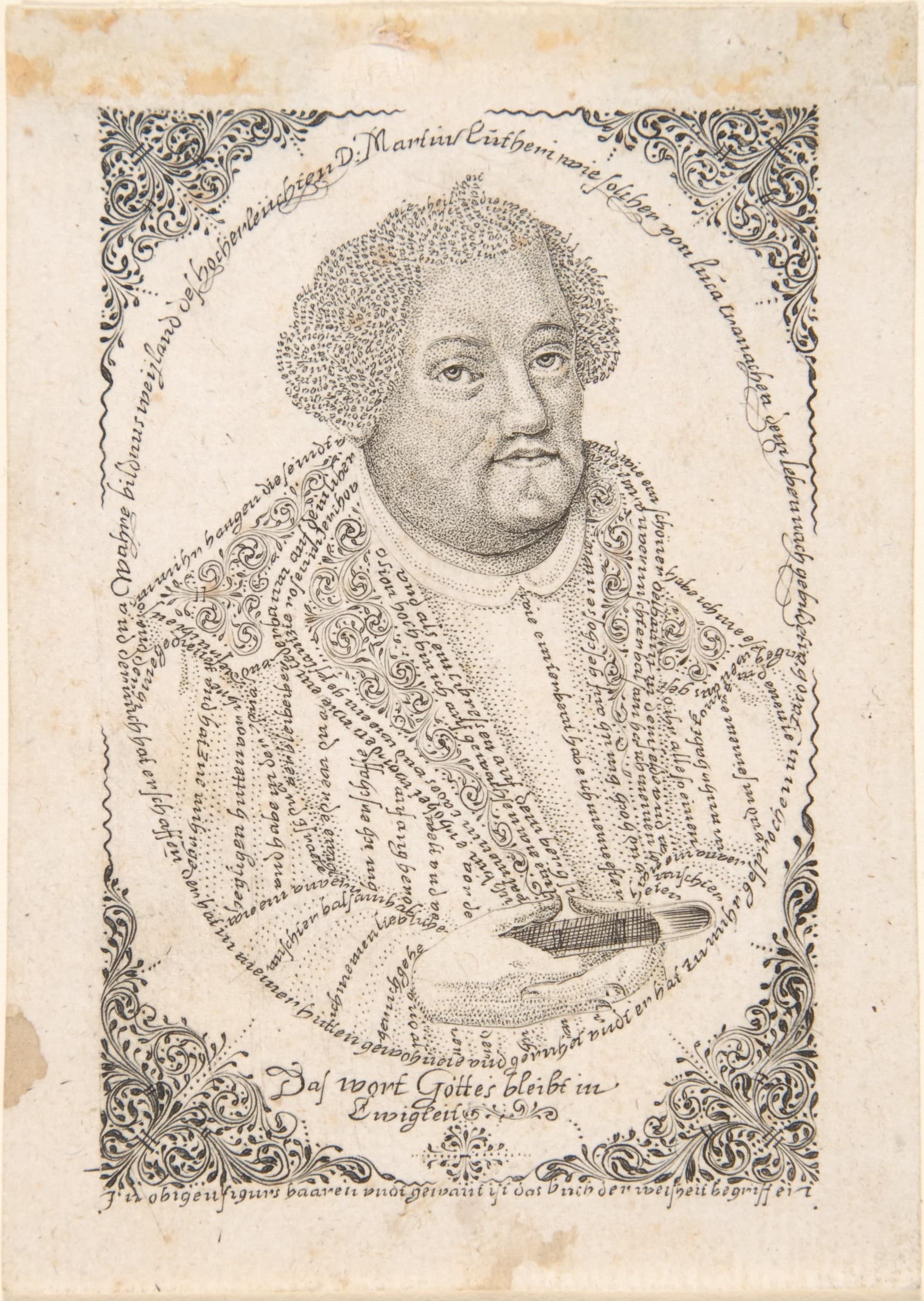
Martin Luther
theologianReformation (15th-16th C) · 1483-1546 CE · Updated April 8, 2026
Biography
Martin Luther was a German Augustinian friar and professor of theology at Wittenberg, active during the early 16th century, who initiated the Protestant Reformation. He is best known for challenging the Catholic Church's practices and doctrines, particularly the sale of indulgences, which were said to reduce punishment for sins. His actions and writings sparked a religious movement that reshaped Christianity in Europe and beyond.
Born on November 10, 1483, in Eisleben, Germany, Luther spent his life in the heart of the Holy Roman Empire. In 1517, he posted his Ninety-Five Theses on the door of the Wittenberg Castle Church, a bold act that questioned the Church's authority and practices. This defiance led to his excommunication in 1521 after refusing to recant his teachings at the Diet of Worms. Luther continued his reform efforts by translating the Bible into German, completing the New Testament in 1522 and the entire Bible in 1534, making the scriptures accessible to ordinary people. His influence extended beyond theology, as his writings inadvertently fueled the Peasants' War, though he later opposed the rebellion.
Luther's era was one of profound change, marked by dissatisfaction with the Catholic Church's corruption and the rise of new ideas about salvation and church authority. The invention of the printing press allowed Luther's ideas to spread rapidly, challenging the Church's control over religious teachings. Debates over salvation, authority, and the church's role led to the fragmentation of Christianity in the West. Luther's emphasis on faith and scripture over church tradition laid the groundwork for this transformation, permanently altering the religious landscape in Europe.
If salvation is entirely God's act through faith alone, what role remains for the church, sacraments, and moral effort — and does grace free humanity or simply replace one form of bondage with another?
The ideas
Martin Luther was driven by a profound question: How can a sinful human be made right with a holy God? This question tormented him as he grappled with his own sense of unworthiness and the demands of the Catholic Church. Luther, a monk deeply committed to his faith, found no peace in the Church's system of penance and indulgences, which promised forgiveness through acts and payments. He became increasingly convinced that these practices obscured the true nature of salvation. Luther's quest for assurance led him to the Bible, where he found a different answer centered on faith and Grace.
Among Luther's most significant ideas were the principles of "faith alone" and "scripture alone." The idea of "faith alone" posited that salvation comes purely through trusting in God's grace, rather than through human actions or merits. This notion undercut the Church's teachings on indulgences, which suggested that financial offerings could reduce time in purgatory. "Scripture alone" asserted that the Bible, not church traditions or papal decrees, was the ultimate authority in matters of faith. Influenced by the Renaissance's call to return to original sources, Luther argued that each believer could interpret Scripture personally, without clerical mediation.
Luther's other contributions include the concept of the "priesthood of all believers," which declared that every Christian has direct access to God. This idea challenged the hierarchical power of the clergy and promoted religious equality. In his work "On the Bondage of the Will," Luther contended that human will is incapable of choosing Salvation, countering the humanistic views of thinkers like Erasmus. Furthermore, his doctrine of the "two kingdoms" articulated a distinct separation between the spiritual realm of the church and the secular authority of the state, a vital framework during the Reformation's political upheavals.
Luther's signature argument was that Salvation is entirely an act of God's grace, received through faith alone. This revolutionary idea shifted the focus from human efforts to a personal relationship with God, accessible through the study of scripture. It was compelling because it offered believers direct access to divine grace, bypassing the complex and often corrupt structures of the Church. This redefinition of Salvation not only sparked the Protestant Reformation but also transformed countless lives by offering a clear and hopeful path to reconciliation with God.
What changed
Before Martin Luther, the Catholic Church held a firm grip on Christian thought. The church taught that salvation required both faith and good works, with the clergy acting as essential mediators of grace through the sacraments. The Pope's authority was unquestioned, and church tradition was considered as authoritative as Scripture. This structure left many questions about salvation and the church's role unresolved. Believers relied heavily on the church for guidance, as personal interpretation of the Bible was neither encouraged nor common. The church's hierarchy reinforced a distinction between clergy and laypeople, with the former seen as having special access to God.
Martin Luther challenged these assumptions profoundly. He argued that Salvation is achieved through faith alone, without the need for works, challenging the church's central role in mediating Salvation. Luther proclaimed that Scripture alone should be the authority for Christian faith, reducing the power of church tradition and the Pope. He also introduced the idea of the priesthood of all believers, asserting that every Christian has equal access to God and can interpret the Bible. Luther emphasized a theology of the cross, focusing on God's work in suffering and humility, rather than the church's visible power. These ideas forced the church to confront its teachings and traditions.
Luther’s reforms led to the Protestant Reformation, giving rise to numerous Protestant denominations. His emphasis on Scripture alone influenced later theologians like John Calvin, shaping the development of Reformed theology. In response, the Catholic Church convened the Council of Trent, which brought about significant reforms. Luther's ideas also sparked a rise in religious individualism, emphasizing personal faith and interpretation. Today, Luther's legacy is seen in the diversity of Christian denominations and the widespread practice of personal Bible study.
Disputed legacy
Martin Luther's legacy is not without its serious flaws. His antisemitic writings, notably "On the Jews and Their Lies," advocated for harsh actions against Jews and fueled a persistent legacy of antisemitism. During the Peasants' War, Luther initially sympathized with the peasants' grievances but later condemned their revolt, siding with the nobility and urging brutal suppression. This was seen as a betrayal by peasant leaders and later criticized by social historians for his failure to support social justice. Luther's inflexibility also led to a significant split within the Protestant movement over the Eucharist, as he and Zwingli could not agree on its nature. This disagreement weakened the Protestant cause and showed Luther's unwillingness to compromise on doctrinal issues. Furthermore, Luther's doctrine of the bondage of the will was criticized for undermining human agency and moral responsibility, igniting debates that continue to this day.
Luther's antisemitic writings mark the darkest chapter of his legacy. In "On the Jews and Their Lies," he called for the persecution of Jews, advocating for measures such as the destruction of synagogues and the confiscation of Jewish property. These writings contributed to a long-standing tradition of antisemitism in Europe and later influenced more extreme ideologies. His arguments have been condemned by Jewish communities, modern theologians, and historians as deeply harmful. This aspect of Luther's work is widely considered indefensible and casts a long shadow over his theological contributions, making it one of the most damaging elements of his legacy.
Some scholars attempt to contextualize Luther's antisemitism within the norms of his time, suggesting that his theological contributions can be appreciated separately from his personal failings. However, this view is contentious and not widely accepted. The criticisms of his antisemitic writings, his stance during the Peasants' War, his role in the Eucharistic controversy, and his theology of the will remain robust. His antisemitic treatise, in particular, stands as a stark and undeniable stain on his legacy, with its impact resonating far beyond his own era.
Legacy
After Martin Luther's excommunication in 1521 and his defiant stand at the Diet of Worms, he faced significant danger as an outlaw in the Holy Roman Empire. Declared an enemy of both church and state, his life was at risk. Frederick the Wise, Elector of Saxony and one of Luther's supporters, secretly whisked him away to Wartburg Castle for his safety. During his time at the castle, Luther remained productive, notably translating the New Testament into German, making the scriptures more accessible to ordinary people. This translation played a crucial role in shaping the German language and culture. Despite being excommunicated and an outlaw, Luther continued to write and develop his theological ideas until his death in 1546 in his hometown of Eisleben.
Luther's teachings sparked the Protestant Reformation, fundamentally transforming Christianity in Europe. His emphasis on salvation by faith alone and the authority of the scriptures over church hierarchy resonated widely, leading to the formation of new Protestant denominations. Lutheranism took root in Germany and spread to Scandinavia, becoming the state religion in countries like Sweden, Denmark, and Norway. Luther's ideas also inspired other reformers, including John Calvin in France and Huldrych Zwingli in Switzerland, who further developed Protestant theology and practice. The Reformation reshaped religious and political landscapes across Europe, diminishing the Catholic Church's dominance and fostering religious diversity.
Today, Lutheranism remains a significant Christian denomination, with millions of followers worldwide. It maintains a strong presence in Germany and Scandinavia, where it originated, and has also established a substantial following in the United States. The doctrines of faith alone and scripture alone continue to influence modern Protestant thought and are reflected in various evangelical and non-denominational Christian movements. In Germany, the Castle Church in Wittenberg, where Luther famously nailed his 95 Theses, stands as a testament to his enduring legacy, drawing visitors from around the globe who come to witness the birthplace of The Reformation.
Continue reading with a Scholar plan
Upgrade to ScholarCommon questions
- What is Martin Luther most known for in Christian history?
- Martin Luther is most known for initiating the Protestant Reformation in 1517 by posting his Ninety-Five Theses, which criticized the Catholic Church's sale of indulgences and other practices. This act led to a significant religious movement that resulted in the formation of Protestant denominations and a major shift in Christian theology and church practices.
- What were Martin Luther's most important works?
- Martin Luther's most important works include the Ninety-Five Theses (1517), which sparked the Reformation; The Freedom of a Christian (1520), which articulated his views on faith and works; On the Bondage of the Will (1525), which debated human free will; and his translation of the Bible into German (1534), which made the scriptures accessible to the common people.
- What were Martin Luther's most influential theological ideas?
- Luther's most influential theological ideas include justification by faith alone, meaning salvation is a gift from God received through faith, not works; the authority of Scripture alone as the basis for Christian belief; the priesthood of all believers, which democratized religious authority; and the concept of the two kingdoms, distinguishing between church and state.
- What controversies did Martin Luther engage in — and what was at stake?
- Luther engaged in controversies over the sale of indulgences, the authority of the Pope, and the nature of salvation. These disputes challenged the Catholic Church's teachings and authority, leading to his excommunication and the eventual split of Western Christianity into Catholic and Protestant branches.
- How did Martin Luther influence later Christianity — Catholic, Protestant, and beyond?
- Luther's influence led to the formation of Protestant denominations, which emphasized personal faith and the authority of the Bible. The Catholic Church responded with the Counter-Reformation, reforming some practices and doctrines. His ideas also contributed to the development of modern concepts of individual conscience and religious freedom.
- What did Martin Luther get wrong, or what ideas have been seriously disputed?
- Luther's views on Jews, particularly in his later writings, have been widely criticized for their anti-Semitic content. Additionally, his rejection of free will in salvation has been disputed by those who emphasize human cooperation with divine grace.
- Is Martin Luther considered a saint? By which traditions?
- Martin Luther is not considered a saint in the Catholic Church due to his role in the Reformation and excommunication. However, some Lutheran and Protestant traditions honor him as a reformer and significant religious figure.
- Why does Martin Luther still matter today?
- Martin Luther matters today because his actions and ideas reshaped Christianity, leading to the diversity of Christian denominations. His emphasis on personal faith and scripture continues to influence religious thought, and his legacy impacts discussions on religious freedom and the relationship between church and state.
- What is the most surprising or counterintuitive thing about Martin Luther?
- One surprising aspect of Luther is his initial intention to reform the Catholic Church from within, not to create a separate movement. Despite his eventual break with the Church, he remained a devout Christian who valued traditional elements like the sacraments and liturgy.
- What is the best place to start reading Martin Luther?
- A good starting point for reading Martin Luther is his work The Freedom of a Christian, which clearly outlines his views on faith and works. Additionally, his Ninety-Five Theses provide insight into the initial issues that sparked the Reformation.