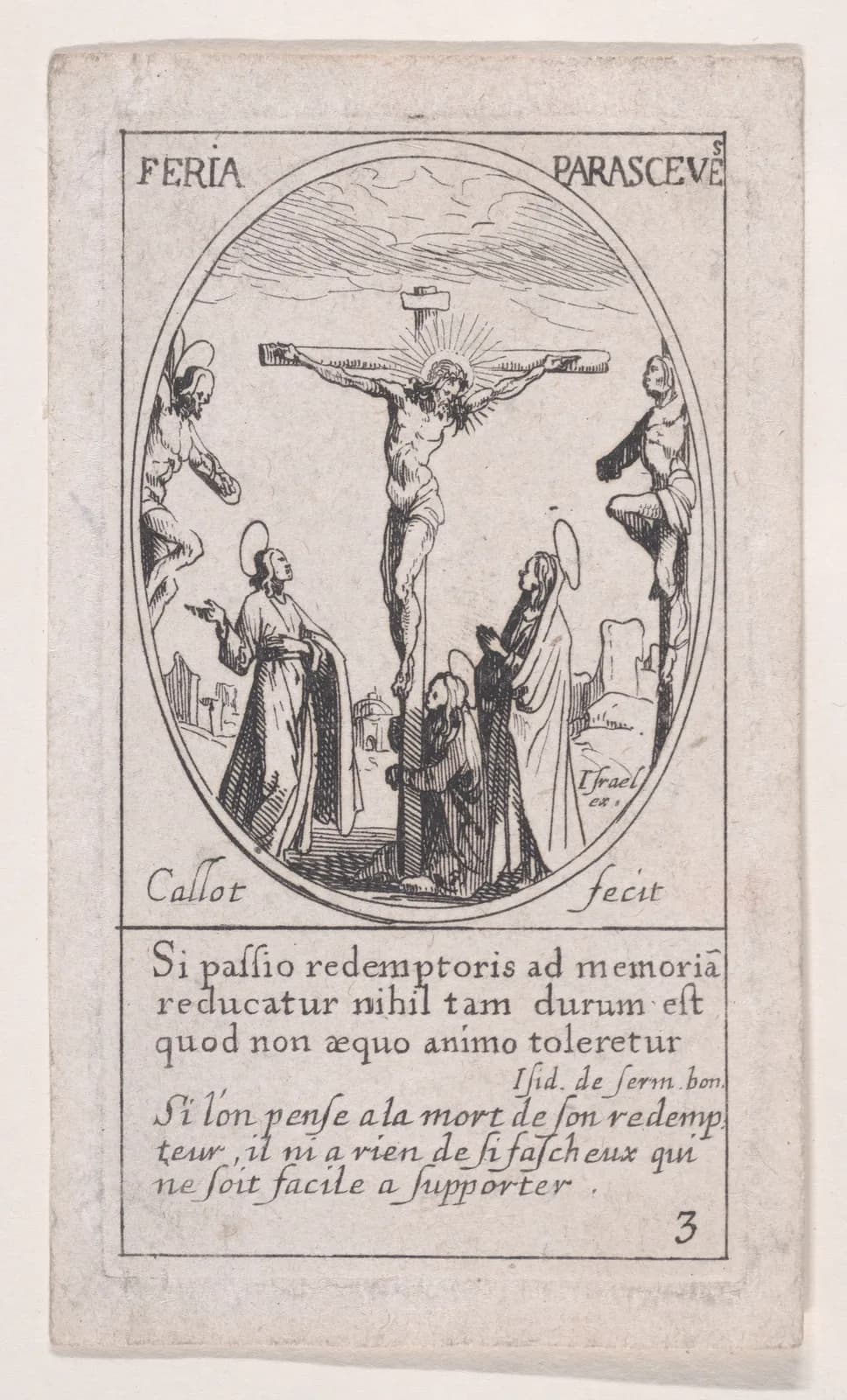
Good Friday
Holidays & seasons · Updated August 15, 2026
Overview
Christians have debated for centuries whether Good Friday should be a day of mourning for the events of Christ's crucifixion or a day of subdued celebration of the redemptive act that Christians believe was achieved through Jesus's death. This debate dates to the earliest days of the church, when theological differences over the events of Holy Week produced different approaches to commemoration. Different traditions still emphasize either sorrow or hope in their Good Friday observances.
The earliest recorded observance of Good Friday dates to the 4th century, when Christianity was becoming more formally organized. The term "Good Friday" is thought to have originated from "God's Friday" or "Holy Friday." The Council of Nicaea in 325 AD established the date of Easter, which directly determines when Good Friday is observed. The council tied Easter to the first Sunday after the first full moon following the spring equinox, causing Good Friday's date to shift each year. This council brought together bishops from across the Roman Empire, including figures like Athanasius of Alexandria and Hosius of Cordoba, who worked to unify the church's practices and calendar. Their decisions produced standardized observances, but regional variations in Good Friday's tone persisted across different areas.
Good Friday is marked by diverse practices and perspectives. In countries such as Australia, Canada, and the United Kingdom, it is recognized as a public holiday. Traditions include church services, fasting, and reenactments of the Passion of Christ. In the United States, Good Friday is not a federal holiday. The practice of fasting and penance is widely observed across traditions, a practice rooted in the day's historical association with reflection and reverence.
Why Fighting Over Good Friday Was a Big Deal
Struggles over how to observe Good Friday involved more than whether to mourn or celebrate. They were part of a larger battle over who had the power to decide how Christians should worship. The issue was the question of authority: who had the right to dictate the church's liturgical practices. This struggle involved more than just setting a date; it was about the identity of the Christian faith and the balance of power among its communities. Different factions vied for control, each arguing that their tradition best represented the true teachings of Christianity. Debates reflected tensions about orthodoxy, with groups holding to their interpretations and practices in the face of calls for standardization.
The Council of Nicaea in 325 AD addressed the issue of Easter's date. Emperor Constantine and bishops from across the Christian world convened to settle the matter. On one side, Pope Victor I and the Roman Church pushed for Easter to be celebrated on the Sunday following the 14th of Nisan, aiming to unify Christian practice and assert Roman authority. On the other side, Polycrates of Ephesus and the Quartodecimans insisted on celebrating Easter on the 14th of Nisan itself, regardless of the day of the week, maintaining what they believed was the tradition passed down by the apostles. The council's decision to adopt the Roman practice established a unified front.
Yet, despite the council's decree, the conflict was never fully settled. Local traditions and interpretations of Good Friday continued to thrive, resisting the central authority's attempts to impose uniformity. The persistence of these diverse practices revealed cultural and doctrinal divides within Christianity. This resistance to centralized control meant that, even as the broader framework of Easter observance was established, the specifics of how to commemorate Good Friday remained contentious. Today, Good Friday is a public holiday in some countries but not in others.
Continue reading with a Scholar plan
Upgrade to ScholarCommon questions
- What is Good Friday and why is it significant?
- Good Friday is a Christian observance that commemorates the crucifixion of Jesus Christ. It is significant because it marks the day Christians believe Jesus sacrificed himself for humanity's sins, leading to redemption.
- Why do Christians commemorate Good Friday?
- Christians commemorate Good Friday to reflect on the suffering and sacrifice of Jesus Christ, which they believe was essential for the redemption of humanity. It is a day for mourning and reflection on the events leading to Jesus's death.
- What events are remembered on Good Friday?
- Good Friday remembers the events of Jesus Christ's crucifixion, including his trial, suffering, and death on the cross. These events are central to the Christian narrative of salvation.
- How is Good Friday observed in different Christian denominations?
- Good Friday is observed with various traditions, including church services, fasting, and reenactments of the Passion of Christ. While some denominations focus on mourning, others may emphasize the redemptive aspect of Jesus's death.
- Why is Good Friday called 'Good' if it marks Jesus' crucifixion?
- The term 'Good' in Good Friday is believed to originate from 'God's Friday' or 'Holy Friday.' Despite marking Jesus's crucifixion, it is considered 'good' because it led to the resurrection and salvation in Christian belief.
- What are the traditional customs and practices on Good Friday?
- Traditional customs on Good Friday include attending church services, fasting, and participating in reenactments of the Passion of Christ. These practices emphasize reflection, penance, and reverence for the day's significance.
- How did the early church determine the date for Good Friday?
- The date for Good Friday is determined based on the date of Easter, which was established by the Council of Nicaea in 325 AD to be the first Sunday after the first full moon following the spring equinox. This means Good Friday's date shifts each year.
- What role does Good Friday play in the Holy Week?
- Good Friday plays a crucial role in Holy Week as the day commemorating the crucifixion of Jesus Christ. It is a time for Christians to reflect on Jesus's sacrifice and the events leading to his resurrection on Easter Sunday.
- Why do some countries have public holidays on Good Friday?
- Some countries recognize Good Friday as a public holiday due to its importance in the Christian calendar, allowing people to observe the day through religious services and reflection. This reflects the cultural and religious significance of the day in those regions.
- What are the key differences between Good Friday and Easter Sunday?
- Good Friday marks the crucifixion and death of Jesus Christ, focusing on mourning and reflection, while Easter Sunday celebrates his resurrection, emphasizing joy and the promise of eternal life. These days represent contrasting emotions within the Christian faith.
- How does Good Friday relate to the Passion of Christ?
- Good Friday is directly related to the Passion of Christ, which encompasses the events of Jesus's suffering and crucifixion. It is a day to remember and reflect on the trials and sacrifices Jesus endured for humanity's salvation.
- What are the common liturgical services held on Good Friday?
- Common liturgical services on Good Friday include the reading of the Passion narrative, veneration of the cross, and prayers for the church and the world. These services are solemn and focus on the themes of sacrifice and redemption.
- Why is fasting observed by some Christians on Good Friday?
- Fasting on Good Friday is observed as a form of penance and reflection on the suffering of Jesus Christ. It is a way for Christians to participate in the solemnity of the day and to honor the sacrifice made by Jesus.
- How do historical accounts outside the Bible describe Good Friday?
- Historical accounts outside the Bible, such as writings by early church historians, focus on the events surrounding Jesus's crucifixion and its significance to early Christians. These accounts often emphasize the impact of Jesus's death on the growth and development of the Christian faith.