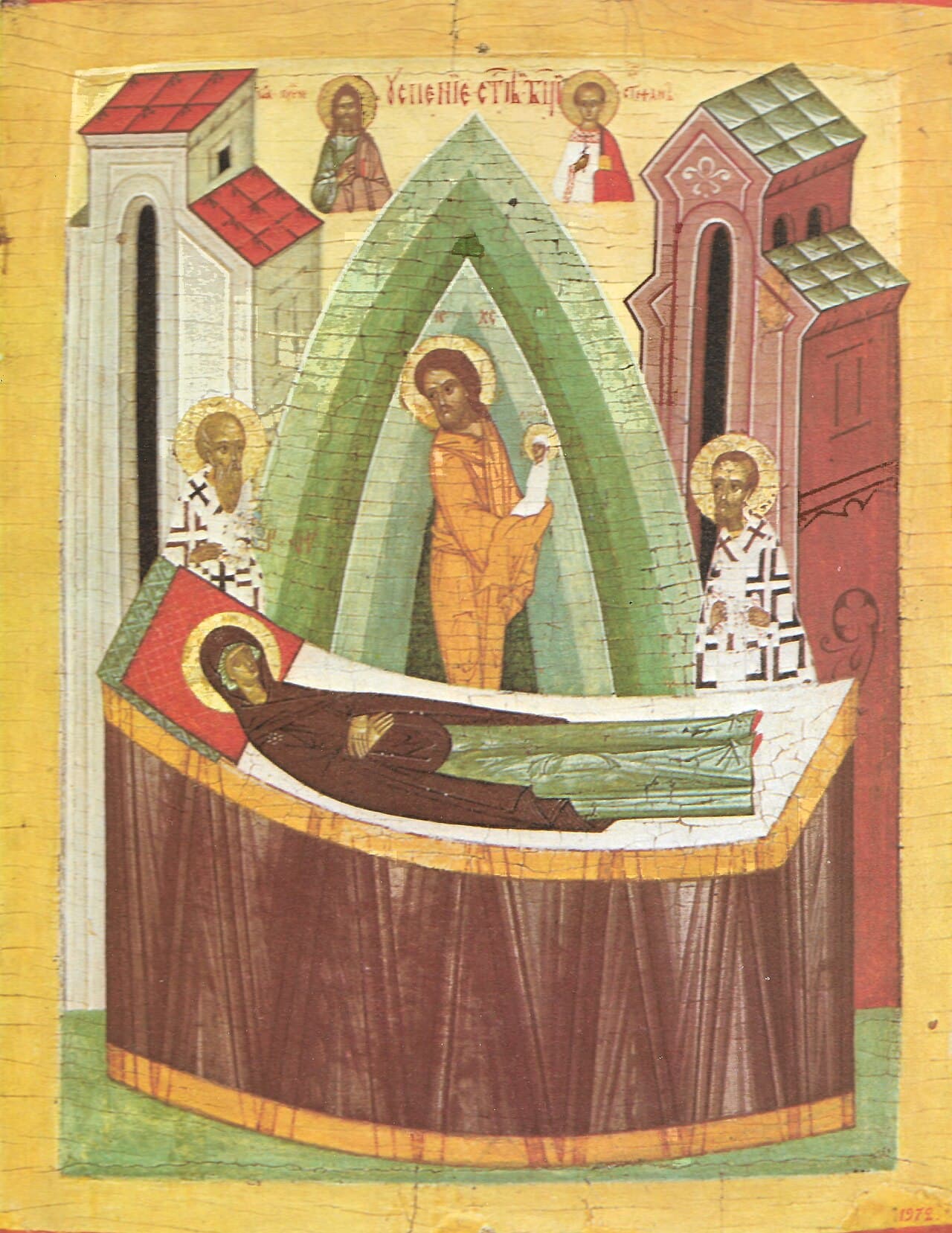
Mary, Mother of Jesus · Updated August 15, 2026
Theotokos is a Greek title given to Mary meaning "God-bearer" or "Mother of God." It is the oldest and most theologically contested of all Marian titles — the one that fractured the church in the fifth century. In 431 AD, the Council of Ephesus declared that Mary could legitimately be called Theotokos, rejecting the alternative title Christotokos ("Christ-bearer") proposed by Nestorius, Patriarch of Constantinople. The dispute was not primarily about Mary. It was about the nature of Christ: whether the divine and human natures in Jesus were so unified that one could say God was born of a woman, or whether Mary bore only the human nature and not the divine.
The theological logic behind Theotokos rests on the doctrine of the hypostatic union — the teaching that Christ is one person with two natures, divine and human, inseparably joined. If Christ is one person, not two, then his mother is the mother of that one person, who is God. To say she was only the mother of his humanity is to imply that the divine and human in Christ are more separate than orthodoxy allows. This reasoning was articulated by Cyril of Alexandria against Nestorius, and Ephesus sided with Cyril. Nestorianism — the view that Mary bore a human Jesus who was then joined to the divine Logos
The title passed from Ephesus into the liturgical life of the church. Eastern Orthodoxy centers its Mariology on Theotokos; the title appears throughout the Byzantine liturgy and is considered foundational rather than merely honorific. In the West, the equivalent phrase is Mater Dei, "Mother of God," and it carries the same Christological weight. Protestant traditions generally accept the Christological point — that Christ is one person — but often avoid the title as too closely associated with Marian devotion. The word remains the sharpest single-word test of what a tradition believes about the Incarnation.
Theotokos is not primarily a statement about Mary — it is a statement about who Christ is. To deny the title is to divide the person of Christ.
The Theotokos controversy reveals how doctrinal definitions work in practice: a term is contested, a council rules, the losing side leaves and builds its own church. Nestorius argued that calling Mary Theotokos was theologically imprecise and liable to pagan misunderstanding — pagans worshipped mother goddesses, and the title sounded uncomfortably similar. His alternative, Christotokos, was intended to honor Mary while avoiding that confusion. Cyril of Alexandria insisted that imprecision was not the issue — the issue was what the title implied about the unity of Christ's person. A title that avoided saying Mary bore God was, for Cyril, a title that covertly divided Christ into two subjects.
The political dimension of Ephesus cannot be ignored. Cyril was a skilled political operator who ensured the council began before the Antiochene delegation — Nestorius's allies — arrived. The Nestorian church that refused the Ephesian ruling flourished in Persia, reached Central Asia, and established communities in China by the Tang Dynasty. The "Church of the East" descended from Nestorian Christianity numbered in the millions before the Mongol invasions of the 13th century effectively destroyed it. What appeared to be a theological loss at Ephesus became, over centuries, one of the largest Christian presences in history.
The deeper stakes concern how language functions in theology. Theotokos is a test of whether a single term can carry the weight of a doctrine without collapsing into devotion divorced from meaning. Used carelessly, it can slip into treating Mary as a goddess — the worry Nestorius raised was not irrational. Used with precision, it is a compact Confession of the Incarnation: one person, divine and human, whose mother is therefore the mother of God. In 1994, the Assyrian Church of the East — the direct heir of the tradition that rejected Ephesus — signed a joint Christological declaration with the Catholic Church, affirming a common faith in Christ. The 1,500-year division over Theotokos ended not by one side capitulating but by both sides agreeing that the underlying Christology had always been the same.
Continue reading with a Scholar plan
Upgrade to Scholar