Exodus 3:1-22 · Exodus · Updated April 25, 2026
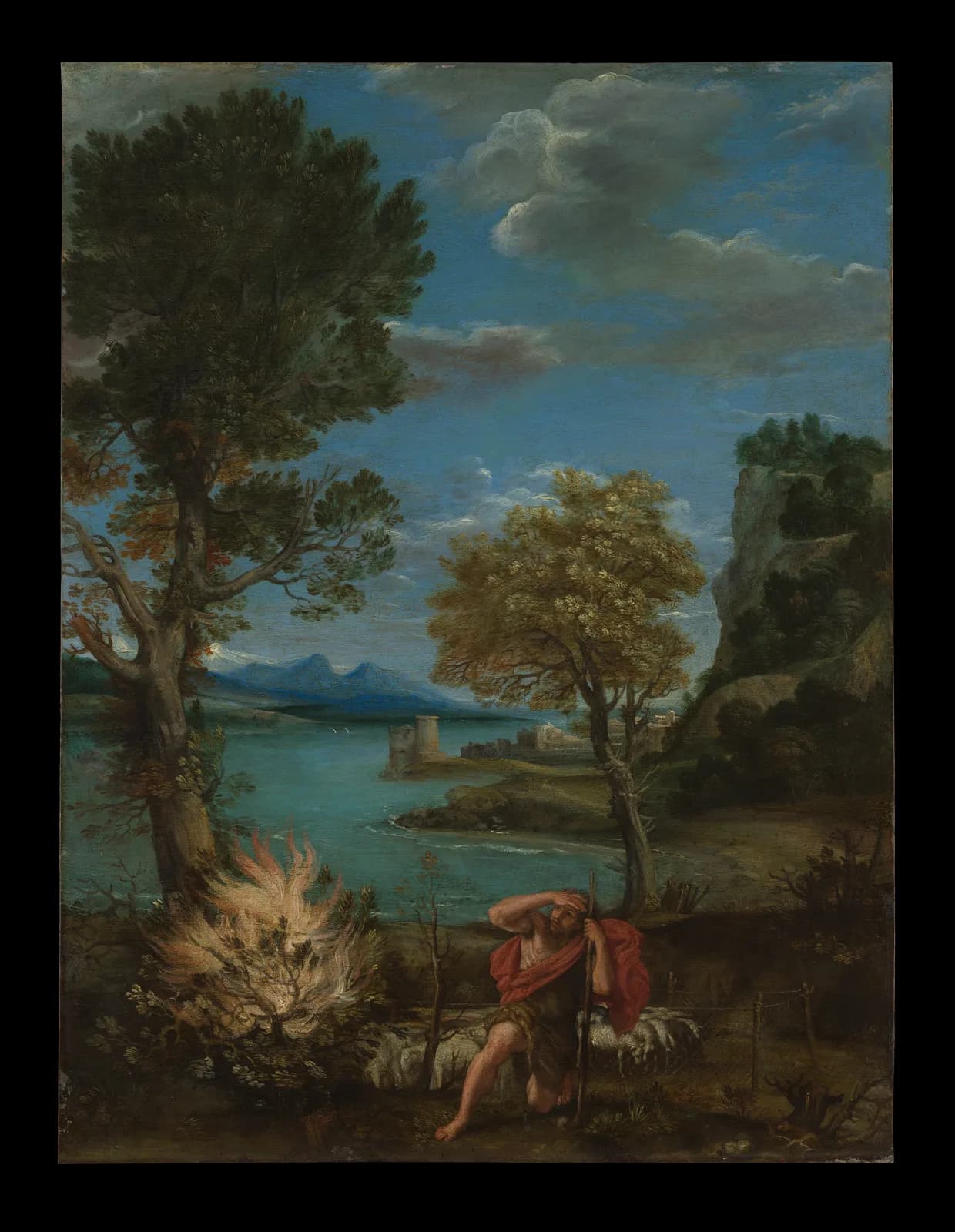
Burning Bush
Moses encounters the burning bush on Mount Horeb, where God speaks to him, revealing His name as 'I AM' and instructing Moses to lead the Israelites out of Egypt. God promises to deliver the Israelites to a land flowing with milk and honey and assures Moses of His presence and support.
Summary
The passage in Exodus 3:1-22 is a pivotal moment where Moses encounters God through a miraculous event. Moses is introduced as tending the flock of Jethro, his father-in-law, in the wilderness near Mount Horeb, also known as the mountain of God (3:1). As he leads the flock, Moses notices a bush that is on fire but not consumed by the flames. Intrigued, he approaches to investigate this unusual sight (3:2-3).
As Moses draws closer, God calls to him from the bush, instructing him to remove his sandals because he is standing on holy ground (3:4-5). God identifies Himself as the God of Abraham, Isaac, and Jacob, which causes Moses to hide his face in fear (3:6). God tells Moses that He has seen the suffering of the Israelites in Egypt and has come to deliver them from oppression and lead them to a prosperous land (3:7-8). God then commissions Moses to go to Pharaoh and bring the Israelites out of Egypt (3:10). Moses expresses doubt about his ability to do this, but God assures him of His presence and gives him the name "I AM" to use when speaking to the Israelites (3:11-14).
The passage concludes with God instructing Moses to gather the elders of Israel and inform them of His plan to rescue them from Egypt and bring them to a land flowing with milk and honey (3:16-17). God predicts Pharaoh's resistance but promises to perform wonders in Egypt to secure their release (3:19-20). Finally, God assures Moses that the Israelites will not leave empty-handed; they will receive favor from the Egyptians and take valuable items with them (3:21-22). The passage establishes God's intention to deliver His people and His selection of Moses as the leader of this mission.
Chiastic structure
ⓘExodus 3:7-8
“And the LORD said, I have surely seen the affliction of my people which are in Egypt... I am come down to deliver them...”
Exodus 3:14
“And God said unto Moses, I AM THAT I AM...”
Exodus 3:16-17
“I have surely visited you, and seen that which is done to you in Egypt... I will bring you up out of the affliction...”
Both A and A' involve God's revelation and promise of deliverance, highlighting His plan to rescue the Israelites.
Interpretation and theological stakes
Continue reading with a Scholar plan
Upgrade to Scholar