Matthew 3:1-12 · Matthew · Updated April 25, 2026
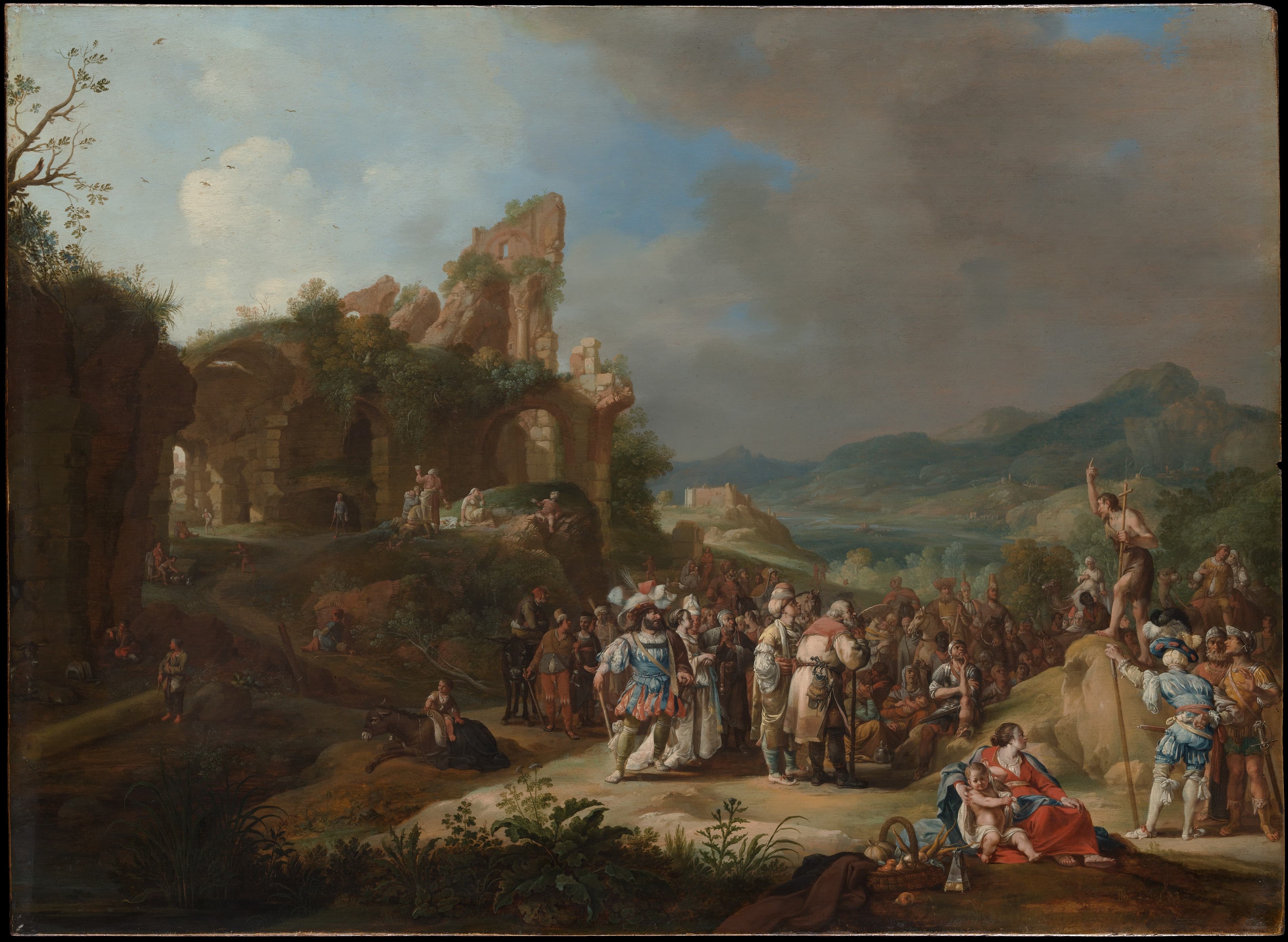
John the Baptist Preaching
John the Baptist preaches in the wilderness of Judaea, calling people to repent as the kingdom of heaven is near. He baptizes many, including Pharisees and Sadducees, warning them to produce good fruit and announcing the coming of one mightier than himself.
Summary
The passage from the Gospel of Matthew introduces John the Baptist, a key figure in the New Testament, who is preaching in the wilderness of Judaea. John is known for his unique lifestyle, wearing clothing made of camel's hair and eating locusts and wild honey (3:4). John calls people to repentance, emphasizing that the kingdom of heaven is near (3:2). The prophet Isaiah foretold him as "the voice of one crying in the wilderness" (3:3). People from Jerusalem, all of Judea, and the surrounding regions come to him, confessing their sins and being baptized in the Jordan River (3:5-6).
As John baptizes those who come to him, he encounters many Pharisees and Sadducees. He addresses them sternly, referring to them as a "generation of vipers" and questioning their motives for fleeing from impending wrath (3:7). John urges them to produce genuine repentance, warning that their lineage from Abraham is not enough to save them (3:8-9). He uses the metaphor of an axe at the root of the trees, indicating that any tree not producing good fruit will be cut down and burned (3:10). John distinguishes his baptism with water from the one who will come after him, who is mightier and will baptize with the Holy Spirit and fire (3:11).
The passage concludes with John describing the coming one as having a winnowing fork in his hand to clear the threshing floor, gathering the wheat into the barn and burning the chaff with unquenchable fire (3:12). This final imagery establishes the significance of the events, emphasizing the urgency of repentance and the power of the one who is to come. This passage in Matthew 3:1-12 primarily establishes the urgent call to repentance John the Baptist delivers as a precursor to the arrival of the kingdom of heaven. John's message focuses on the need for genuine repentance and transformation, threatening judgment for those who fail to produce "good fruit" (3:10). His role as the voice crying in the wilderness (3:3) emphasizes that the time to prepare one's heart for the coming of the Lord is immediate. The urgency of John's warning to the Pharisees and Sadducees about fleeing from wrath emphasizes the critical nature of authentic repentance over reliance on heritage or status (3:7-9).
Chiastic structure
ⓘMatthew 3:2
“Repent ye: for the kingdom of heaven is at hand.”
Matthew 3:11
“He shall baptize you with the Holy Ghost, and with fire.”
Matthew 3:10
“Every tree which bringeth not forth good fruit is hewn down, and cast into the fire.”
Both A and A' involve themes of repentance and judgment, with A focusing on the call for repentance and A' on the consequences of not bearing good fruit.
Interpretation and theological stakes
Continue reading with a Scholar plan
Upgrade to Scholar