Acts 10:1-48 · Acts · Updated April 25, 2026
Peter's Vision / Cornelius
Cornelius, a centurion in Caesarea, receives a vision from an angel instructing him to send for Peter. Meanwhile, Peter has a vision of unclean animals and is told by God not to call anything impure. Peter visits Cornelius, preaches about Jesus, and the Holy Spirit falls on all present, leading to their baptism.
Summary
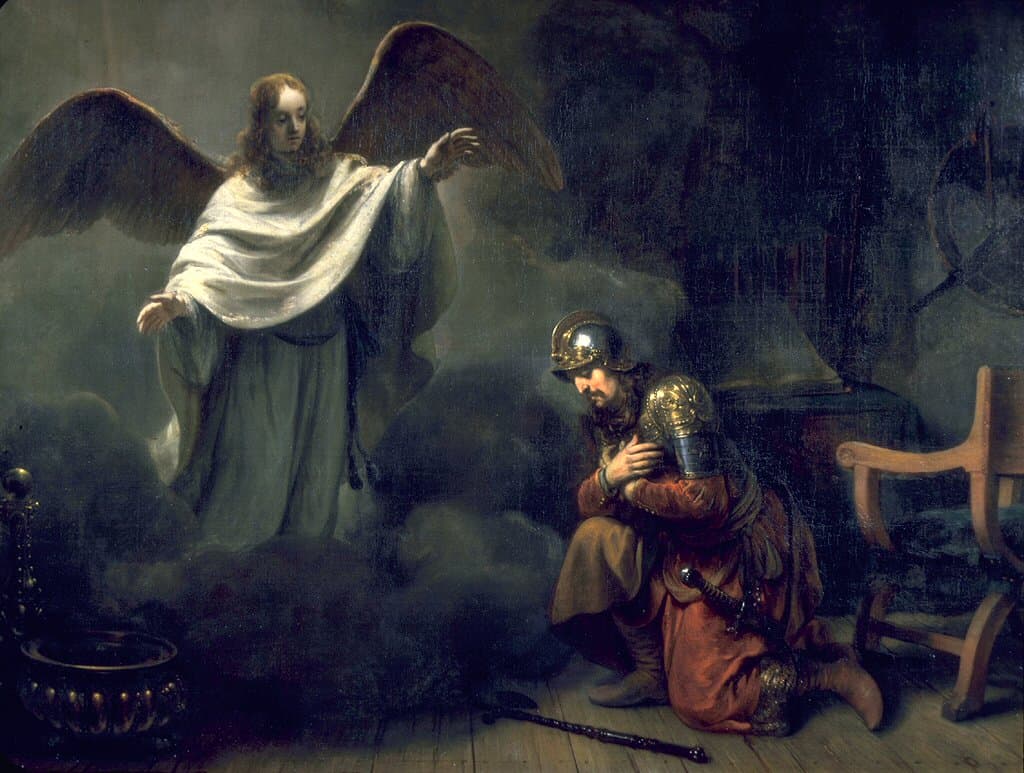
Acts 10 illustrates the spread of the gospel beyond Jewish communities. Cornelius, a Roman centurion in Caesarea, is a devout man who fears God, gives alms, and prays regularly (Acts 10:1-2). One day, an angel visits Cornelius in a vision, instructing him to send for Simon Peter, who is staying in Joppa with Simon the tanner (Acts 10:3-6). Cornelius promptly sends two servants and a devout soldier to fetch Peter (Acts 10:7-8).
As Cornelius’s men approach Joppa, Peter experiences a vision while praying on a rooftop. A sheet descends from Heaven, filled with various animals, and a voice tells him to kill and eat (Acts 10:11-13). Peter objects, citing Jewish dietary laws, but the voice insists, stating, "What God hath cleansed, that call not thou common" (Acts 10:15). This occurs three times before the vision ends (Acts 10:16). While Peter contemplates the vision, Cornelius’s men arrive, and the Holy Spirit instructs Peter to go with them without hesitation (Acts 10:19-20). Peter meets them, learns of Cornelius’s vision, and agrees to travel to Caesarea the next day with some fellow believers (Acts 10:21-23).
Upon arrival in Caesarea, Cornelius greets Peter and explains his vision (Acts 10:25-33). Peter acknowledges that God has shown him not to call any person impure or unclean, signaling a new understanding that the gospel is for all people (Acts 10:28). Peter then shares the message of Jesus Christ, emphasizing that God accepts anyone who fears Him and does what is right (Acts 10:34-35). As Peter speaks, the Holy Ghost descends on all who hear, astonishing the Jewish believers with Peter because the Gentiles receive the Holy Spirit as well (Acts 10:44-45). Peter then commands that they be baptized in the name of the Lord, and he stays with them for several days (Acts 10:47-48). The passage concludes by establishing that God does not show favoritism, and the gospel is open to all, Jew and Gentile alike. The main conclusion of Acts 10 is that the gospel transcends ethnic and cultural barriers, affirming that God's Salvation is available to all people, not just the Jews. This passage signals a shift in the early Christian church, as Peter, a Jewish apostle, receives divine instruction to embrace Gentiles as part of God's plan. The key moment arrives in Peter's realization that he should "not call any man common or unclean" (Acts 10:28). This theological breakthrough shows that God's grace and the message of Jesus Christ are inclusive, extending beyond the boundaries of Jewish tradition to embrace all humanity.
Chiastic structure
ⓘActs 10:3-6
“He saw in a vision evidently about the ninth hour of the day an angel of God coming in to him, and saying unto him, Cornelius.”
Acts 10:34-35
“Of a truth I perceive that God is no respecter of persons: But in every nation he that feareth him, and worketh righteousness, is accepted with him.”
Acts 10:44-48
“While Peter yet spake these words, the Holy Ghost fell on all them which heard the word.”
Both A and A' involve divine communication and the breaking of traditional barriers, emphasizing God's acceptance of Gentiles.
Interpretation and theological stakes
Continue reading with a Scholar plan
Upgrade to Scholar