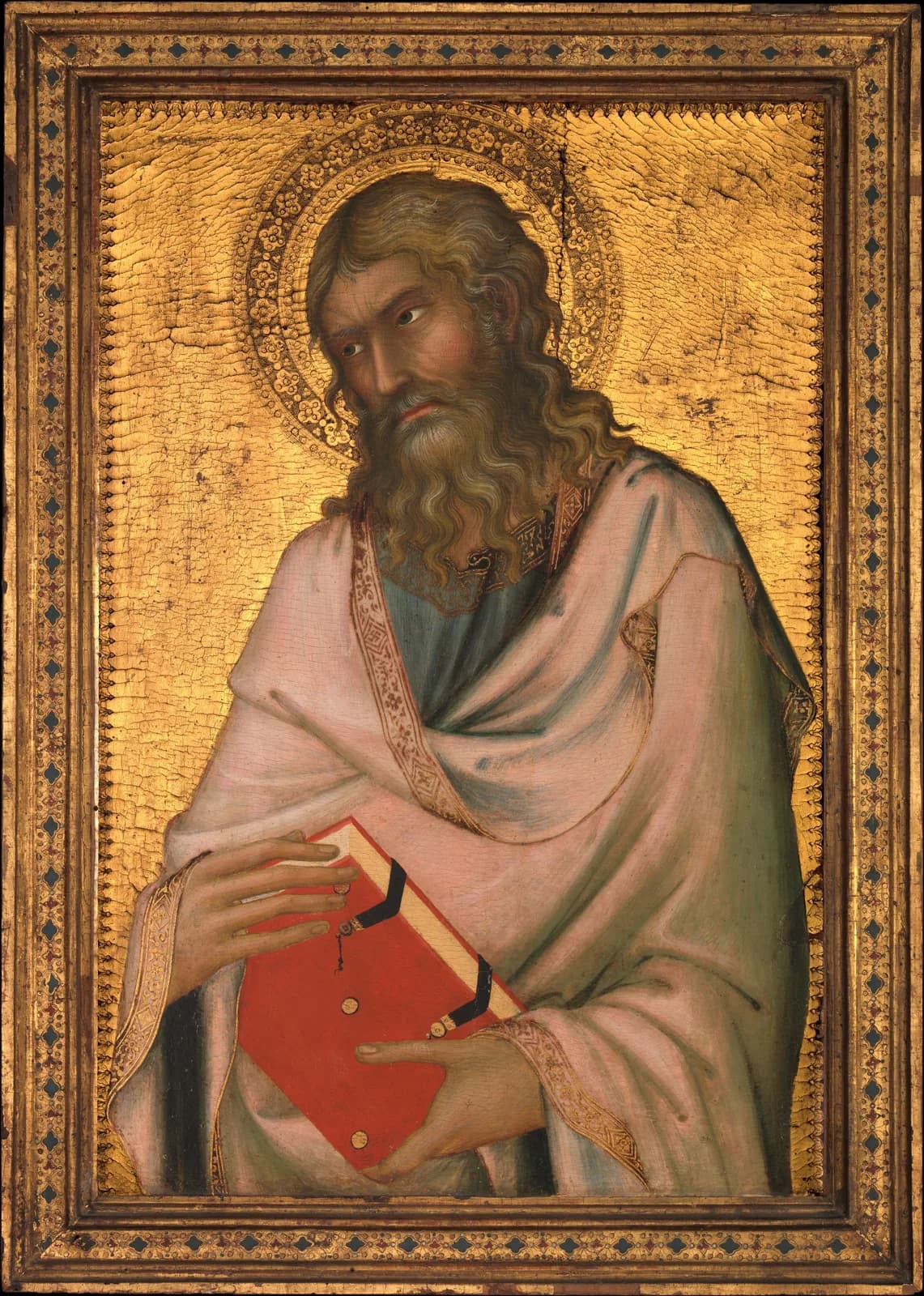
The Story of Andrew
In the bustling region of Galilee during the first century AD, under Roman occupation, Andrew emerges as an often understated figure. Born in Bethsaida, a town near the Sea of Galilee, Andrew worked as a fisherman, a common trade in this diverse area mingling Jewish and Gentile cultures. His life took a dramatic turn when he encountered John the Baptist, whose proclamation of Jesus as the Lamb of God (John 1:40-41) compelled Andrew to follow this new teacher. This encounter marks the beginning of Andrew’s journey as the first disciple called by Jesus — a calling that would shape the rest of his life and those around him.
Andrew's role in the New Testament narrative unfolds through his actions, demonstrating an ability to connect others with Jesus. One of his most notable decisions comes soon after his own calling when he introduces his brother, Simon Peter, to Jesus, declaring, "We have found the Messiah" (John 1:41-42). This act of bringing Peter to Jesus is crucial, as Peter later becomes a central figure in the early church. Andrew's influence, however, extends beyond his familial ties. In the account of the feeding of the 5,000, Andrew identifies a boy with five barley loaves and two fish (John 6:8-9), facilitating one of Jesus' most famous miracles. His actions reveal a knack for seeing potential where others may not, playing an understated role in Jesus' ministry.
The narrative continues to show Andrew’s role as a bridge-builder. In John 12:20-22, Andrew, alongside Philip, responds to a request from a group of Greeks who wish to see Jesus. This moment shows Andrew’s openness and willingness to expand the reach of Jesus' message beyond traditional Jewish boundaries, hinting at the inclusive nature of the early Christian movement. Andrew's presence and participation in these events illustrate his commitment to broadening the scope of Jesus' mission, even when it required stepping out from the shadows.
Despite these contributions, Andrew's story concludes with a quieter legacy. He is among the apostles present in the upper room after Jesus' ascension, as recorded in Acts 1:13, participating in the foundational moments of the early church. While his brother Peter gains renown as the 'rock' upon which the church is built (Matthew 16:18), Andrew's presence in these formative gatherings reflects his steadfast dedication to the nascent Christian community. Though he does not receive the same level of recognition as Peter, Andrew’s early actions and continued support are crucial in the church's establishment and expansion. His name, forever etched in the lists of apostles, reflects his quiet yet impactful faithfulness. The Greek term "πρωτόκλητος" (protokletos), meaning "first called," aptly describes Andrew's role among Jesus' disciples. This word, found in John 1:40, highlights his position as the first disciple to follow Jesus after hearing John the Baptist's testimony. Andrew's immediate decision to follow Jesus, as described in John 1:40-41, shows his initiative and spiritual insight. Despite his early call, Andrew is less prominent in the gospel narratives than his brother, Simon Peter. Yet, his actions reveal a man who is not only quick to recognize the Messiah but also eager to share this discovery, as he did by bringing Peter to Jesus (John 1:41-42). His ability to act as a bridge-builder is further seen when he brings Greeks seeking Jesus to Him, demonstrating his openness and desire to connect others to Christ (John 12:20-22).